
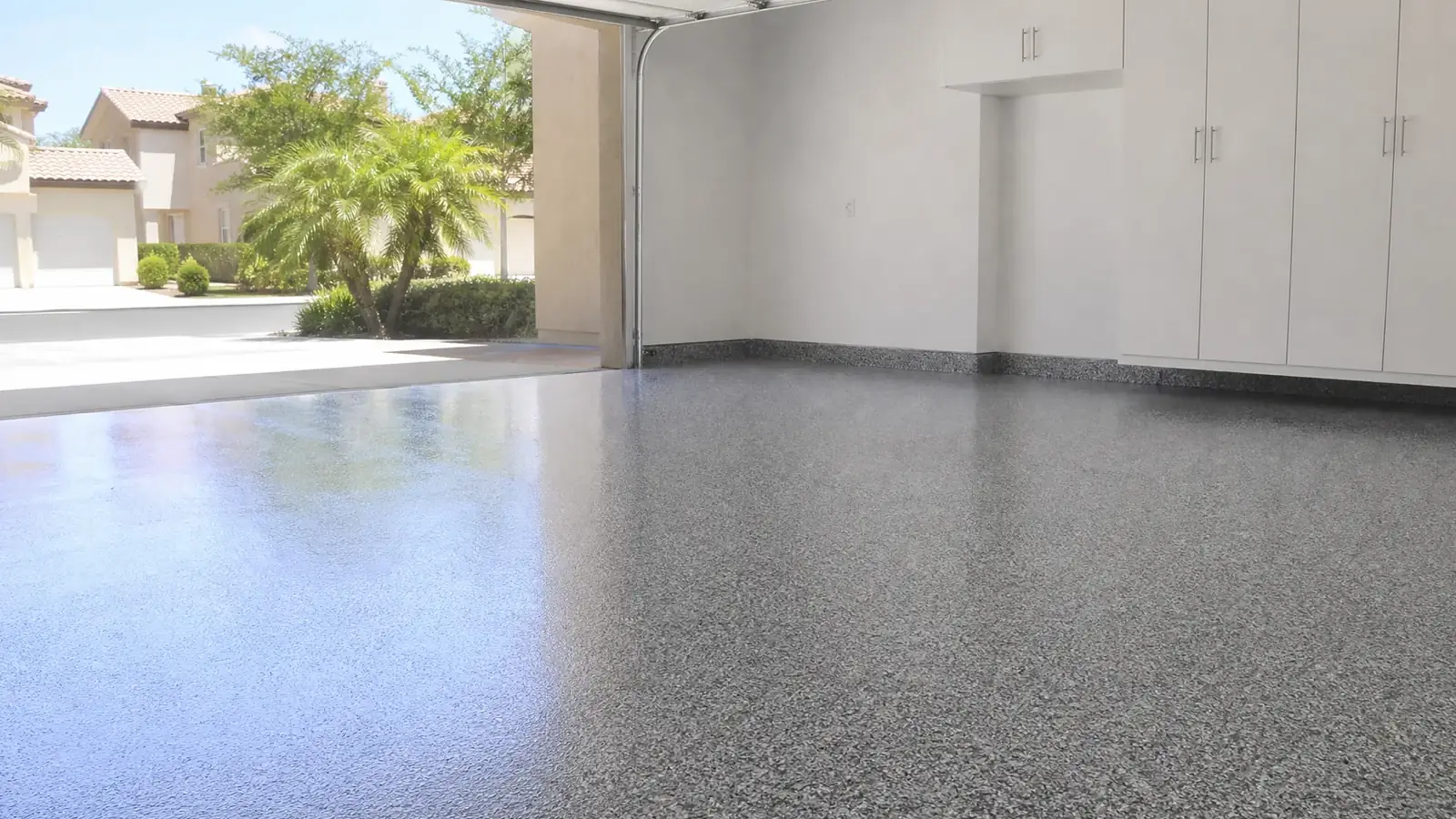
Diamond-ground concrete, a moisture-barrier epoxy basecoat and a UV-stable polyaspartic topcoat turn a stained Simi Valley garage slab into a floor that sweeps clean.
An epoxy garage floor in Simi Valley is a diamond-ground concrete slab sealed with a moisture-barrier epoxy basecoat, decorative flake and a UV-stable polyaspartic topcoat. Most two-car garages are finished in one day and cost $2,600 to $4,000 with flake. SV Epoxy Flooring backs residential work with a limited lifetime adhesion warranty.
Simi Valley garages work hard. They hold the daily cars, the overflow from the pantry, the workbench and, in many homes, the water heater and a spare freezer. The concrete underneath was poured for strength, not for looks, and it soaks up oil, tire residue and whatever leaks from the back of a shelf. After a few years it turns dusty, stained and hard to clean. An epoxy coating changes that by sealing the slab under a smooth, durable layer that you can sweep and mop like any other floor in the house.
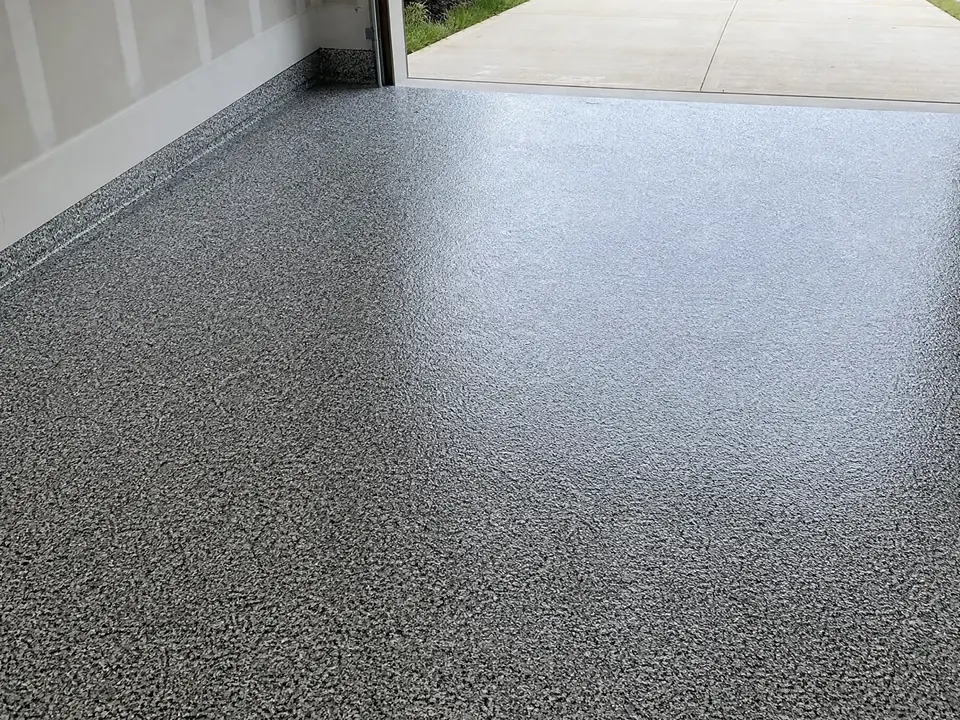
Our garage floors are built as a system, not as a single coat of paint. We diamond grind the slab, repair cracks and joints, roll a moisture-barrier epoxy basecoat, broadcast decorative flake to full rejection and finish with a UV-stable polyaspartic topcoat. Every product is VOC-free, so the garage does not smell like a chemical plant for a week afterward. A standard two-car garage is finished in a single day, and you can pick the flake blend from the color chart before we arrive.
SV Epoxy Flooring is based in Simi Valley and works across the valley and nearby Ventura County communities, from older tract homes on the valley floor to larger Wood Ranch style houses and hillside lots with long driveways. This page explains how the work is done, what it costs, how the choices compare and what to expect over the years, including the downsides, because a sound decision needs the full picture.
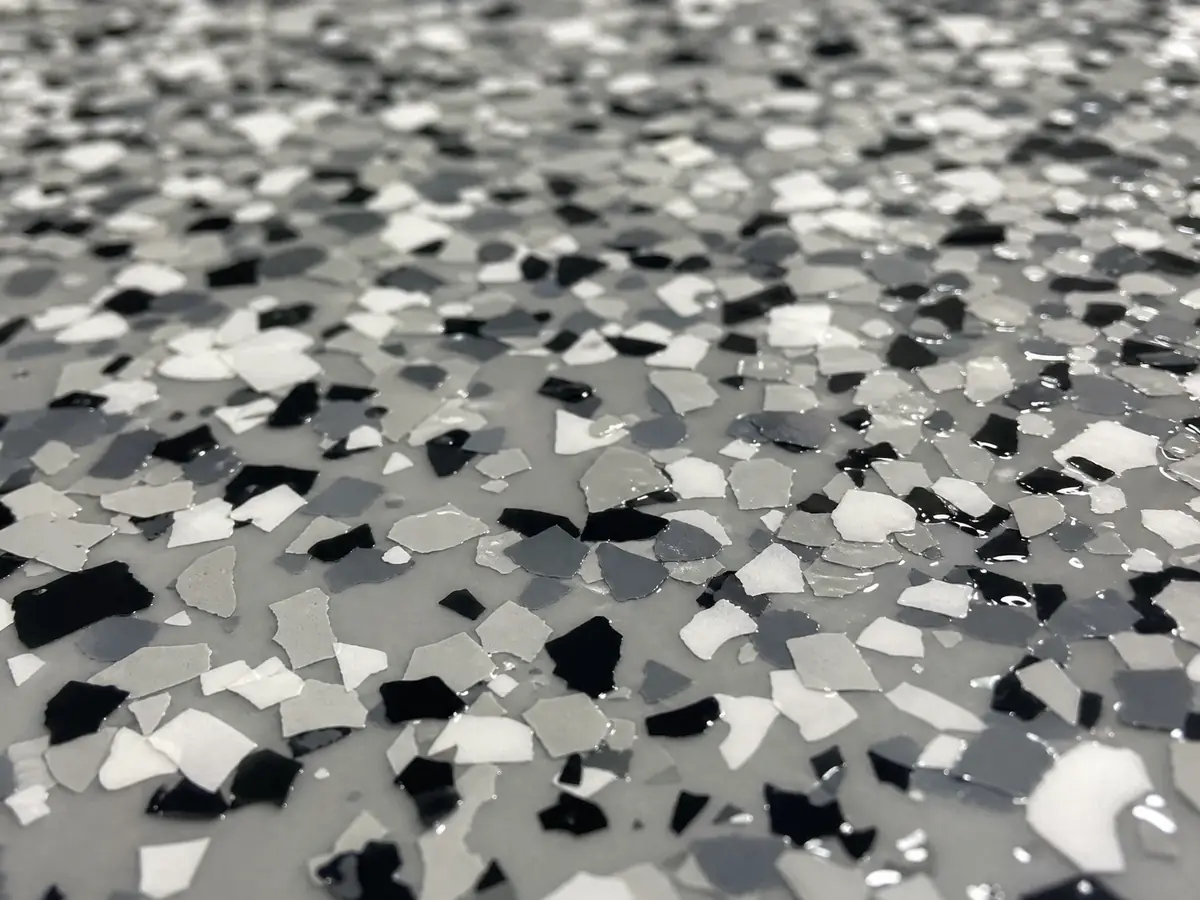
The day starts with a walkthrough of the slab and a check for moisture. Then the crew diamond grinds the entire floor. Grinding removes laitance, old paint, sealer and surface contamination, and it cuts the bonding profile that lets the coating grip the concrete. Acid etching, the method in most do-it-yourself kits, cannot do this evenly, and uneven prep is the most common reason kit floors peel. Next come repairs. Cracks are routed and filled, joints are treated, and spalled spots and pits are patched and ground flush. The slab is vacuumed until the dust is gone. A moisture-barrier epoxy basecoat is rolled out first, giving the system its body and its hold on the concrete. While it is still wet, flake is broadcast to full rejection, meaning the floor is covered until no wet resin shows through. Once the basecoat firms, loose flake is scraped and swept away and the surface is lightly sanded so the topcoat has a smooth base to build on. Last, a UV-stable polyaspartic topcoat is applied for scratch, chemical and sun resistance. A standard two-car garage goes through every one of these steps in one day, and the walkthrough at the end is your chance to check the work against the color you chose.
People search epoxy versus polyaspartic as if one has to win. In a well-built garage floor, both have a job. Epoxy is thick, strong in compression and very good at bonding to concrete, so it makes a fine basecoat and a moisture barrier when the slab needs one. Its weakness is sunlight. Left exposed to UV, many epoxies amber over time, which is why we do not leave epoxy as the final surface in a garage with a large south or west facing door. Polyaspartic is a thinner, fast-curing coating that stays clear and resists UV and hot-tire pickup well, but it is less forgiving to install and is not a substitute for a good basecoat on a slab with moisture issues. Our standard garage system uses epoxy underneath and polyaspartic on top, so each material does what it does best. Polyurea belongs to a related family, and contractors love to argue about the differences. What matters more than the label is the prep, the film thickness and the crew doing the work. Vendor claims such as ten times stronger rarely survive a real garage with a hot SUV and a floor jack, so we do not promise absolute numbers. We will tell you exactly what goes into your floor, in writing, so you can compare it with any other quote you receive.
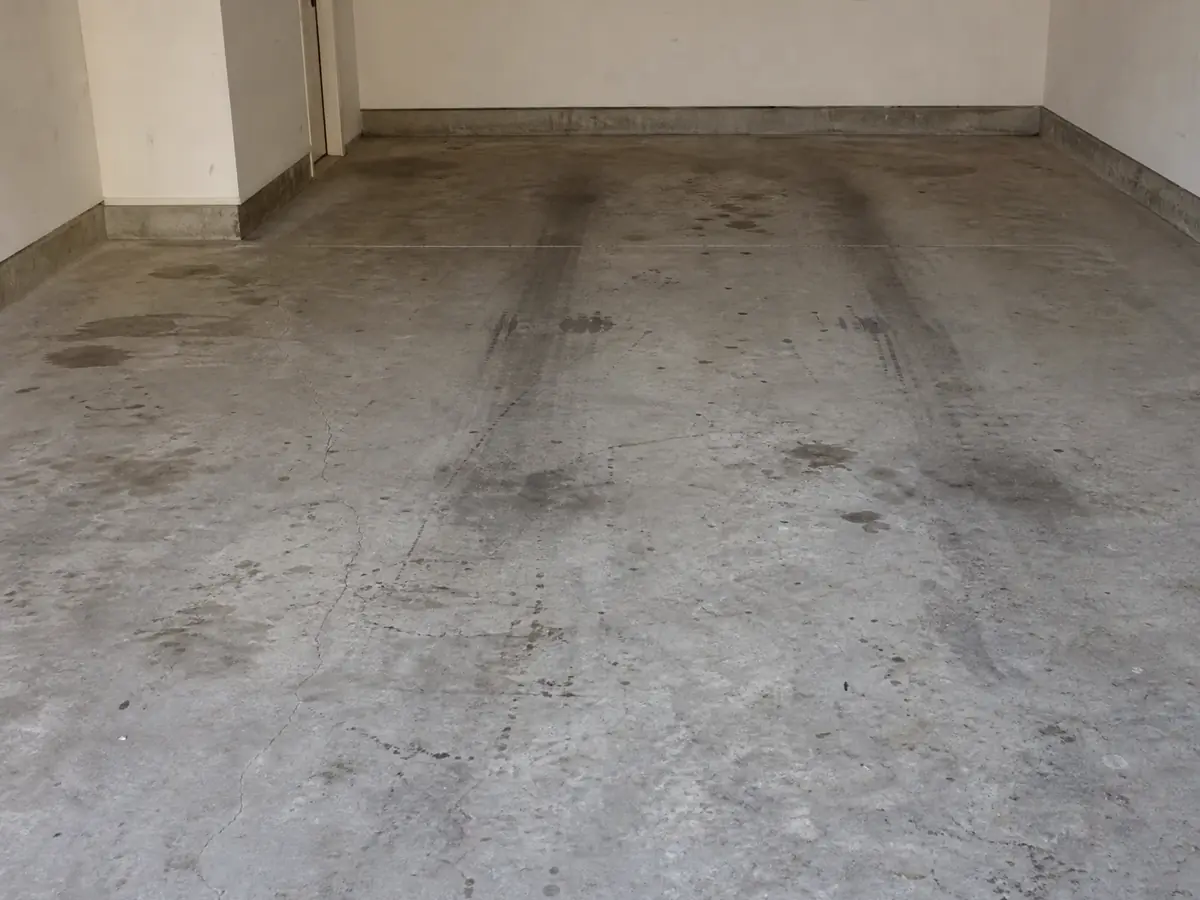
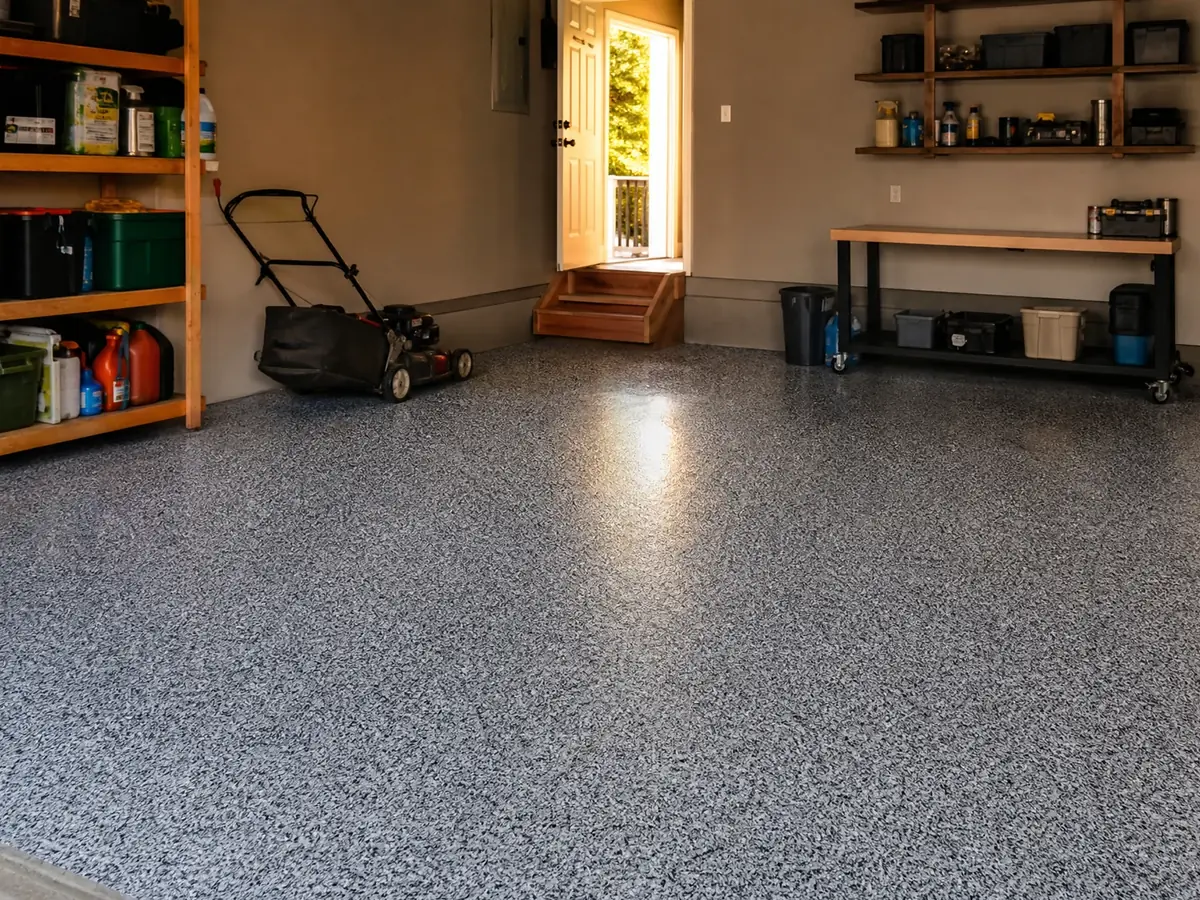
Simi Valley summers are hot and dry, and a closed garage can run much hotter than the air outside. Tires coming off a freeway commute carry that heat onto the floor, which is the exact condition that causes hot-tire pickup on a weak coating. The topcoat we use is chosen for it. Sunlight through a garage door window or an open bay matters too, so UV stability is a real requirement here, not a sales line. Santa Ana winds blow fine dust and, during fire season, ash into open garages. A sealed floor sweeps clean in minutes, while bare concrete holds the dust and keeps shedding it. Older tract homes on the valley floor often have slabs poured decades ago, with hairline cracks, joint edges that have chipped and patches of old paint or sealer that need grinding. Larger homes in the Wood Ranch area and on hillside lots can have three or four car bays and sloped approaches, where the square footage matters as much as the system. Slabs on cut and fill lots deserve a closer look for cracks and moisture, which is why the free estimate includes a slab inspection. If you plan to convert part of the garage to living space, or your HOA has architectural rules, check those first and tell us about them.
A coated garage floor is easy to look after. Sweep or dust mop weekly, since grit is what dulls a glossy surface over time. Damp mop with a neutral cleaner and warm water now and then. Wipe up oil, brake fluid, coolant and battery acid soon after a spill instead of letting them sit for weeks. Avoid abrasive pads and harsh solvents. A squeegee handles water tracked in on a rainy day or after washing the car. Use felt pads under tool chests and rolling jack stands, and lift heavy items rather than dragging them across the floor. Over the years the topcoat will show the wear any garage floor shows, such as fine scratches where cars turn and tools get dragged. That is normal and mostly cosmetic. We do not quote a number of years, because lifespan depends on the slab, the prep, how the garage is used and how it is cleaned. What we stand behind is the bond. Residential work carries a limited lifetime adhesion warranty, which covers the coating letting go of the concrete. It does not cover normal wear, impact damage or chemical spills left to sit. If a spot is chipped, a small repair is possible, and a worn topcoat can often be recoated instead of removed.
Grinding opens the pores of the concrete and cuts a bonding profile, so the coating grips the slab instead of sitting on top of it. This step is what separates a floor that lasts from one that peels.
A sealed floor sweeps and mops without soaking anything in. Dust from windy days and ash after wildfire season lifts off instead of grinding into bare concrete.
The cured system resists drips of motor oil, coolant, brake fluid and common cleaners. Wipe a spill up soon after it happens and the stain stays off the floor.
A polyaspartic topcoat is chosen to stand up to warm tires coming in from the road, which is the situation that lifts weaker coatings in a summer garage.
UV-stable topcoats help the color hold steady where sunlight reaches the floor, instead of yellowing the way an exposed epoxy can.
Residential garage floors carry a limited lifetime adhesion warranty on the bond between coating and concrete. We explain in plain words what it covers and what counts as normal wear.
A standard two-car flake garage floor takes 1 day from the first grind to the final topcoat. Other systems take longer: solid color about 3 days, metallic 3 to 4 days and quartz or sand finishes 2 to 3 days. Most flake floors can take careful foot traffic soon after the topcoat sets, and we confirm at the final walkthrough when the car can come back in. Give the floor extra time before parking heavy trucks, rolling a loaded tool chest across it or setting up a lift. Cool mornings and hot afternoons both change how fast coatings firm up, so we plan the schedule around the weather and tell you the exact timing for your garage.
Choose a flake garage floor when you want the best balance of cost, speed and forgiveness. Flake hides dirt, tire marks and small slab flaws, and it finishes in one day. Choose solid color if you prefer a clean, uniform look and are comfortable with a three day job. Choose metallic when the garage is a showpiece and the budget allows $5,000 to $7,400 for a typical project. Choose a quartz or sand finish when traction matters most, as on a ramp or a wet entry. Grind and seal is the leanest option for a plain concrete look. Every project has a $2,600 minimum, and the free estimate will point you to the right system.
Typical ranges for Simi Valley and Ventura County. Minimum project $2,600. Commercial and industrial work is quoted after a site visit.
| System | Price per sq ft | Typical project |
|---|---|---|
| Flake system (garage, up to 400 sq ft) | $6.50 – $10 per sq ft | $2,600 – $4,000 |
| Solid color system | $9.50 – $11.50 per sq ft | $3,800 – $4,600 |
| Metallic epoxy system | $12.50 – $18.50 per sq ft | $5,000 – $7,400 |
| Quartz & sand finish system | $9 – $16.50 per sq ft | $3,600 – $6,600 |
| Grind & seal (clear sealer) | $6.50 – $9 per sq ft | $2,600 – $3,600 |
| Patio, driveway & pool deck | $8 – $12 per sq ft | $3,200 – $4,800 |
| Commercial & industrial | Quoted after a site visit | Quoted per project |
Prices and details reviewed October 2026. Project examples assume a two-car garage up to 400 sq ft. Free on-site measurement and written estimate. See the color chart to pick your color.
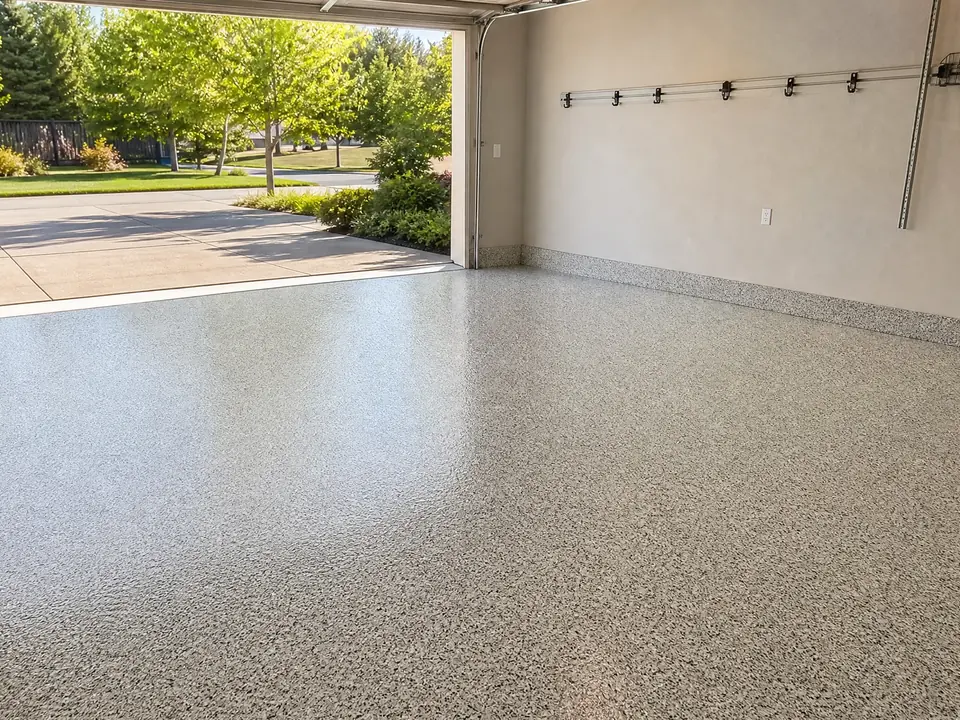
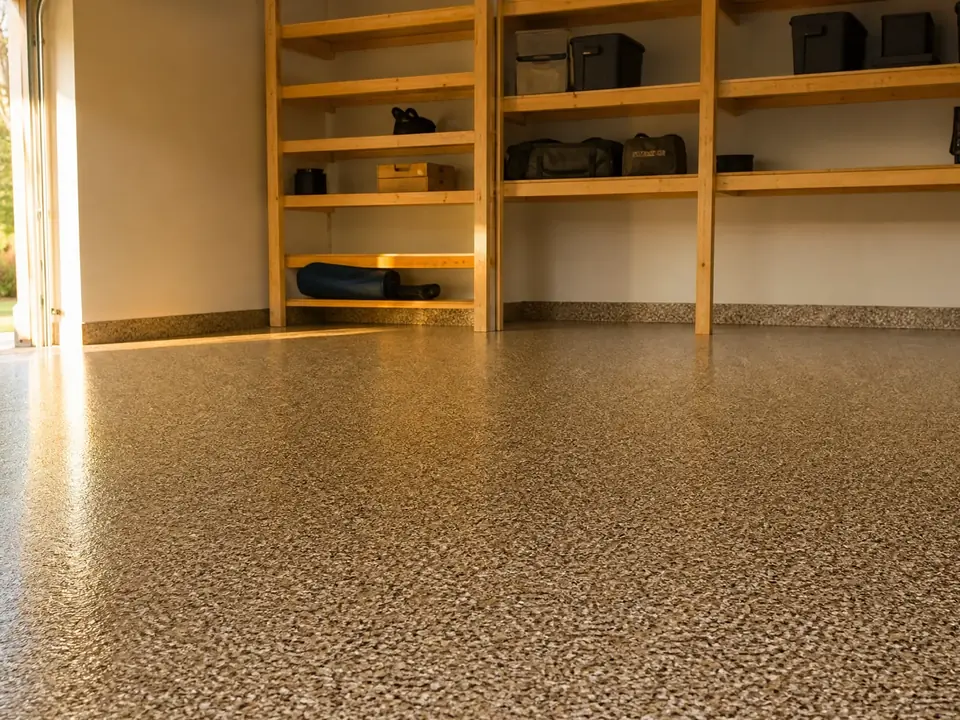
Yes, for most Simi Valley homeowners an epoxy garage floor is worth it when it is built properly: diamond ground, moisture tested and finished with a UV-stable topcoat. It ends concrete dust, resists oil and hot tires, and mops clean. It is not worth it over an unresolved moisture problem or with a thin, cheap coat.
Read the answer →A two-car flake epoxy garage floor in Simi Valley typically costs $2,600 to $4,000 for up to 400 square feet, or $6.50 to $10 per square foot. Our minimum project is $2,600. Solid color starts at $3,800, metallic runs $12.50 to $18.50 per square foot, and larger garages cost more because pricing follows square footage.
Read the answer →Hot tire pickup is when a warm tire lifts, softens or leaves marks in a garage floor coating where it sits. It usually comes from poor concrete prep, an under-cured or thin coating, or the wrong product. Diamond grinding, a well-bonded basecoat, full cure and a polyaspartic topcoat prevent it.
Read the answer →A flake epoxy garage floor costs $6.50 to $10 per square foot, which is $2,600 to $4,000 for a two-car garage up to 400 square feet. Our minimum project is $2,600. Solid color starts at $3,800 and metallic runs $5,000 to $7,400 for typical projects. Slab condition, repairs and size move the final number, so the free estimate gives a fixed written quote.
Neither is better on its own, because they do different jobs. Epoxy makes a strong basecoat and moisture barrier, while polyaspartic makes a clear, UV-stable, hot-tire-resistant topcoat. Our standard garage system uses both. Cost, prep and installer skill matter more than the product name, so ask any contractor exactly what goes in each layer.
A standard two-car garage with a flake system takes one day, from diamond grinding to the final polyaspartic topcoat. Solid color takes about three days, metallic three to four, and quartz or sand finishes two to three. We give you the schedule before work starts so you know when the garage is out of service.
You can usually walk on the floor with care soon after the topcoat sets, and we tell you at the final walkthrough when the car can return. Heavy trucks, loaded tool chests and lifts should wait longer. Timing shifts with temperature and the system installed, so we confirm the exact window for your garage.
Hot tire pickup is when warm tires soften a weak or poorly cured coating and pull it up as the car sits. A well-prepped floor with a polyaspartic topcoat is chosen to resist it, even in a Simi Valley summer. No coating is immune to every condition, which is why prep and curing matter.
Peeling usually comes from poor prep, not from the epoxy itself. Acid etching instead of diamond grinding, moisture rising through the slab, old sealer left in place or rushed curing are the usual causes. Diamond grinding, moisture awareness and a proper basecoat are what reduce that risk, and our limited lifetime adhesion warranty covers the bond.
Yes, after the cracks are repaired. We rout and fill them, then grind the repair flush before coating. Hairline and settled cracks usually disappear under the finish, though an actively moving crack can reopen over time. If a crack looks structural, we tell you during the free estimate and explain the options.
A smooth, glossy coating can be slick when wet, but a flake floor has natural texture from the chips. For extra grip, such as near a wet entry or sloped approach, we can add a fine slip-resistant additive to the topcoat or choose a quartz or sand finish. Tell us how you use the garage and we will match the traction.
A floor coating is a surface finish, and we have found no rule stating a permit is required, but rules vary. Check your HOA covenants for any color or finish limits, and call the Simi Valley Building and Safety Division if you are unsure, especially if the garage is being converted. We are happy to provide product details for approval requests.
Full-rejection flake over a moisture-barrier epoxy basecoat, sealed with a UV-stable polyaspartic topcoat. Installed in one day.
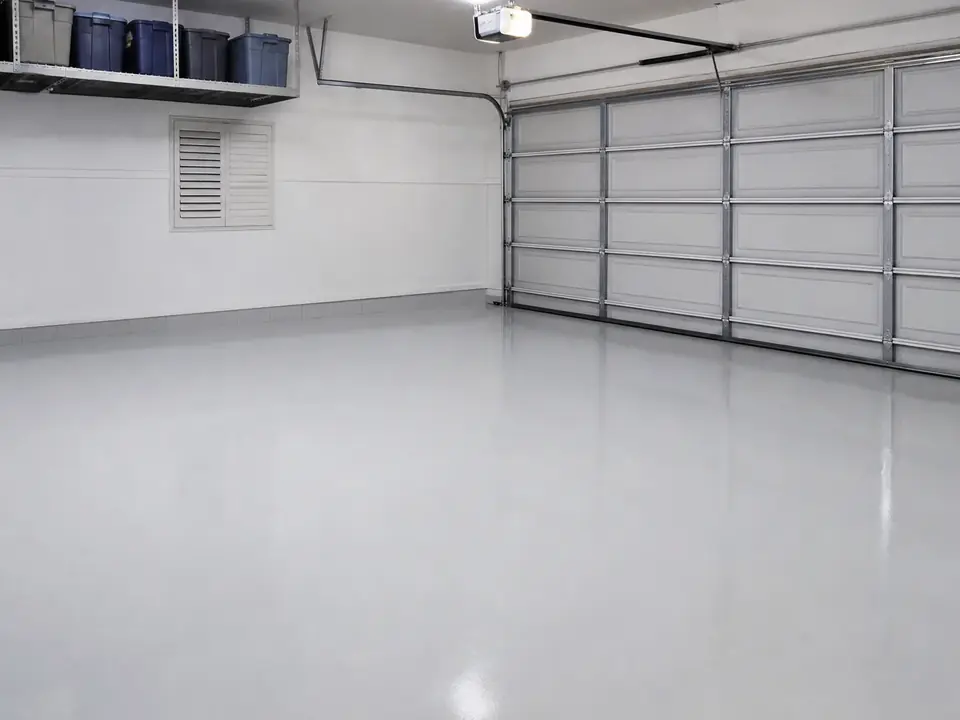
Learn more →A clean, seamless pigmented floor in gloss, satin or matte for garages, workshops, interiors and commercial spaces.
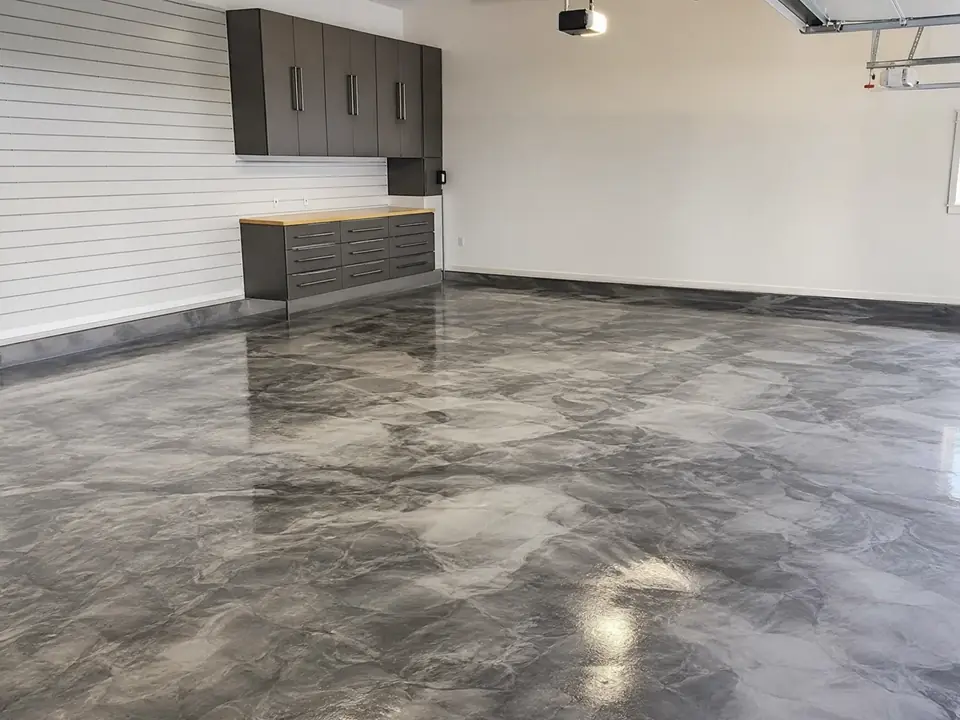
Learn more →Hand-guided metallic pigments create marble and lava effects, so no two floors look alike. A statement floor for homes and showrooms.
Learn more →Call (805) 697-5483 or send the form at the top of the page. We reply the same day with a time to measure.