
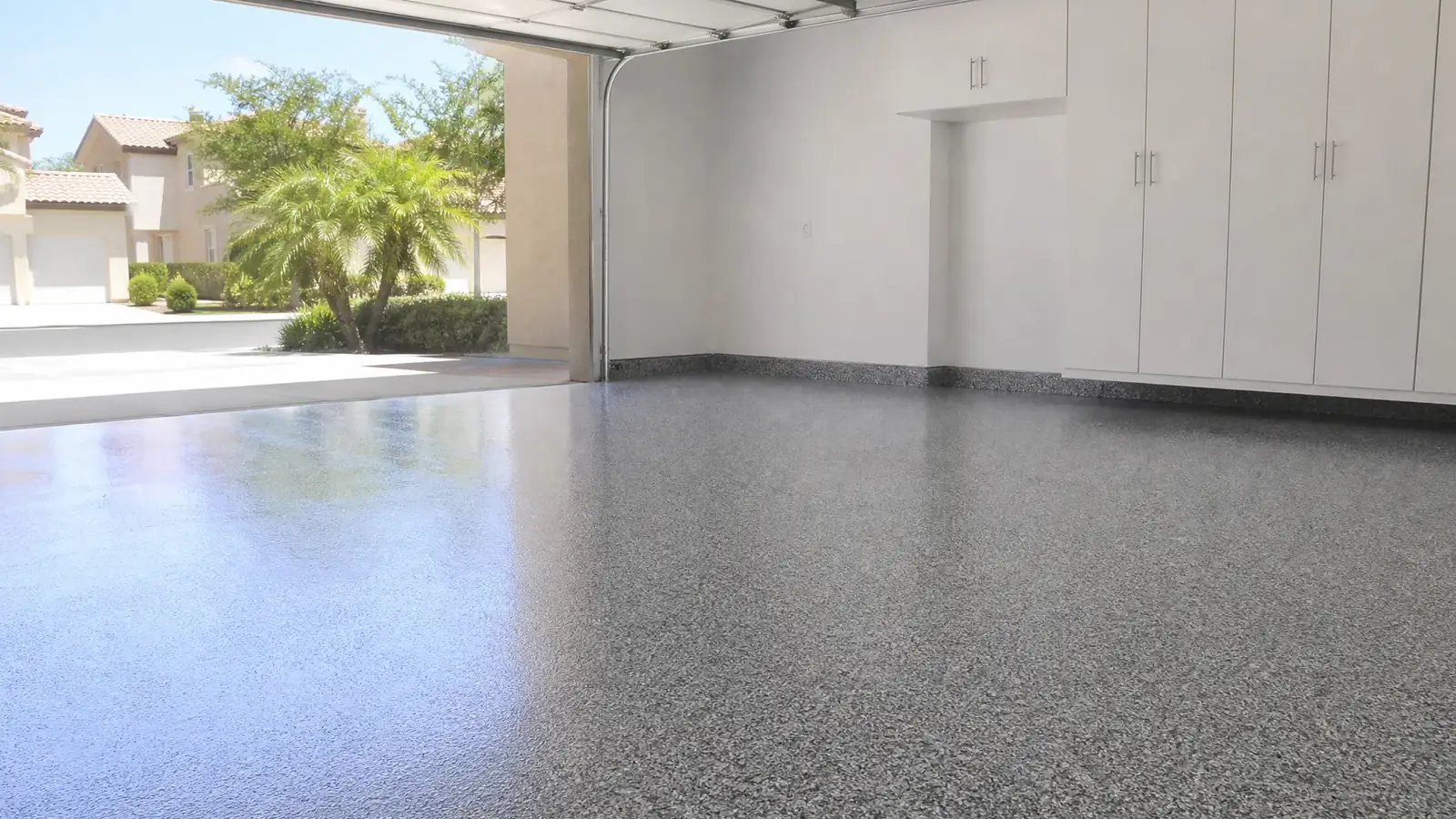
Yes, for most Simi Valley homeowners an epoxy garage floor is worth it when it is built properly: diamond ground, moisture tested and finished with a UV-stable topcoat. It ends concrete dust, resists oil and hot tires, and mops clean. It is not worth it over an unresolved moisture problem or with a thin, cheap coat.
Yes, for most Simi Valley homeowners an epoxy garage floor is worth it when it is built properly: diamond ground, moisture tested and finished with a UV-stable topcoat. It ends concrete dust, resists oil and hot tires, and mops clean. It is not worth it over an unresolved moisture problem or with a thin, cheap coat.
Plenty of garages in Simi Valley have the same bare gray slab the builder poured, stained by oil, dusty in every season and hard to keep clean. Coating it costs real money, so the fair question is whether you get that money back in daily use, not in vague promises. This post gives a straight answer. It covers what an epoxy floor does well, what Simi Valley conditions make it more useful, the situations where we would tell you to skip it, and how to judge a quote so you spend on the parts that matter.
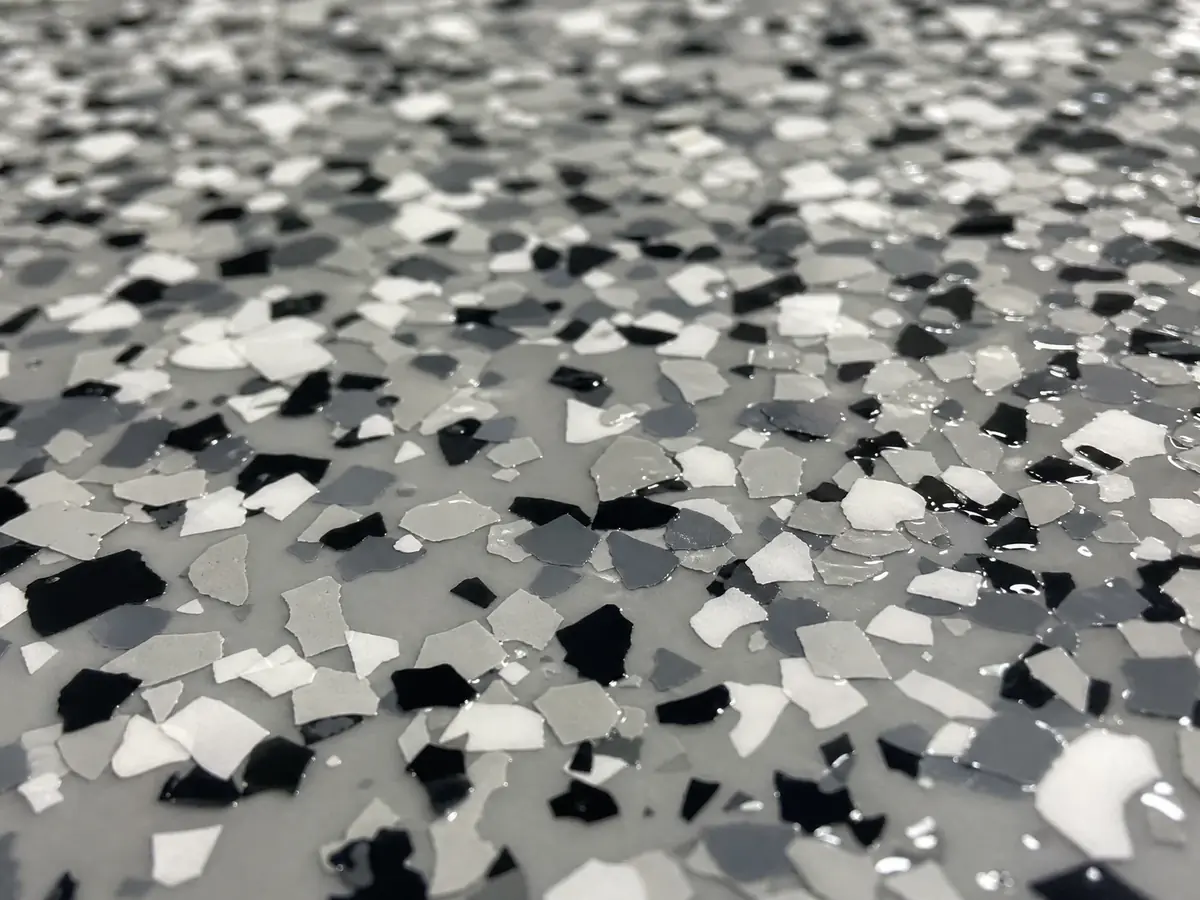
Bare concrete is porous. It soaks up oil, leaves a fine powder on everything you store, and shows every drip as a permanent stain. A coating system fixes those three problems at once. The slab is diamond ground to open the pores and create a bonding profile, cracks and joints are repaired, a moisture-barrier epoxy basecoat goes down, and a UV-stable polyaspartic topcoat seals the surface. The result is a seamless floor with no pores for oil to enter, no dust to track into the house, and a surface you can clean with a mop or a push broom. A flake epoxy floor also hides small slab flaws, because the color and texture pull your eye away from patches and hairline marks. The finish makes the garage brighter, since a light floor reflects the overhead light. Residential floors carry a limited lifetime adhesion warranty, which covers the bond between the coating and your slab. That is the part of the system that matters most, and it is only possible to warrant because the prep is done properly. Put simply, you are paying once to turn a porous, dusty slab into a surface that behaves like part of the house.
This is a dry, sunny, dusty part of Southern California. Garage doors get opened and closed all day, and when the Santa Ana winds blow, fine dust finds its way in. On bare concrete that dust mixes with the powder the slab already sheds. On a sealed floor it sits on the surface and sweeps up. Summers are hot, and a car that has just come in from a drive puts hot tires on the floor. A coating that is built for that heat, with a properly cured basecoat and topcoat, resists hot-tire pickup, which is the lifting that cheap or rushed coatings suffer from. Many Simi Valley homes are tract homes with a slab-on-grade garage that gets used as a workshop, gym, storage room or second living space, so the floor takes more than parking. If your garage is open to afternoon sun, ask for a UV-stable polyaspartic topcoat, because an epoxy-only top layer can yellow in direct sun. None of this is unique magic. It simply means the floor is working against the conditions you actually live with. The difference shows up the first time a windy day passes and you reach for a broom instead of a hose.
We would rather lose a job than sell a floor that fails. Here are the cases where we would pause or say no. First, a slab with an active moisture problem. If water vapor is pushing up through the concrete and nobody tests for it, any coating can blister or peel. A moisture test and a moisture-barrier basecoat are the answer, and if the readings are too high, the honest advice may be to fix the moisture source first. Second, a slab with serious structural movement. A coating will not hold a moving crack closed. Third, a home you will leave within a few months where the garage is not part of the sale. Fourth, a quote that skips grinding. Acid etching and rolling a thin coat is the cheapest way to get a floor that peels, and that is where most horror stories come from. If you are in a community with an association, check your HOA rules before you commit, and if you are unsure whether anything needs sign-off, call the City Building and Safety office. Honest advice up front sometimes costs us a job, but it costs you far less than a failed floor.
Garage floor paint is cheap, but it is a thin film that wears through in tire paths and lifts under hot tires. Interlocking tiles go down fast and can be lifted, but they leave seams where liquids and dirt collect and they can shift under heavy loads. A clear sealer on bare concrete keeps the cost low, but it protects less and wears sooner. If you want a simple sealed-concrete look, a grind and seal is a real option at a lower price than a color system. If you want a durable color floor with texture, a flake system is the usual choice. If you want a showpiece, a metallic epoxy floor gives a swirled, one-of-a-kind look. The best option depends on how you use the garage. A parking-only garage and a car-hobby garage want different things, and a good estimator will ask before recommending anything. Polished concrete is another route, but it needs a sound, level slab and does not offer the color and texture choices a coating does. DIY kits from a hardware store also exist, and they work best on small, clean, dry slabs where the person doing the work has a floor grinder and the patience to prep properly.
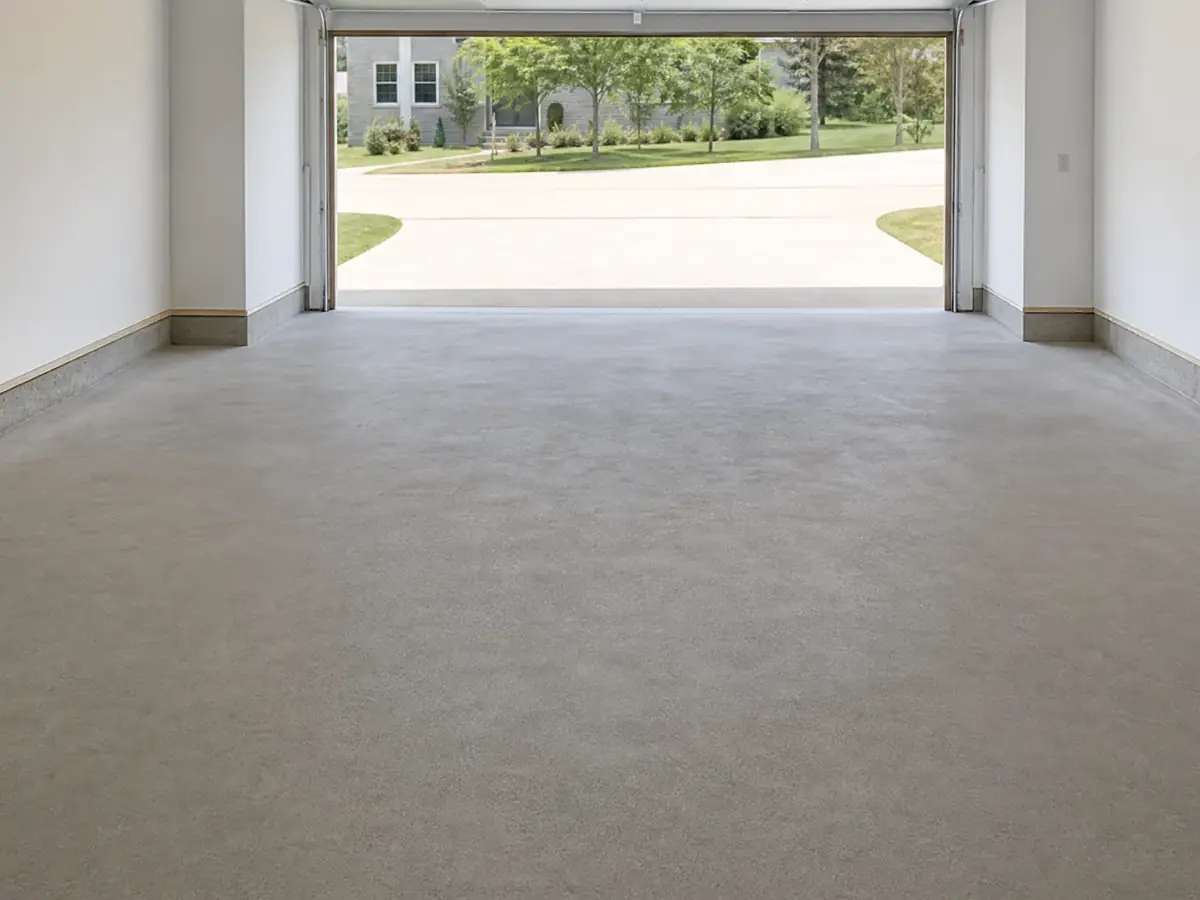
Our minimum project is $2,600. A flake system runs $6.50 to $10 per square foot, which is $2,600 to $4,000 for a two-car garage up to 400 square feet. Solid color projects start at $3,800, metallic runs $12.50 to $18.50 per square foot, and quartz and sand finishes run $9 to $16.50. A grind and seal is $6.50 to $9 per square foot. The simplest way to judge value is to ask what you are paying for. Most of the cost is labor and prep, not the liquid in the bucket. A quote that is far below these numbers usually means grinding was skipped or the coating is too thin. A flake floor is also installed in one day, so the garage is back in service quickly. For the full breakdown, read how much does epoxy cost in Simi Valley. You can also request a free estimate, and you will get a fixed written quote after we measure and inspect the slab. A fair way to compare is cost against the time you will use the space. A floor you enjoy for years, and wash instead of scrub, spreads that price thin.
An epoxy garage floor is worth it when the prep is done right and the system fits how you use the space. If a quote skips grinding or a moisture test, walk away. Ask for a free estimate and we will tell you honestly whether your slab is a good candidate. Call (805) 697-5483 for a free estimate.
Yes, in most cases, when the slab is properly ground and sealed with a quality system. You get a floor that resists oil and hot tires, stops concrete dust and cleans easily. It is not worth it if the prep is skipped or a moisture problem is ignored, because the coating will fail early.
Yes, because the climate suits a cured coating. Dry weather helps curing, and a UV-stable polyaspartic topcoat holds up to sun. The main risks are hot summer garages and moisture in the slab, and both are handled by correct product choice and a moisture test before coating.
It can make the home more appealing, but we cannot promise a specific resale gain. Buyers tend to notice a clean, bright garage over a stained slab. Treat it as a real improvement in daily use first, and any effect on sale price as a possible bonus.
A well-prepped floor can last many years, and how long depends on prep, traffic and sun exposure. We do not quote a single number because it would be a guess. Residential floors carry a limited lifetime adhesion warranty, and our post on how epoxy looks after five years covers real wear.
The main downsides are a day or more without the garage, possible scratches from dragged metal, and a slippery surface when wet unless texture is added. Failures from moisture or thin prep are avoidable. Our downsides of epoxy post covers each one and how to prevent it.
Check your HOA rules before you start, because we cannot state what your association requires. A floor coating is a surface finish inside the garage, but community documents vary. If you are unsure whether anything else applies, contact the City Building and Safety office.
Durable, easy-to-clean garage floors that resist hot-tire pickup, oil and salt. Most two-car garages are done in one day.
Learn more →Full-rejection flake over a moisture-barrier epoxy basecoat, sealed with a UV-stable polyaspartic topcoat. Installed in one day.
Learn more →Diamond-ground concrete finished with a clear sealer for a natural, low-maintenance floor at the lowest installed price.
Learn more →Epoxy garage floors fail mainly from peeling, hot-tire pickup, yellowing, bubbling and slipperiness. Nearly all trace back to skipped prep, moisture in the slab or the wrong topcoat. Diamond grinding, a moisture test, a moisture-barrier basecoat and a UV-stable polyaspartic topcoat prevent most of them before the first coat goes on.
Read the answer →A well-installed epoxy floor in Simi Valley should still look clean and intact after five years, with some gloss dulling in tire paths, light surface scratches and little color change under a UV-stable topcoat. Peeling, bubbling or lifting at five years points to a prep or moisture problem, not normal wear.
Read the answer →Choose flake for the best mix of value, grip and hiding power, solid color for a clean uniform look, and metallic for a one-of-a-kind showpiece. Flake takes one day at $6.50 to $10 per square foot, solid color takes three days at $9.50 to $11.50, and metallic takes three to four days at $12.50 to $18.50.
Read the answer →Call (805) 697-5483 or send the form at the top of the page. We reply the same day.