
Choose flake for the best mix of value, grip and hiding power, solid color for a clean uniform look, and metallic for a one-of-a-kind showpiece. Flake takes one day at $6.50 to $10 per square foot, solid color takes three days at $9.50 to $11.50, and metallic takes three to four days at $12.50 to $18.50.
Choose flake for the best mix of value, grip and hiding power, solid color for a clean uniform look, and metallic for a one-of-a-kind showpiece. Flake takes one day at $6.50 to $10 per square foot, solid color takes three days at $9.50 to $11.50, and metallic takes three to four days at $12.50 to $18.50.
Once you decide to coat your floor, the next question is what it should look like. Flake, solid color and metallic are the three finishes people ask about most, and they differ in more than appearance. They install on different timelines, hide different problems, clean up differently and sit at different price points. The right pick depends on how you use the space, how much you want to spend and how much you care about the look. This guide compares them plainly, with our install times and approved price ranges, so you can narrow the choice before a free estimate. Where the answer depends on your garage, we say so.
Here is the quick version before the details. A flake epoxy floor is a base color covered with colored vinyl flakes and sealed with a clear topcoat. It installs in one day, runs $6.50 to $10 per square foot, and costs $2,600 to $4,000 for a two-car garage up to 400 square feet. A solid color epoxy floor is a smooth, uniform color with a clean, modern look. It takes three days, runs $9.50 to $11.50 per square foot, and solid color projects start at $3,800, with typical projects landing between $3,800 and $4,600. A metallic epoxy floor is a marbleized, swirling finish created with metallic pigments. It takes three to four days, runs $12.50 to $18.50 per square foot, and typically costs $5,000 to $7,400. Our minimum project is $2,600. All three get the same foundation: diamond grinding, crack and joint repair, and a moisture-barrier epoxy basecoat. Prices depend on square footage, slab condition and options, and the quote you receive after a free estimate is a fixed written quote. The sections below cover each finish in detail, including where it falls short, so you know exactly what you are buying and can ask better questions at your estimate.
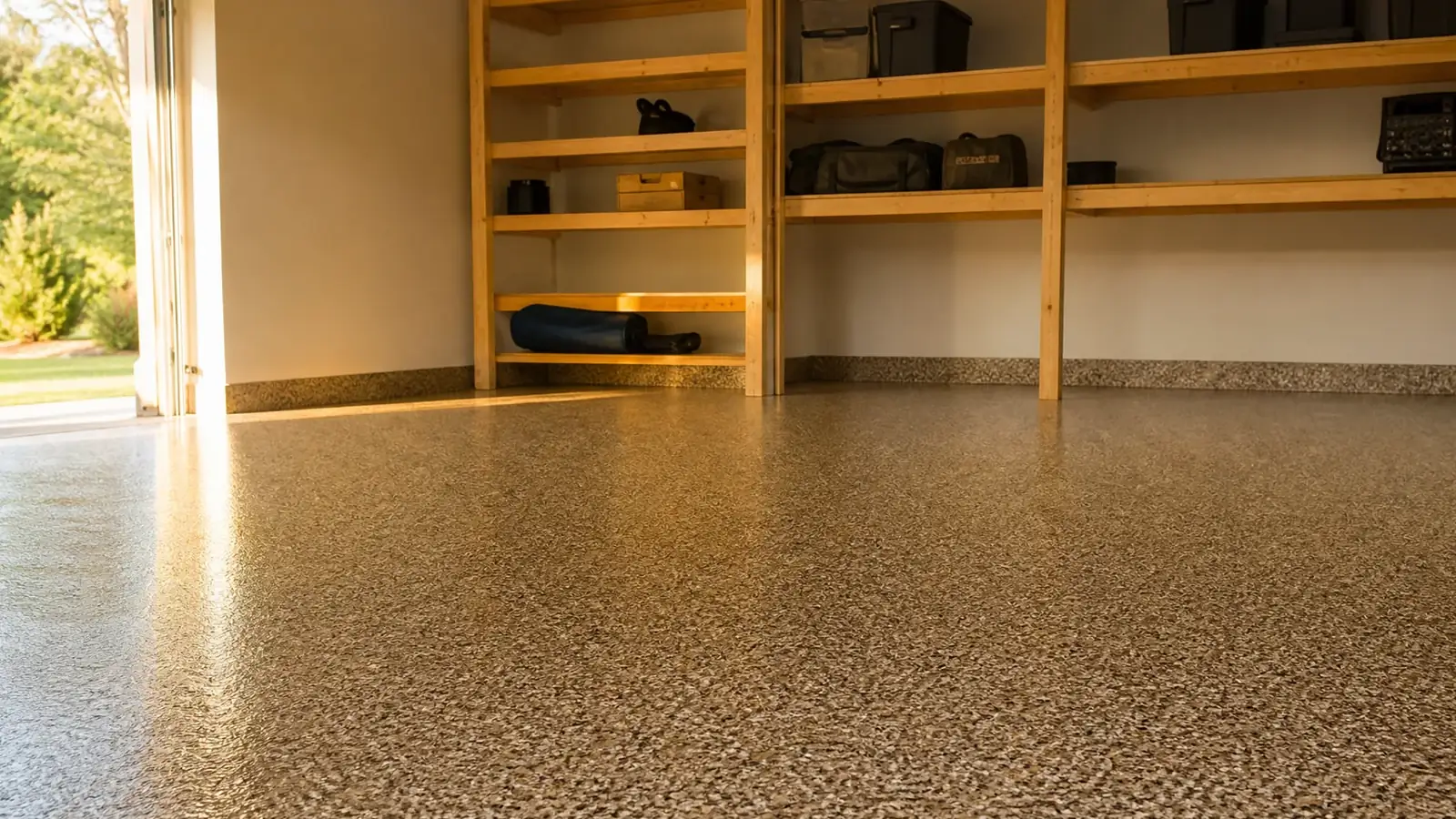
Flake is the most popular garage finish for good reasons. Colored flakes are broadcast into the wet basecoat until the surface is fully covered, which we call full-rejection broadcast. The mix of colors breaks up the light, so small stains, dust, tire marks and minor slab imperfections are far less noticeable than on a plain smooth floor. The texture of the flakes also gives the surface some natural grip, which helps when shoes or tires are wet. Because the system goes in quickly, your garage is usually back in use sooner than with the other options, and a standard two-car garage is a one-day install. Flake also offers the widest range of looks, from quiet grays and tans to bold blends, and our color chart shows the options. The tradeoff is that the surface is slightly textured, so it cleans with a little more effort than a perfectly smooth finish, and the look is a speckled pattern rather than a single color. If you want a durable, forgiving floor that suits a working garage and keeps a budget reasonable, flake is where most people end up.
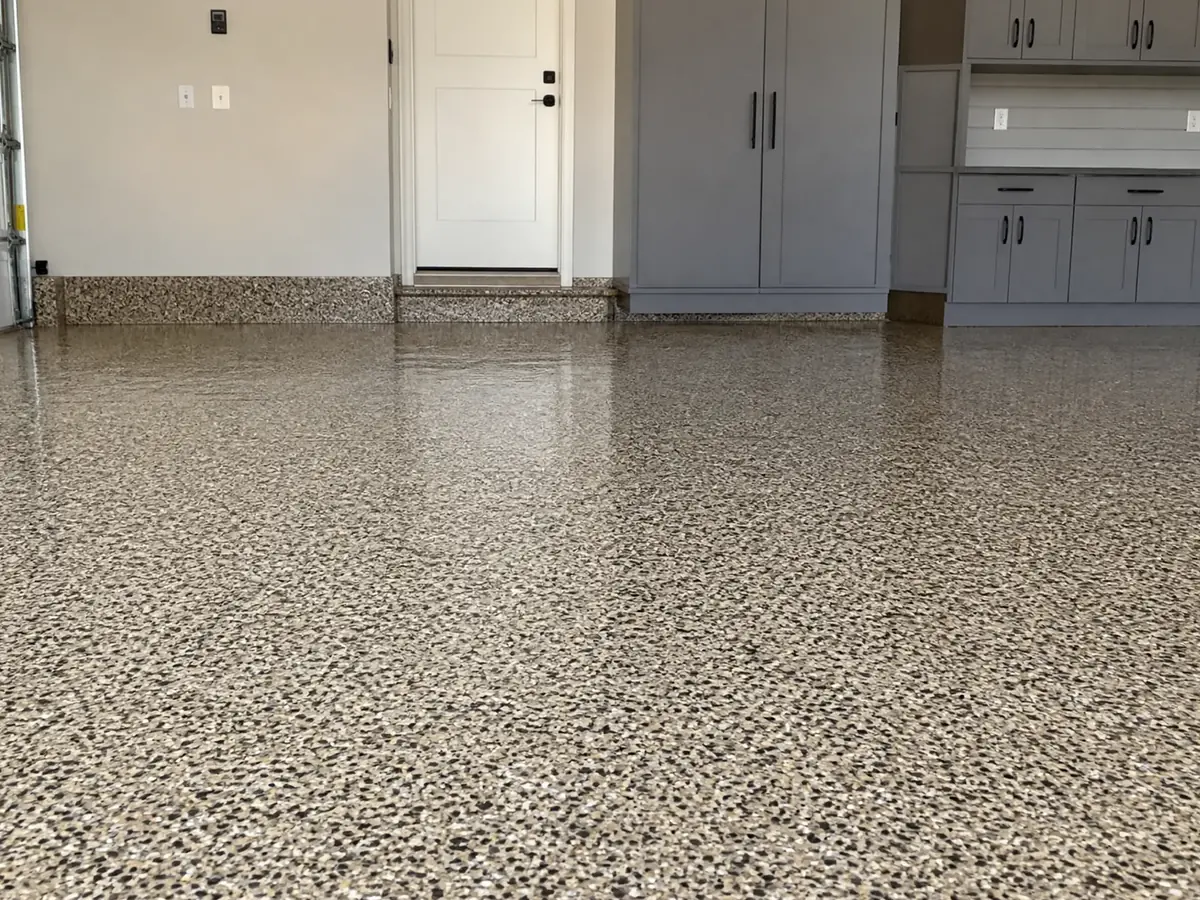
A solid color epoxy floor is a smooth, even field of one color, topped with a clear protective layer. It makes a garage look finished and modern, and light colors reflect light, so the space feels brighter. It is also the easiest finish to wipe clean, since there is no texture to hold dirt. The honest tradeoffs matter. A smooth glossy floor shows what is under it, so the slab needs more careful preparation and repair, which is part of why the install takes three days and why solid color costs more per square foot than flake. Dust, footprints and tire marks stand out more on a plain surface, especially on very dark or very light colors, and a glossy finish can be slippery when wet unless texture is added. Solid color suits people who want a showroom look, a workshop that reads as clean, or a simple backdrop for a car collection. If that sounds like you and you can accept more visible upkeep, it is a strong choice. If you want a floor that hides daily wear, flake is usually better.
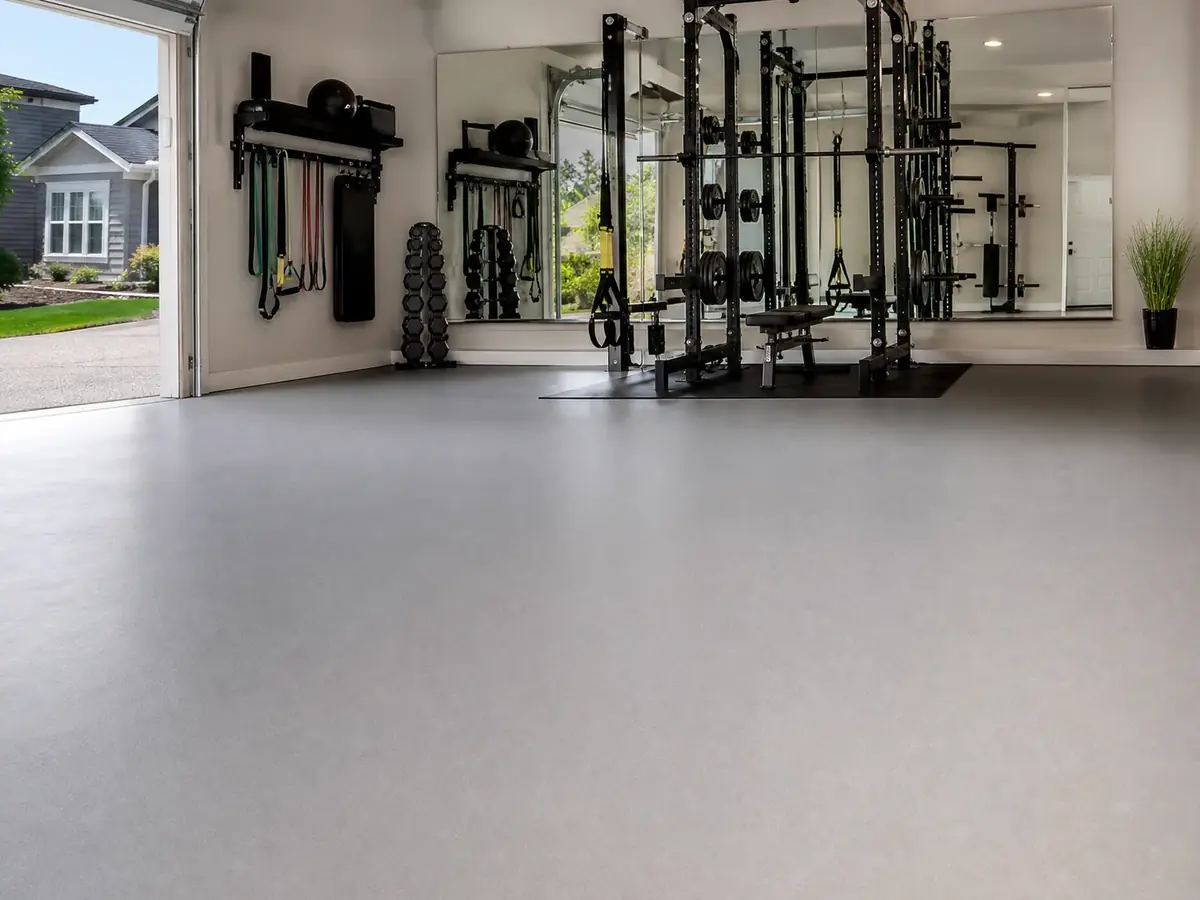
Metallic epoxy is made with pigments that shimmer and swirl as the material is worked, producing depth that looks like marble, lava or flowing water. No two floors are identical, because the pattern is created by hand in the moment. It is the right choice when the floor is meant to be seen: a man cave, a showroom garage, a home gym or a finished basement. It does take longer, three to four days, and costs the most of the three at $12.50 to $18.50 per square foot, because it needs a flawless base and skilled application. A few honest cautions. The finish is glossy, so imperfections in the slab can show, and you cannot specify an exact pattern in advance, only colors and a general direction. Ask how the floor will be protected where it sees sun and how much traction the topcoat has. Metallic is also less forgiving of dirt and tire marks than flake, though it cleans easily. For anyone who wants a floor that people stop to look at, it is worth the extra time and money. For a working garage, it may be more floor than you need.
Start with how you use the space. If it is a daily-driver garage with tools, bikes and things dragged across it, flake is the safest pick because texture and color variation hide wear. If you want a bright, clean look and do not mind wiping the floor, solid color fits. If the floor is part of a showpiece, metallic earns its price. Consider the sun as well. Garages with doors that face afternoon light, or that stay open, benefit from a UV-stable topcoat on any finish, which our standard system includes. Think about traction, too. Flake gives some grip, and we can add texture to solid or metallic floors if you want it. Think about downtime. If you cannot be without your garage for long, flake's one-day install is a real advantage. A quartz finish is also worth knowing about, since it is a textured, decorative option with a two to three day install at $9 to $16.50 per square foot. If you live in an HOA community, check the rules about garage appearance before you commit to a color or a dramatic finish.
The ranges above are real, but your project falls somewhere inside them for specific reasons. Square footage is the biggest one. Slab condition comes next: heavy cracking, old paint or sealer, patched areas and uneven spots all add prep. Options such as added texture, cove base or a special color can move the number too. That is why we price in person. A free estimate includes a look at your slab, a conversation about how you use the garage, and a fixed written quote, with a same-day reply. Before the visit, browse the color chart and note two or three favorites, because colors look different on a screen than in your own garage light. Ask for a sample if you can. Also think about whether you want the garage to match your house or stand apart. If you are comparing us with other contractors, ask each one the same questions: how the slab is prepared, what the basecoat and topcoat are, how long the job takes, and what the warranty says. We offer a limited lifetime adhesion warranty on residential installs, and you should read the terms of any warranty you are given.
Flake suits most garages, solid color gives a clean uniform look, and metallic is for floors meant to be admired. Match the finish to how you live in the space and what you want to spend. For a fixed written quote, call SV Epoxy Flooring at (805) 697-5483 and book a free estimate. Call (805) 697-5483 for a free estimate.
Flake is better for most working garages because it hides wear, adds grip, installs in one day and costs less. Metallic is better when the floor is meant to be a showpiece. It takes three to four days and costs more, so it suits spaces where looks matter most.
Flake takes one day, solid color takes three days, and metallic takes three to four days. A quartz finish takes two to three. Your estimate confirms the timeline for your garage, and the floor needs return-to-service time before you drive on it.
Flake runs $6.50 to $10 per square foot, solid color runs $9.50 to $11.50, and metallic runs $12.50 to $18.50. For a two-car garage up to 400 square feet, that is $2,600 to $4,000 for flake, $3,800 to $4,600 for solid, and $5,000 to $7,400 for metallic.
Yes, more than flake does. A smooth single color shows dust, footprints and tire marks, especially very dark or very light shades. It wipes clean easily, so the trade is more visible upkeep for a clean modern look. Flake hides everyday marks far better.
Yes, when it is built on a properly ground slab with a protective topcoat. Metallic uses the same foundation as other systems. It is glossy and shows slab flaws and some marks more than flake, so it suits owners who value the look and will care for it.
Flake has natural texture that adds grip, while smooth metallic and solid finishes can be slick when wet. We can add an anti-slip additive to the topcoat on any system. Tell us how you use the space and whether anyone has balance concerns so the right texture is chosen.
Full-rejection flake over a moisture-barrier epoxy basecoat, sealed with a UV-stable polyaspartic topcoat. Installed in one day.
Learn more →A clean, seamless pigmented floor in gloss, satin or matte for garages, workshops, interiors and commercial spaces.
Learn more →Hand-guided metallic pigments create marble and lava effects, so no two floors look alike. A statement floor for homes and showrooms.
Learn more →Neither wins alone. Epoxy bonds deeply to concrete and builds body, while polyaspartic resists sun, scuffs and hot tires as a topcoat. The longest-lasting garage floors usually use both: a moisture-barrier epoxy basecoat for adhesion, then a UV-stable polyaspartic topcoat. Surface preparation matters more than either product.
Read the answer →Hot tire pickup is when a warm tire lifts, softens or leaves marks in a garage floor coating where it sits. It usually comes from poor concrete prep, an under-cured or thin coating, or the wrong product. Diamond grinding, a well-bonded basecoat, full cure and a polyaspartic topcoat prevent it.
Read the answer →Epoxy floors peel when the coating loses its bond to the concrete. The usual causes are moisture rising through the slab, poor surface prep such as acid etching instead of diamond grinding, a thin or unsuitable topcoat, and cheap kits. Proper grinding, moisture testing and a barrier basecoat prevent most peeling.
Read the answer →Call (805) 697-5483 or send the form at the top of the page. We reply the same day.