
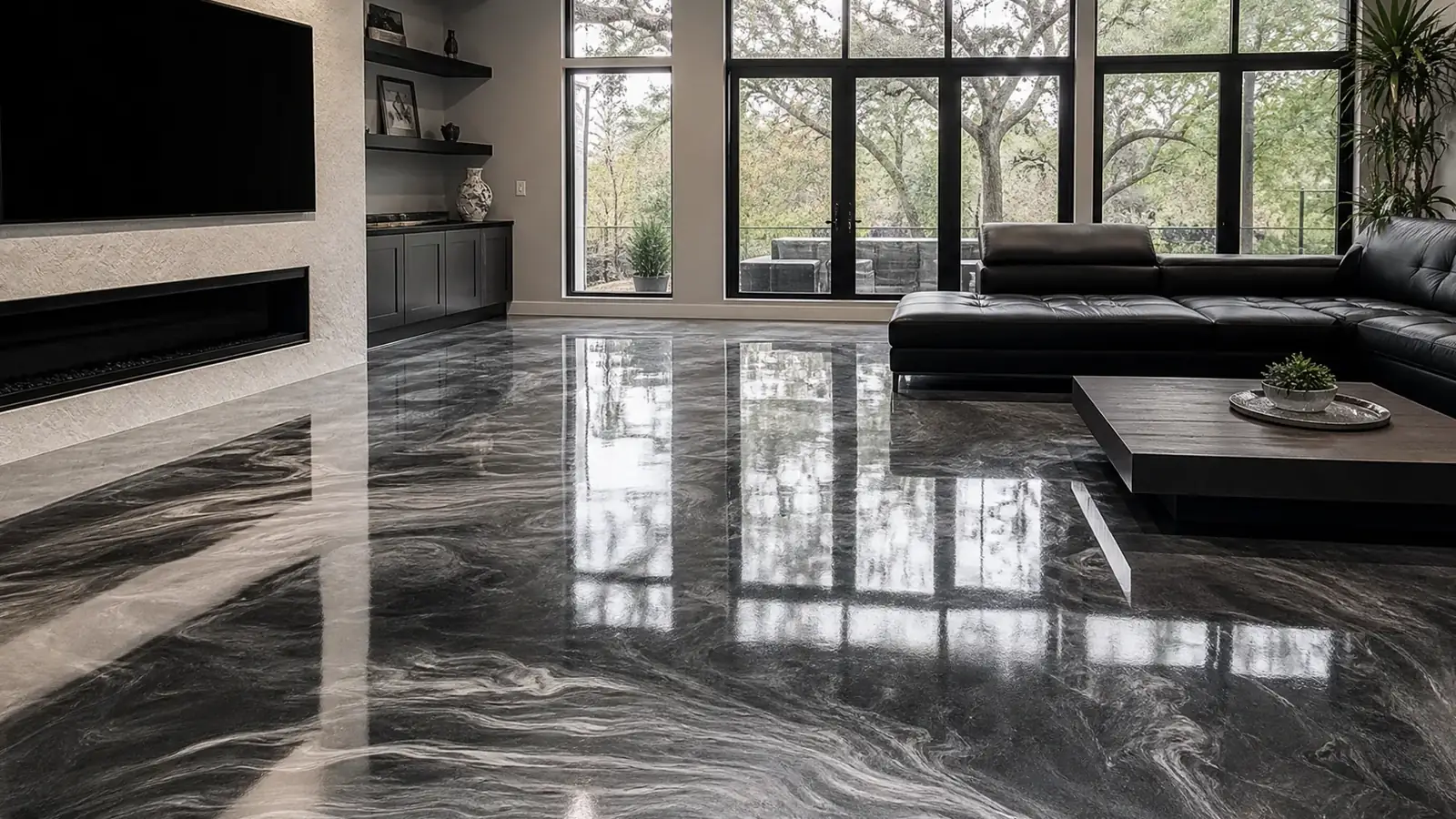
Pearlescent pigments worked by hand through clear epoxy over a colored base create deep, flowing patterns that no two floors share, then a UV-stable topcoat protects them.
A metallic epoxy floor mixes pearlescent pigments into clear epoxy and moves them by hand to create marbled, three-dimensional swirls over a colored base. In Simi Valley it costs $12.50 to $18.50 per square foot, or $5,000 to $7,400 for typical projects, and it takes three to four days to install.
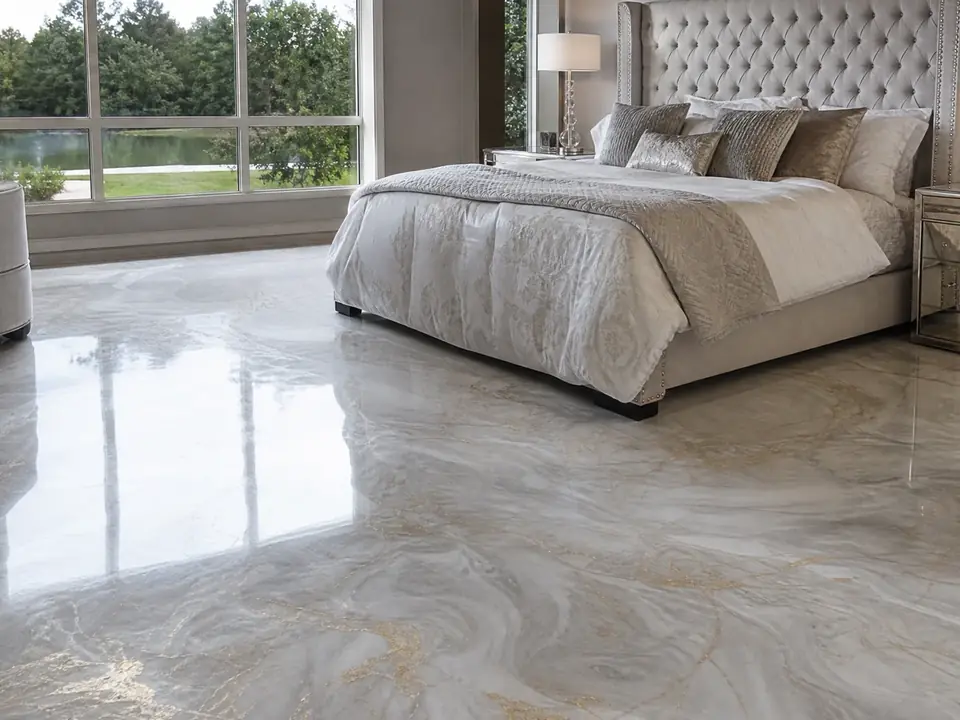
A metallic epoxy floor looks like nothing else in a garage or a home. Instead of chips or a flat color, the surface carries flowing ribbons, veins and pools of shimmering pigment that catch the light and seem to shift as you walk past. Some people see molten metal, others see marble, water or smoke. The effect comes from a colored base coat, a layer of clear epoxy tinted with metallic pearl pigments, and a skilled installer who moves the material by hand with rollers, brushes and sometimes a torch or a mist of solvent to open up cells and lacing.
That artistry is also why metallic costs more and takes longer than flake or solid color. It is the most hands-on system we install, it takes three to four days and it is far less forgiving of rushed prep. Because the finish is glossy and reflective, every ridge, patch edge and pit in the slab shows up, so grinding and repair work has to be especially careful. Pattern is guided, not dictated. We choose colors and direction with you, but the exact swirls are shaped on the floor, which means every installation is truly its own. Anyone promising a pattern that matches a photograph exactly is promising more than the material allows.
SV Epoxy Flooring installs metallic floors in Simi Valley garages and homes and across the rest of Ventura County. We diamond grind the slab, apply a moisture-barrier epoxy basecoat where needed, build the pigmented color layers and finish with a UV-stable polyaspartic topcoat. Pricing runs $12.50 to $18.50 per square foot. The sections below cover the install, what you can and cannot control about the pattern, where metallic shines in Simi Valley and how to care for it.
A metallic floor takes 3 to 4 days from the first grind to the final topcoat, because the base color, metallic coat and sealer layers each need time to firm. By comparison, flake takes 1 day, solid color about 3 days and quartz or sand finishes 2 to 3 days. You can usually walk carefully on the floor once the topcoat sets, and we tell you at the final walkthrough when the car or furniture can return. Heavy items, wheeled loads and lifts should wait longer while the coating hardens. Temperature and humidity affect how metallics flow and set, so your crew confirms the timing for your space.
Choose metallic when the floor is meant to be admired and the budget allows $12.50 to $18.50 per square foot, or about $5,000 to $7,400 for a typical project. Choose flake if you want to hide dirt, add texture and keep the price lower, and it finishes in one day. Choose solid color if you prefer a calm, uniform surface that is easier to predict. Choose a quartz or sand finish for the most traction. Grind and seal is the plain, protective option for bare concrete. If you are torn between metallic and flake, think about how the space is used: showroom and living areas suit metallic, working garages often suit flake.
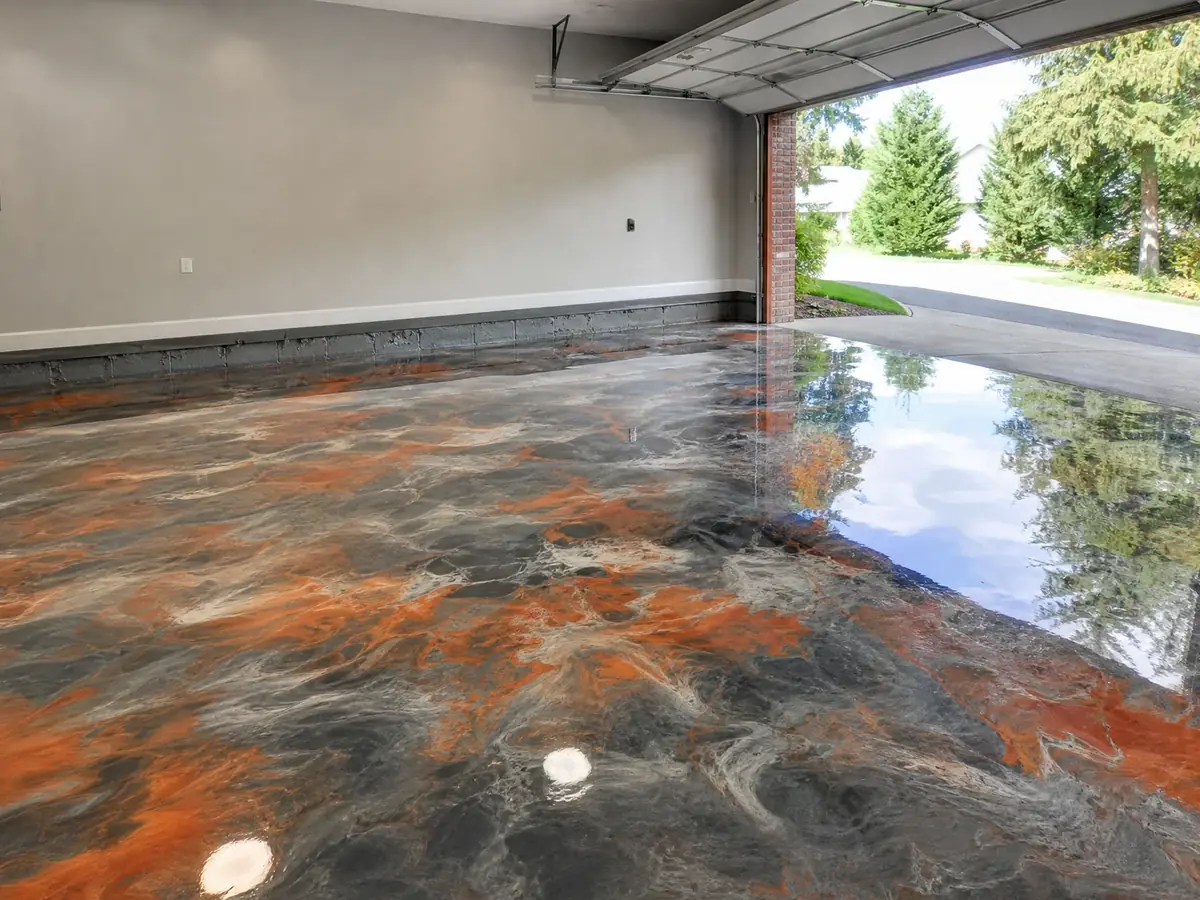
A metallic floor starts the way every good system does, with diamond grinding to remove coatings and contamination and to cut a bonding profile. Cracks are routed and filled, pits and divots are patched, and the slab is ground flat, because the glossy finish exaggerates every flaw. A moisture-barrier epoxy basecoat goes down where the concrete needs it. The colored base coat is then rolled out and left to firm, since its tone shows through the translucent layers above and sets the mood of the whole floor. Next comes the metallic coat, where pearlescent pigments are mixed into clear epoxy and poured across the floor in ribbons. The installer then moves the material by hand with rollers, brushes and tools, working quickly before it sets, to create the flowing, three-dimensional pattern. On some floors a second metallic pass adds depth. When the pattern has firmed, a UV-stable polyaspartic topcoat is applied for scratch, chemical and sun resistance, with extra clear coats where a thicker, glassier look is wanted. The whole process takes three to four days, and the crew walks you around the finished floor at the end. Because the pattern is shaped while the material is wet, the same experienced hands stay on the floor from the first pour to the last pass.
Metallic floors reward a clear conversation about expectations. You choose the color story: a dark base with silver or copper pigments reads as steel or storm clouds, a pale base with pearl and champagne reads as marble, and deep blues and greens suggest water. You also choose the level of drama, from soft, restrained veining to bold, high-contrast swirls. What nobody can control is the exact pattern, because the pigments flow, pool and settle in ways that change with temperature, slab porosity and the hand of the installer. That is also what makes each floor unique. Photos on this site and in the color chart are examples of what is possible, not a blueprint. Dramatic effects such as lacing and cells depend on timing and conditions. If you need an exact reproduction of a design, a solid color with a hand-applied border is a more predictable alternative. We suggest looking at several finished floors, bringing a swatch of your preferred tones and keeping lighting in mind. Metallic pigments react to light, so a floor can look quite different under garage lights, daylight and warm interior bulbs. Viewing a sample or finished floor in the same kind of lighting is the best way to avoid surprises.
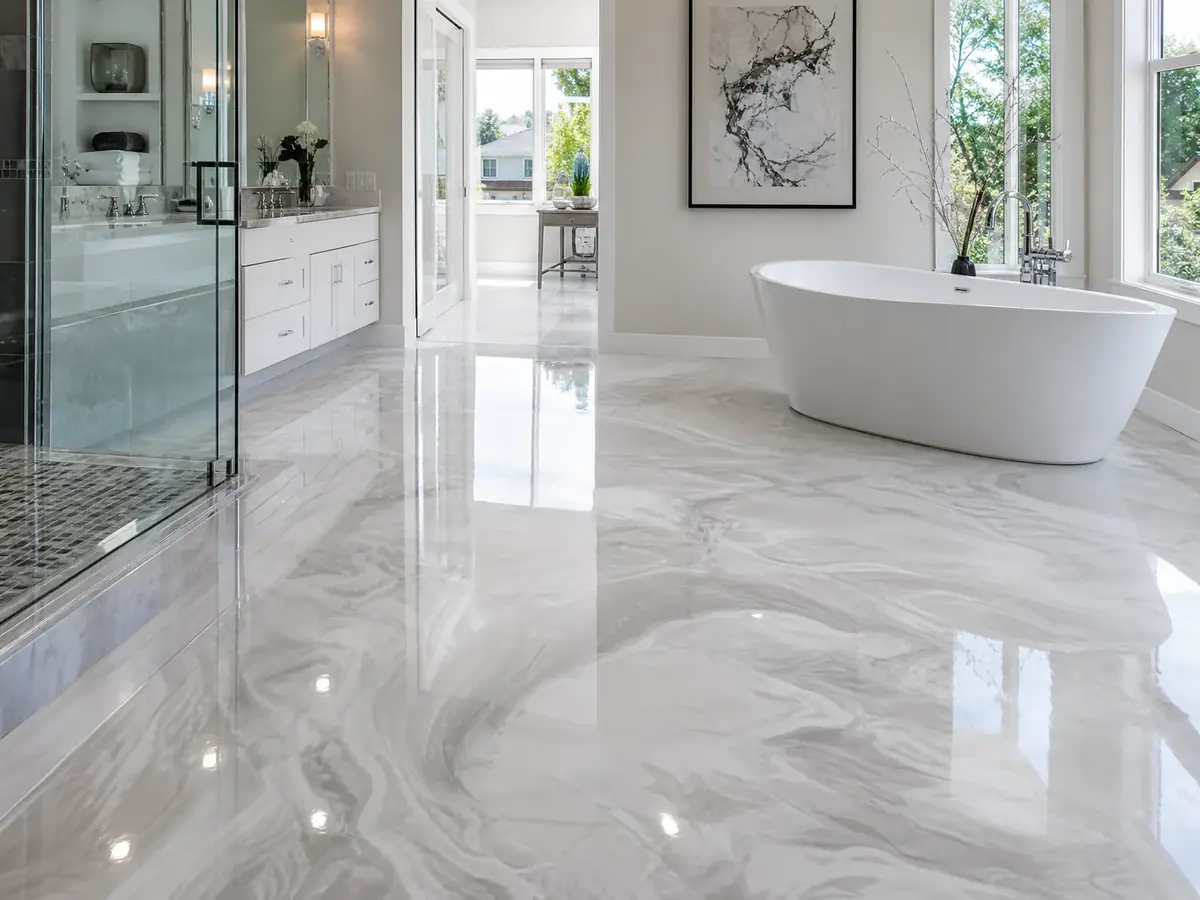
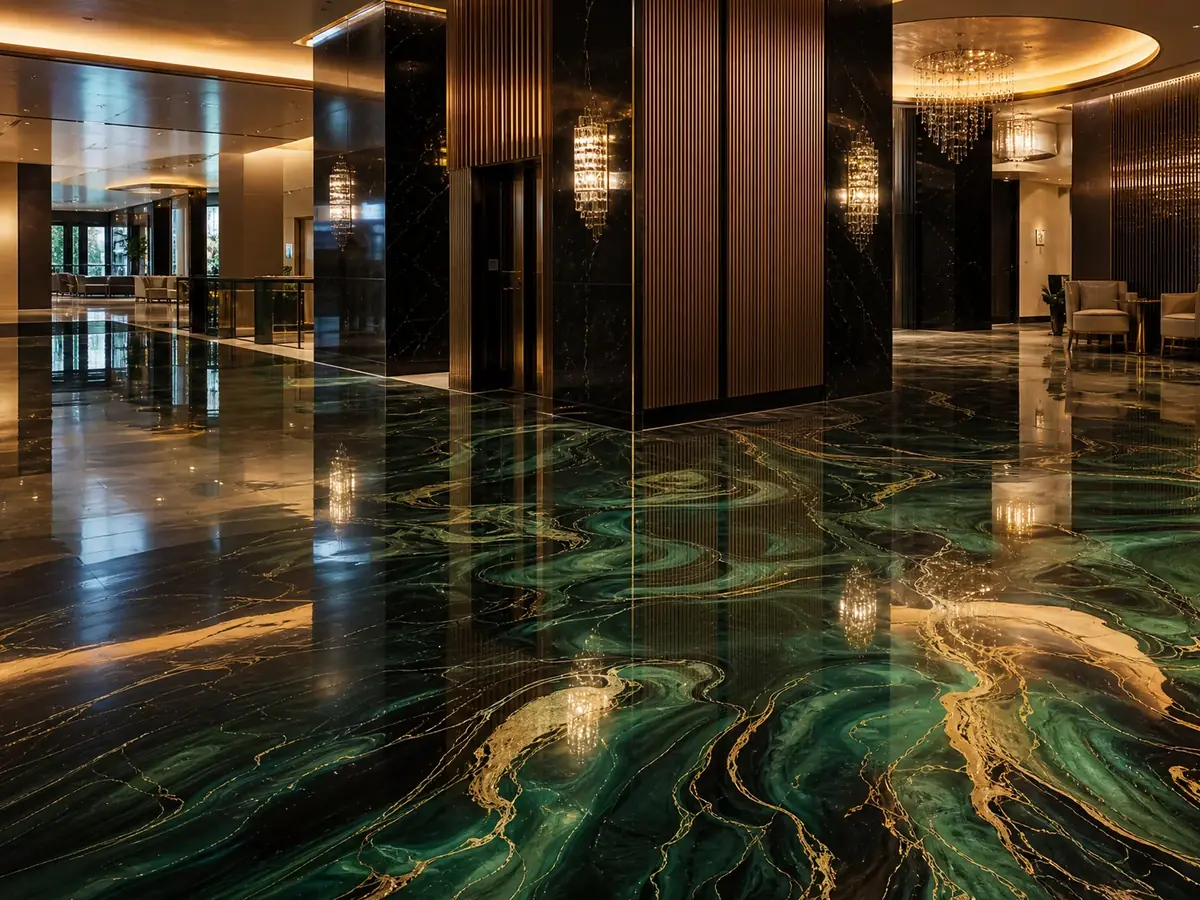
Metallic is a statement floor, and in Simi Valley it turns up where the space is meant to be seen. Detached and attached garages used as showrooms for classic cars, motorcycles and collections are the common case, especially in larger Wood Ranch style homes with three or four bays. It is also chosen for home gyms, game rooms, entryways, offices, and living spaces and kitchens on a slab. Commercial storefronts, salons, tasting rooms and showrooms use metallic to give a space personality. Heat and sun deserve attention here. Strong light through a garage door can age any coating over time, and a UV-stable polyaspartic topcoat helps the shimmer and color stay true. Metallic is not the best choice for every space. In a working shop with steel dragged across it, or a garage with a lot of wet feet and a smooth gloss that can get slick, flake or a quartz finish may serve you better. Open pool decks and driveways in full sun need an outdoor system designed for heat and traction. During the free estimate we look at the slab, the light and how the room is used, and tell you honestly when metallic is the right call and when it is not.
A metallic floor is easy to clean but shows its condition more than a speckled floor does. Sweep or dust mop regularly and damp mop with a neutral cleaner and warm water, using a clean microfiber mop to avoid streaks. Dust on a glossy floor shows quickly, which matters on windy days in a valley where Santa Ana winds carry grit and ash. Wipe up oil, brake fluid and coolant promptly. Avoid abrasive pads, stiff brushes and solvents. Felt pads under furniture and tool chests help prevent scuffs, and wheeled loads should be lifted, not dragged. The tradeoffs are worth stating plainly. A glossy metallic surface will show fine scratches over time, particularly where tires turn and shoes grit travels, and a deep scratch cannot be invisibly spot repaired because the pattern is unique. A worn topcoat can often be recoated, which freshens the shine. Metallic costs more per square foot than flake and takes longer to install. Lifespan depends on the slab, use and care, so we do not quote a number of years. The limited lifetime adhesion warranty covers the bond between the system and your concrete, not normal wear or impact damage.
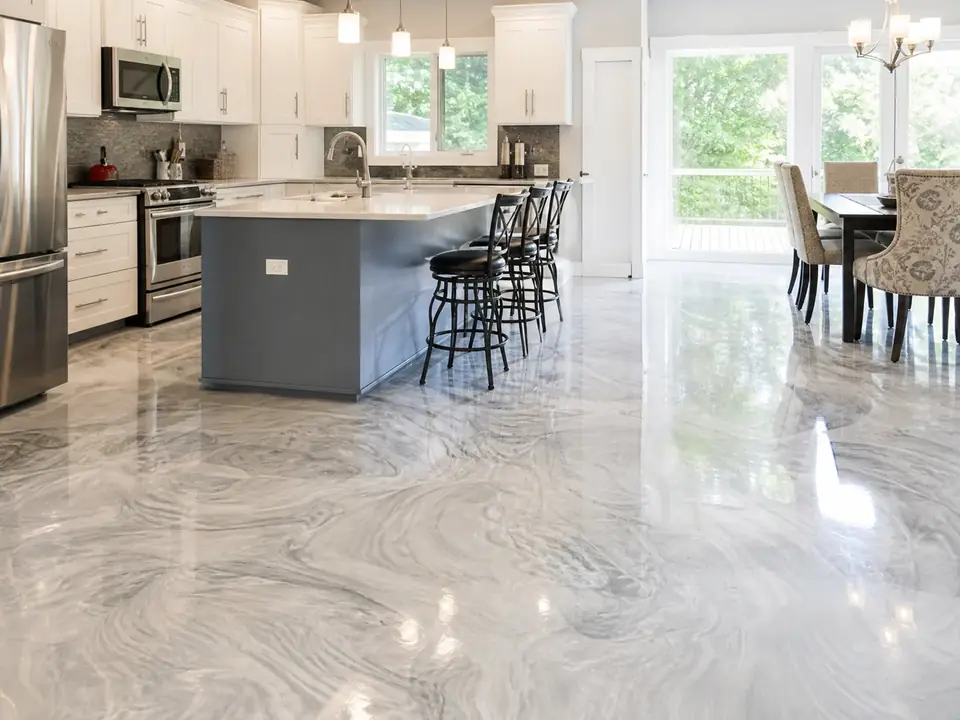
The pigments flow and settle differently on every slab, so your floor is a pattern no other garage or room will have.
Translucent layers over a colored base give the surface a three-dimensional look that changes as light and your viewing angle change.
A continuous surface has no grout lines or seams to hold dirt, so a dust mop and damp mop handle most upkeep.
The polyaspartic topcoat resists oil, coolant and common cleaners, and it is chosen to stand up to warm tires on summer days.
From showroom garages to home gyms, entries and open living areas on a slab, the same system adds a striking floor without tile or stone.
Residential metallic floors carry a limited lifetime adhesion warranty on the bond between the coating and your concrete, with the details explained before you sign.
Typical ranges for Simi Valley and Ventura County. Minimum project $2,600. Commercial and industrial work is quoted after a site visit.
| System | Price per sq ft | Typical project |
|---|---|---|
| Flake system (garage, up to 400 sq ft) | $6.50 – $10 per sq ft | $2,600 – $4,000 |
| Solid color system | $9.50 – $11.50 per sq ft | $3,800 – $4,600 |
| Metallic epoxy system | $12.50 – $18.50 per sq ft | $5,000 – $7,400 |
| Quartz & sand finish system | $9 – $16.50 per sq ft | $3,600 – $6,600 |
| Grind & seal (clear sealer) | $6.50 – $9 per sq ft | $2,600 – $3,600 |
| Patio, driveway & pool deck | $8 – $12 per sq ft | $3,200 – $4,800 |
| Commercial & industrial | Quoted after a site visit | Quoted per project |
Prices and details reviewed October 2026. Project examples assume a two-car garage up to 400 sq ft. Free on-site measurement and written estimate. See the color chart to pick your color.
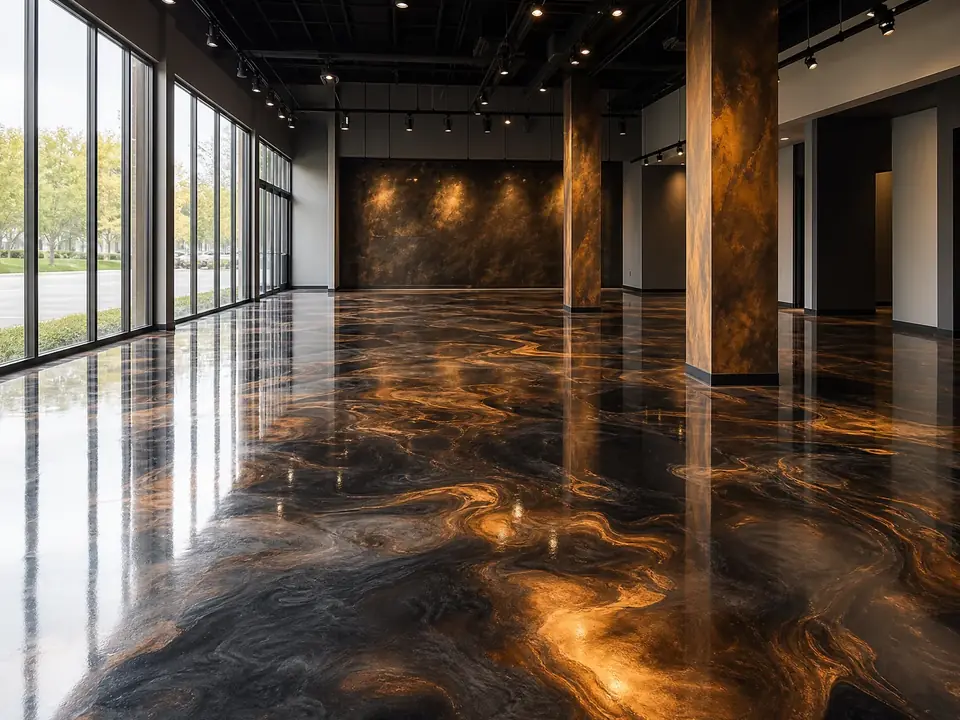
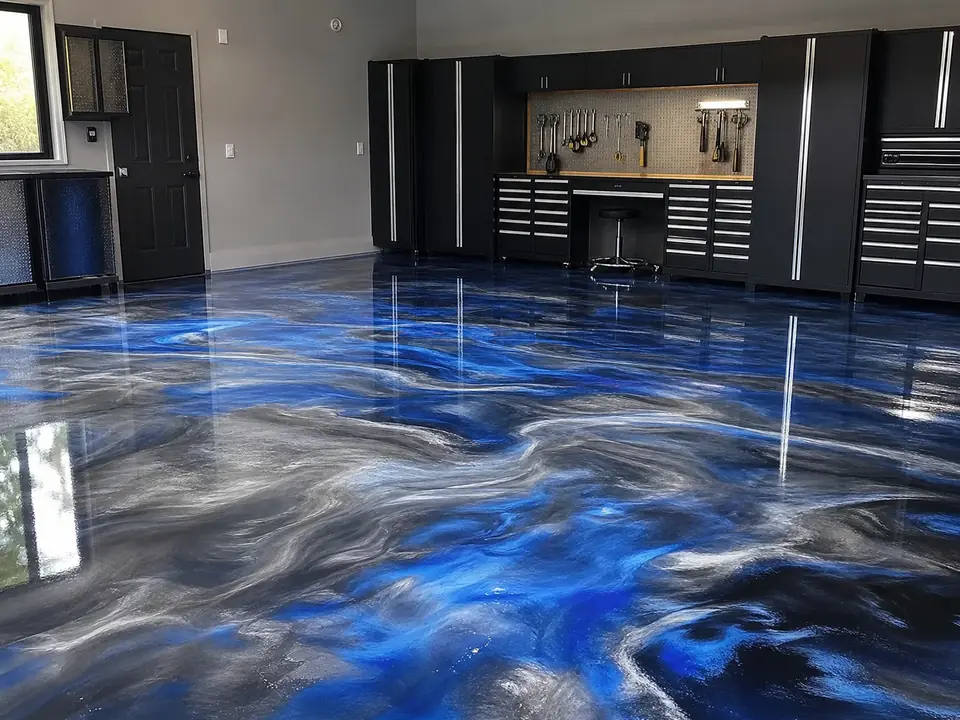
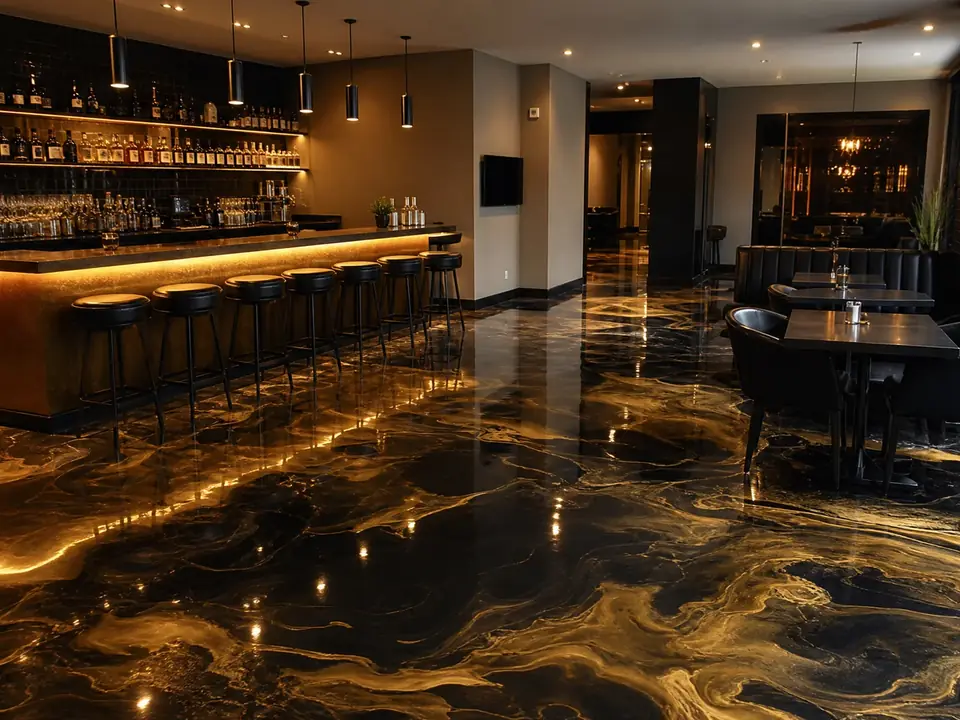
Choose flake for the best mix of value, grip and hiding power, solid color for a clean uniform look, and metallic for a one-of-a-kind showpiece. Flake takes one day at $6.50 to $10 per square foot, solid color takes three days at $9.50 to $11.50, and metallic takes three to four days at $12.50 to $18.50.
Read the answer →Yes, a properly installed epoxy garage floor holds up in Simi Valley heat. The risks come from poor prep, an epoxy-only topcoat that amber-tints in sun, and hot tires on a weak bond. A diamond-ground slab, a moisture-barrier basecoat and a UV-stable polyaspartic topcoat handle summer well.
Read the answer →A two-car flake epoxy garage floor in Simi Valley typically costs $2,600 to $4,000 for up to 400 square feet, or $6.50 to $10 per square foot. Our minimum project is $2,600. Solid color starts at $3,800, metallic runs $12.50 to $18.50 per square foot, and larger garages cost more because pricing follows square footage.
Read the answer →Metallic epoxy costs $12.50 to $18.50 per square foot, which puts typical projects at $5,000 to $7,400. It costs more than flake because it takes three to four days and more hand work. Slab condition and size affect the final number, and the free estimate gives you a fixed written quote.
Yes, when it is installed over a properly ground slab with a polyaspartic topcoat. It resists oil, coolant and hot tires like our other garage systems. It is a gloss finish, though, so it shows fine scratches and dust more than flake does. If your garage is a working shop, flake may suit it better.
A smooth, glossy metallic floor can be slick when wet. If water reaches the space, such as an entry or a garage with a wet approach, we can add a fine slip-resistant additive to the topcoat. A quartz or sand finish grips more. Tell us how the room is used and we will match the traction.
A metallic floor takes three to four days from diamond grinding to the final polyaspartic topcoat. The base color, metallic coat and sealer layers all need time to firm. Flake takes one day, solid color about three and quartz or sand two to three. We give you a specific schedule before work starts.
Yes, on concrete slabs, metallic works in living rooms, kitchens, entries and home gyms. Most Simi Valley homes sit on slabs, which suits it well. We check for moisture before coating, and we can add traction where needed. Floors over wood subfloors are a different job and need a separate conversation.
Yes, every metallic floor is unique, because the pigments flow and settle in ways nobody fully controls. You choose the colors, the base tone and how bold the movement is, and we steer the pattern as we work. We cannot promise an exact copy of a photo, which is why we show finished examples.
A UV-stable polyaspartic topcoat is chosen to resist yellowing and help the color hold under sunlight, which matters in Simi Valley. Strong sun over many years can still affect any coating, and darker or deeper colors tend to hold their look. Tell us if the floor sits near large windows or a west-facing garage door.
It depends on what you value. Metallic is worth it if you want a striking, showpiece floor, since nothing else delivers that depth. Flake is the better value for hiding dirt, adding texture and keeping the price down at $6.50 to $10 per square foot. Many working garages do best with flake.
Like any glossy floor, metallic shows fine scratches over time, especially where tires turn and grit is dragged. Sweep often, damp mop with a neutral cleaner and use felt pads under heavy items. Surface wear can often be freshened with a recoat. Deep damage is hard to repair invisibly because each pattern is unique.
Durable, easy-to-clean garage floors that resist hot-tire pickup, oil and salt. Most two-car garages are done in one day.
Learn more →Full-rejection flake over a moisture-barrier epoxy basecoat, sealed with a UV-stable polyaspartic topcoat. Installed in one day.
Learn more →Double-broadcast colored quartz or a sand finish for extra grip and durability on stairs, patios, mudrooms and commercial floors.
Learn more →Call (805) 697-5483 or send the form at the top of the page. We reply the same day with a time to measure.