
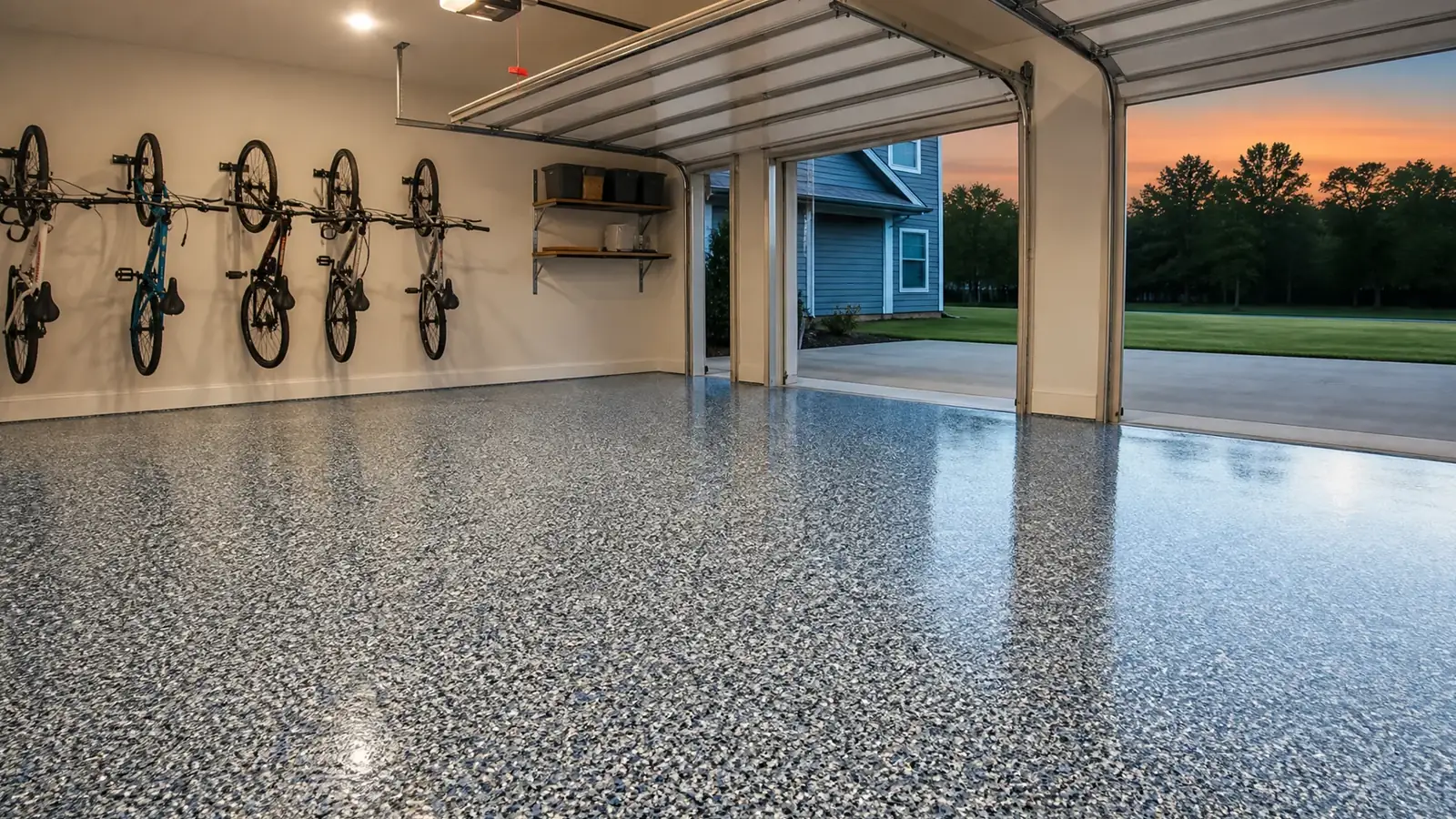
Yes, a properly installed epoxy garage floor holds up in Simi Valley heat. The risks come from poor prep, an epoxy-only topcoat that amber-tints in sun, and hot tires on a weak bond. A diamond-ground slab, a moisture-barrier basecoat and a UV-stable polyaspartic topcoat handle summer well.
Yes, a properly installed epoxy garage floor holds up in Simi Valley heat. The risks come from poor prep, an epoxy-only topcoat that amber-tints in sun, and hot tires on a weak bond. A diamond-ground slab, a moisture-barrier basecoat and a UV-stable polyaspartic topcoat handle summer well.
Summer in the Simi Valley area means hot afternoons, bright sun through an open garage door, and cars that come home with hot tires. People reasonably wonder whether a coating will soften, fade, yellow or lift under that kind of treatment. The short version is that heat alone is rarely what ruins a garage floor. Preparation, the topcoat and the way the floor was installed matter far more. This post walks through what heat and sun actually do to a coating, how color choice changes what you see, and what we do differently on warm days, without making claims we cannot back up.
A concrete slab changes temperature slowly, and a garage keeps it out of direct sun most of the day, so the floor is usually less extreme than the driveway outside. Still, a closed garage in a hot Ventura County summer can get warm, and a coating system has to put up with that every year. Heat does three things worth knowing about. It makes the concrete and the coating expand a little, which is why crack and joint treatment matter before anything goes on. It softens some low-quality coatings, which is one reason bargain paints and thin kits fail first. And it speeds up the chemical reaction of the coating, which affects installation more than daily life. A well-made system with a ground bonding profile and a proper basecoat is designed to move with ordinary temperature swings. We do not publish a temperature rating for a floor, because we cannot verify what your garage reaches, but warm weather by itself is not a reason to avoid epoxy. The failures we see start with poor prep and moisture, not with summer.
Sunlight is the bigger concern than air temperature, especially if your garage door is open for hours or the floor extends to a sunny doorway. Standard epoxy resin is not UV stable. In direct sun it can darken or take on an amber tint over time, and that is where the idea that epoxy yellows comes from. The fix is the topcoat. A UV-stable polyaspartic topcoat is designed to resist that effect, so the color underneath stays truer and the gloss lasts. The basecoat can still do the heavy lifting, since it is protected from the sun by the clear layer on top. This matters most for light colors, clear finishes and anywhere the sun reaches the floor, which includes outdoor patios and driveways. If part of your slab sits in a bright doorway, ask for the topcoat to be carried across it, and ask us for a sample under the same kind of light your garage gets. We would rather you hold a sample in your own doorway than judge the color from a screen, and the color chart is a good place to start narrowing down.
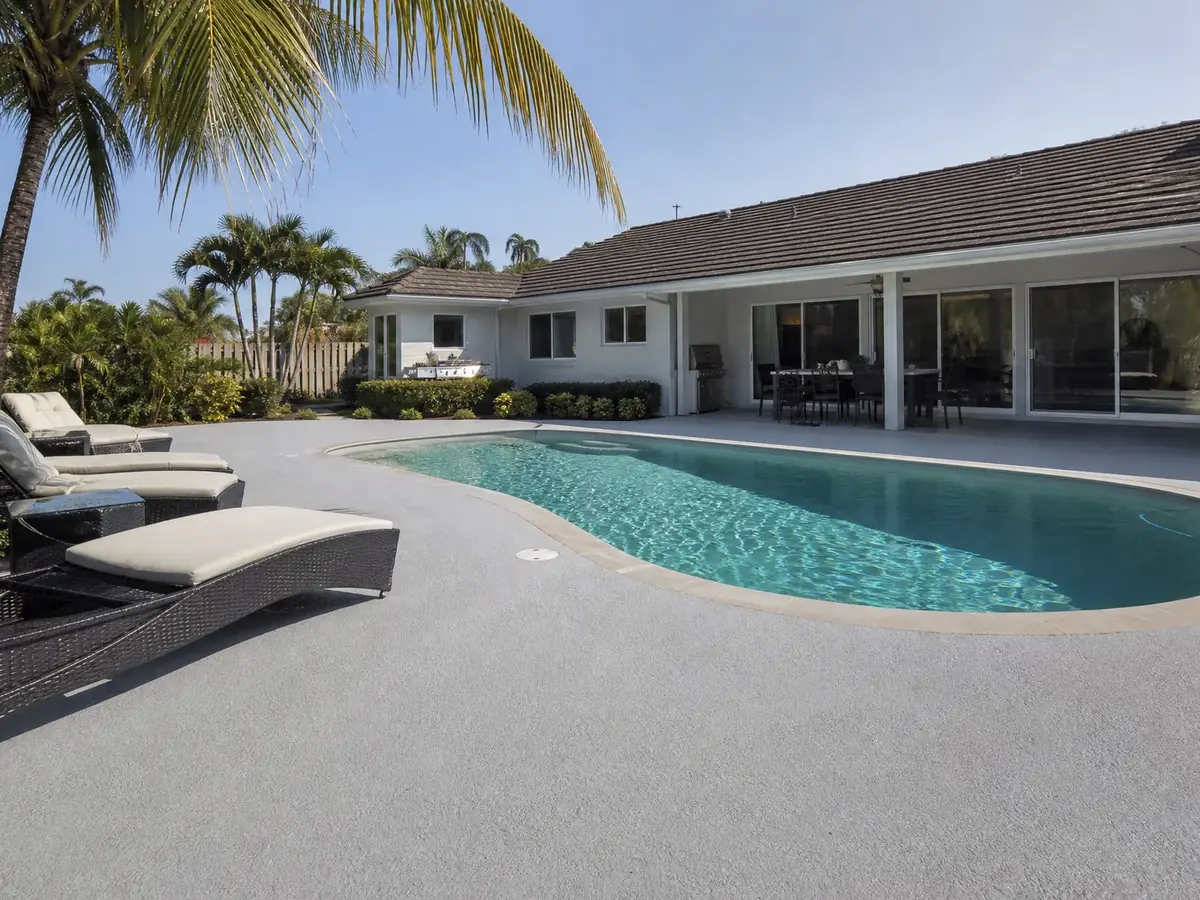
Hot-tire pickup is the complaint that gets people most nervous, and it is a real one. After a long summer drive, tires are hot and soft, and they can pull on a coating that is not well bonded or not fully cured. The problem is not that heat melts the floor. It is that the weak spot in the system shows up under heat and pressure. A floor that was properly diamond ground, built on a moisture-barrier basecoat and finished with a hardened topcoat resists it far better than a floor that was acid etched, rolled with a thin kit, or driven on too soon. We do not say any floor is immune, and we do not trust anyone who does. What we can say is that preparation is what decides this, which is why we grind rather than etch, and why we give a return-to-service time for the first drive-in. After that, normal summer use should not be a problem. If you see lifting or a mark after a hot drive, tell us, because the limited lifetime adhesion warranty exists for exactly that kind of bond question.
Color affects how the garage looks in summer more than how the coating performs. Dark floors can feel warmer in direct sun, and in a garage with little sunlight the difference is small, but on an outdoor patio or driveway it is easy to feel with bare feet. Lighter and mid-tone floors stay cooler to the touch outdoors and make a garage brighter. Indoors, the bigger practical question is what shows. A solid dark gloss floor shows dust, footprints and water spots clearly. A very light solid floor shows tire marks and oil. A flake epoxy floor in a mid-tone blend hides most of that, because the flake pattern breaks up the surface. Gray and charcoal flake blends are popular for a reason. Metallic floors look dramatic and hide small marks well, but gloss highlights dust. If you can, pick the color by looking at the sample in your garage at midday, with the door open and again with the lights on. If you are torn between two shades, choose the one that looks slightly lighter in the sample. The color chart helps you compare, but light changes everything.
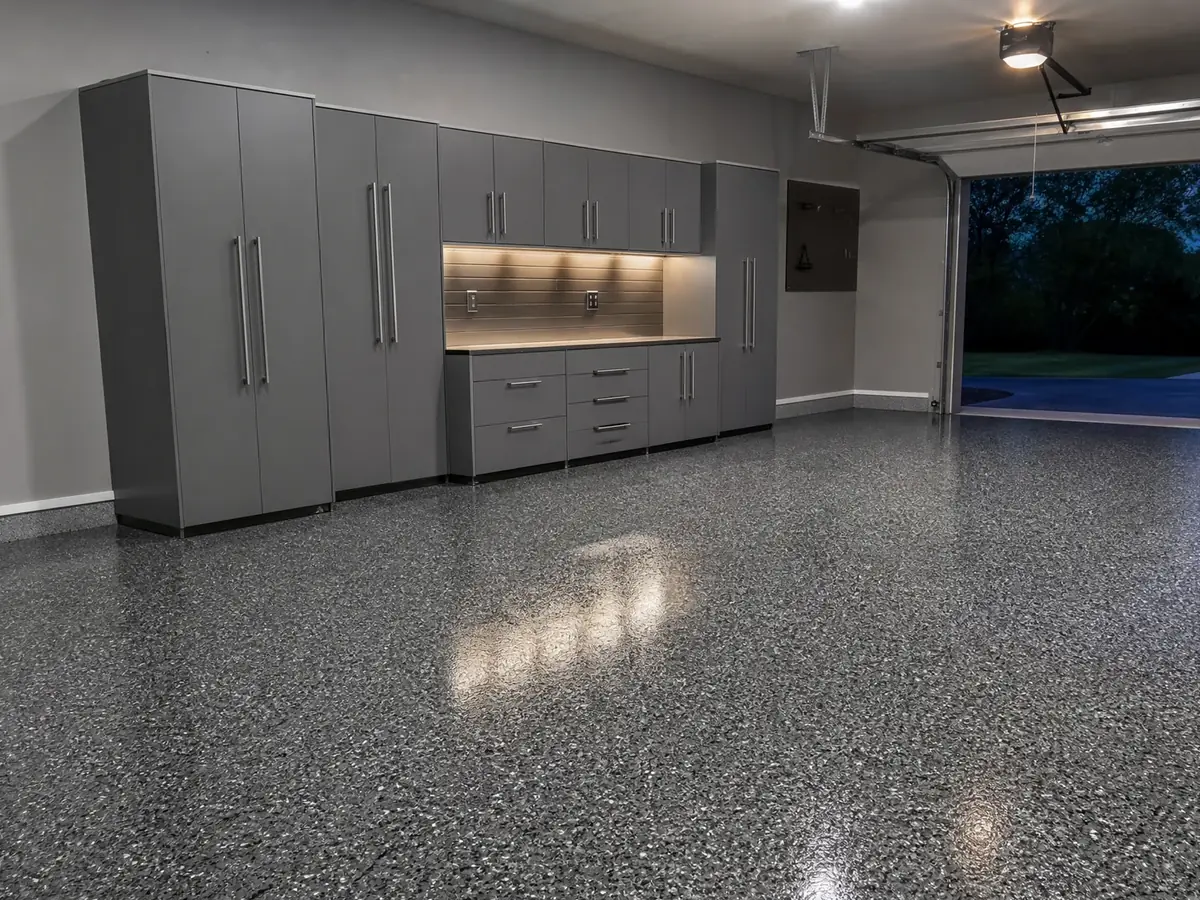
Heat affects how and when we install. Coatings set faster in warm weather, so the working time in each bucket is shorter. The crew mixes smaller batches, starts early in the day and keeps the floor moving so each pass blends cleanly. Concrete can also release trapped air as it warms during the day, which can leave pinholes or bubbles in a coating if it goes on at the wrong moment. Starting while the slab is cooler, and watching it, reduces that risk. Ventilation matters as well. Our materials are VOC-free, which means a mild odor compared with older products, but we still keep air moving and ask you to keep pets and children out of the garage until we release it. Heat also affects the first days after the job, since a floor in a closed, hot garage can cure faster, and a cool, damp garage can cure slower. Tell us if your garage gets direct afternoon sun, because that changes our plan. We tell you the return-to-service times for your job, and we adjust the schedule if the forecast is extreme.
If summer heat is your main worry, here is how we would think about it. Insist on diamond grinding rather than acid etching, because the bond is what carries everything else. Ask whether the basecoat is a moisture-barrier epoxy and whether the topcoat is a UV-stable polyaspartic, and ask for that in writing. Choose a mid-tone flake blend if you want a floor that hides dust and tire marks without looking busy. If you like a solid color, accept that you will wipe it more often. For an outdoor slab such as a patio, driveway or pool deck, favor lighter colors and a textured finish. Tell your installer how you use the garage. A workshop with a hot car, a family minivan and a car collection are different cases. Finally, ask what the warranty covers. Ours is a limited lifetime adhesion warranty for residential floors, and three years for commercial and outdoor work. A good free estimate should walk through these points in plain language. Bring up any past problems you have had, such as peeling paint or a floor that stained, so the plan fits your garage rather than a generic one.
Simi Valley heat is not a reason to skip a coated floor. Insist on diamond grinding, a moisture-barrier basecoat and a UV-stable polyaspartic topcoat, pick a mid-tone color you have seen in your own light, and follow the return-to-service time for the first drive-in. Call (805) 697-5483 for a free estimate.
We cannot give a verified temperature, because it varies by garage, but summers can be hot and a closed garage can run warm. A quality system is built to handle ordinary heat. Preparation, moisture control and a UV-stable topcoat matter far more than the air temperature.
A system with a diamond-ground bond, a moisture-barrier epoxy basecoat and a UV-stable polyaspartic topcoat is a strong choice. The basecoat handles bond and moisture, and the topcoat resists sun and wear. Add flake in a mid-tone blend to hide dust.
Epoxy-only coatings can amber in direct sunlight, since standard epoxy is not UV stable. A UV-stable polyaspartic topcoat is designed to prevent this. If sun reaches your floor, make sure the topcoat covers the whole area, including near the door.
Not on a well-bonded, fully cured floor. Hot-tire pickup comes from weak prep, moisture or driving on the floor too soon, not from heat alone. We grind instead of etching and give a return-to-service time. Nothing is immune, so tell us if you ever see lifting.
Yes, with adjustments. Warm weather makes coatings set faster, so crews mix smaller batches and start early. Starting while the slab is cooler also reduces bubbles from trapped air. In extreme heat we may move the start time or the day.
Both show something. Dark solid gloss shows dust and footprints, and light solid colors show tire marks and oil. A mid-tone flake blend hides the most because the pattern breaks up the surface. View a sample in your own garage before choosing.
Durable, easy-to-clean garage floors that resist hot-tire pickup, oil and salt. Most two-car garages are done in one day.
Learn more →Full-rejection flake over a moisture-barrier epoxy basecoat, sealed with a UV-stable polyaspartic topcoat. Installed in one day.
Learn more →UV-stable, slip-resistant coatings for patios, walkways, driveways and pool decks that stay cooler underfoot.
Learn more →Yes, in most cases you can epoxy over old concrete, but not over the problem itself. Cracks are repaired, joints are treated, oil is ground and cleaned out, old coatings are tested or removed, and moisture is checked first. The coating is only as good as what it bonds to.
Read the answer →We cannot give you a rule for every address, because requirements depend on your HOA and on the city. A coating is a surface finish, not structural work, but you should confirm it. Read your HOA documents, call the Simi Valley Building and Safety office, and get the answer in writing before you book.
Read the answer →A two-car flake epoxy garage floor in Simi Valley typically costs $2,600 to $4,000 for up to 400 square feet, or $6.50 to $10 per square foot. Our minimum project is $2,600. Solid color starts at $3,800, metallic runs $12.50 to $18.50 per square foot, and larger garages cost more because pricing follows square footage.
Read the answer →Call (805) 697-5483 or send the form at the top of the page. We reply the same day.