
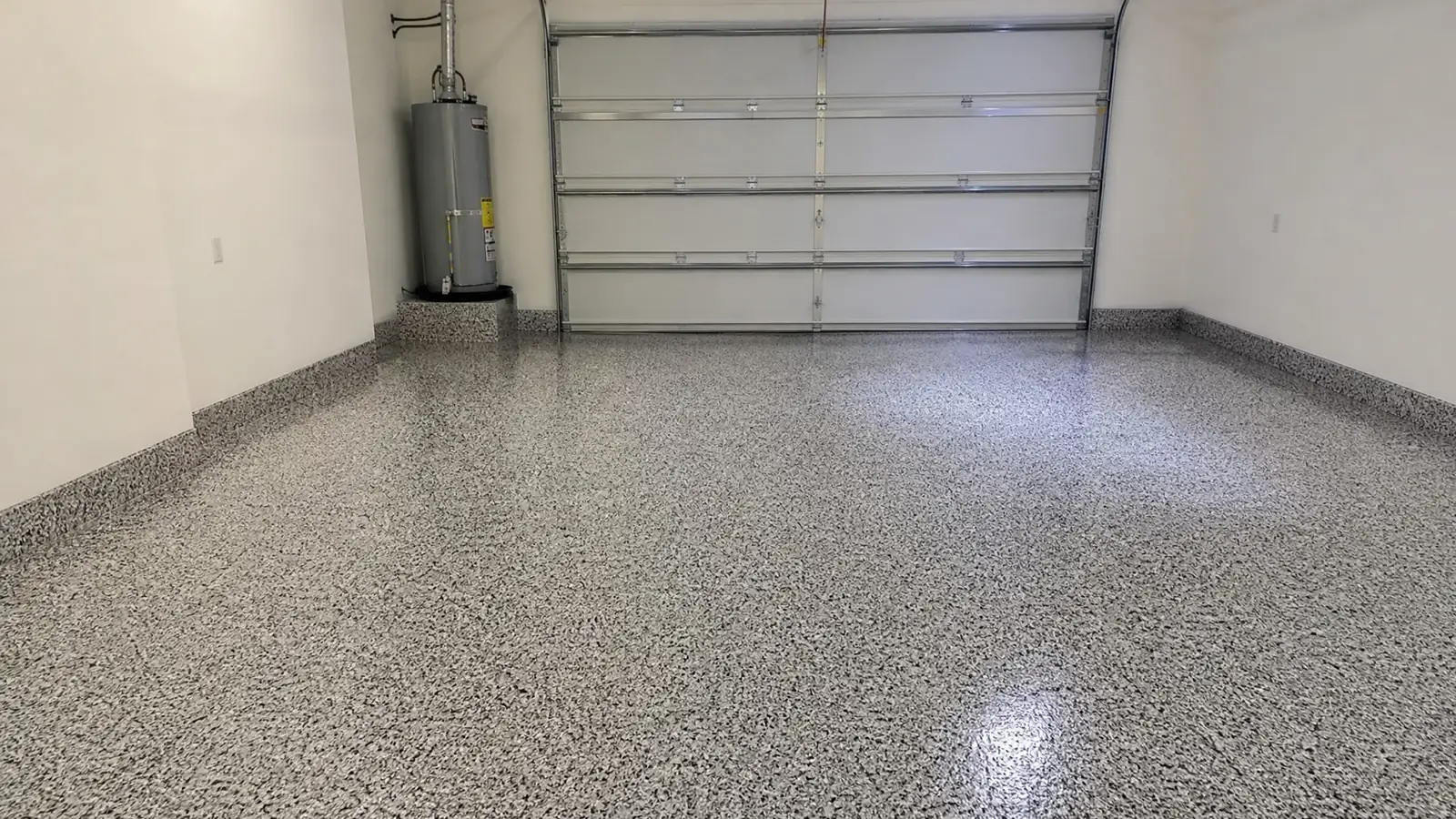
Colored flakes broadcast into wet epoxy and locked under a UV-stable topcoat give your garage a speckled floor that hides dirt, grips better and cleans up fast.
Epoxy flake flooring is a concrete coating where colored vinyl chips are broadcast into wet epoxy, then sealed under a clear topcoat. In Simi Valley it costs $6.50 to $10 per square foot, or $2,600 to $4,000 for a two-car garage up to 400 square feet, and it installs in one day.
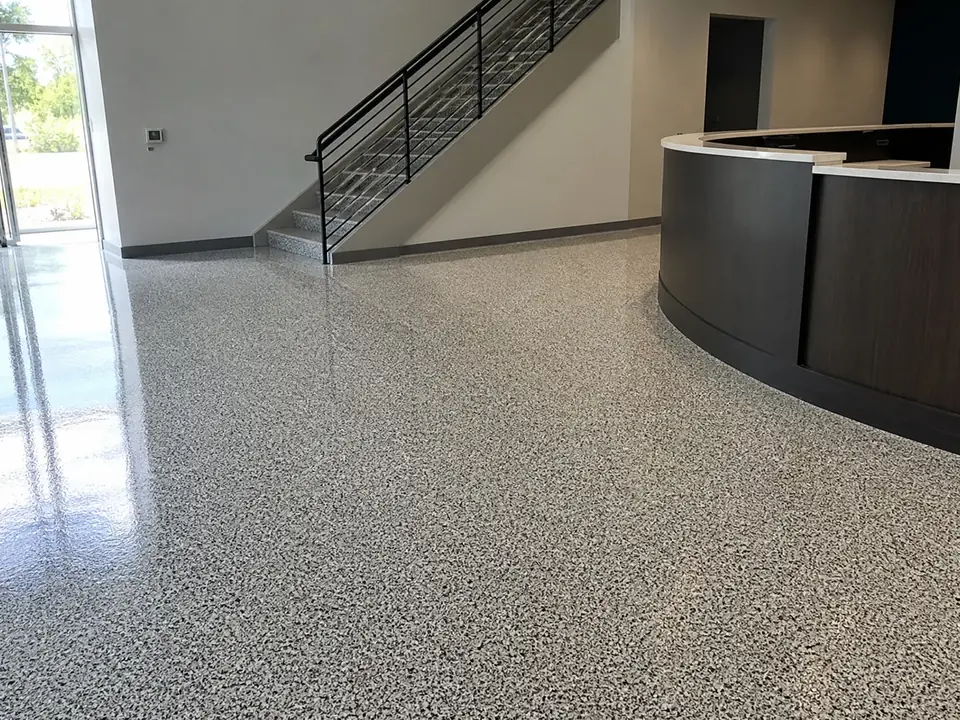
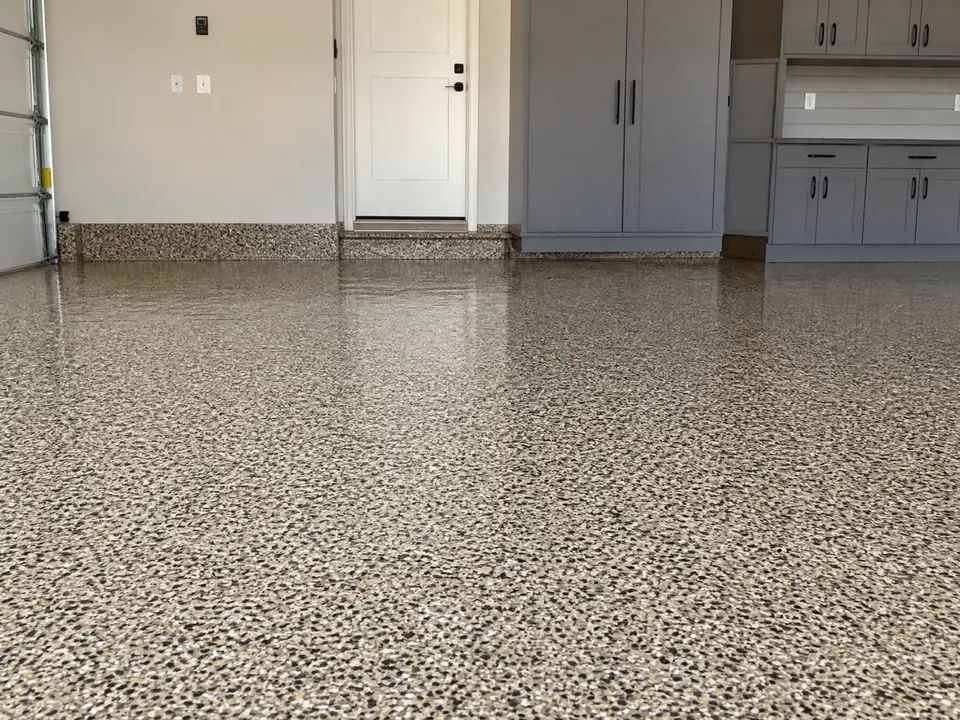
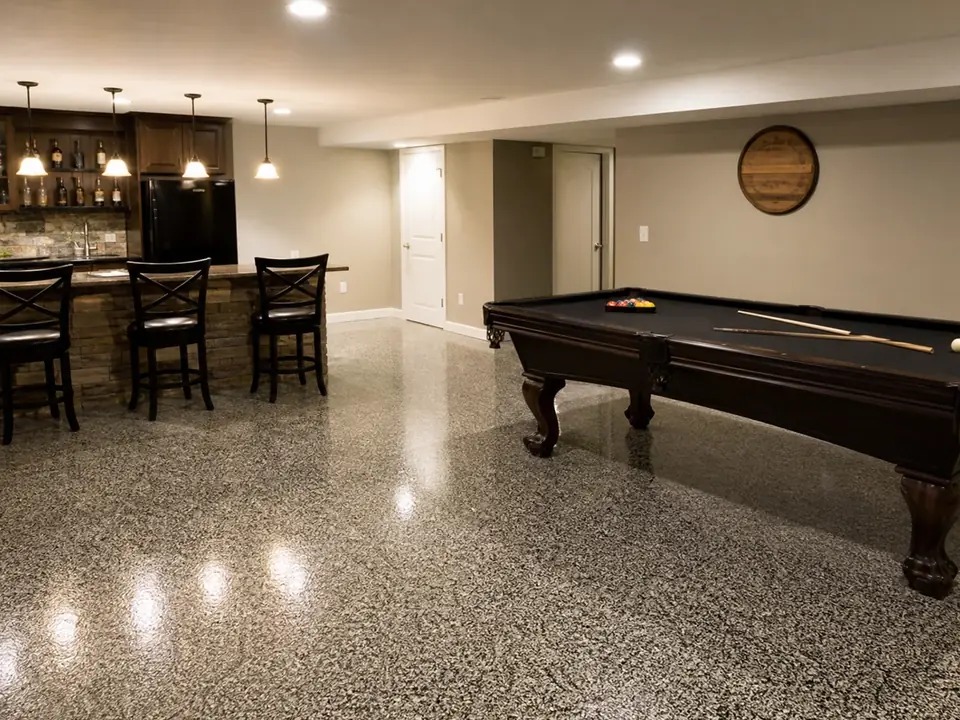
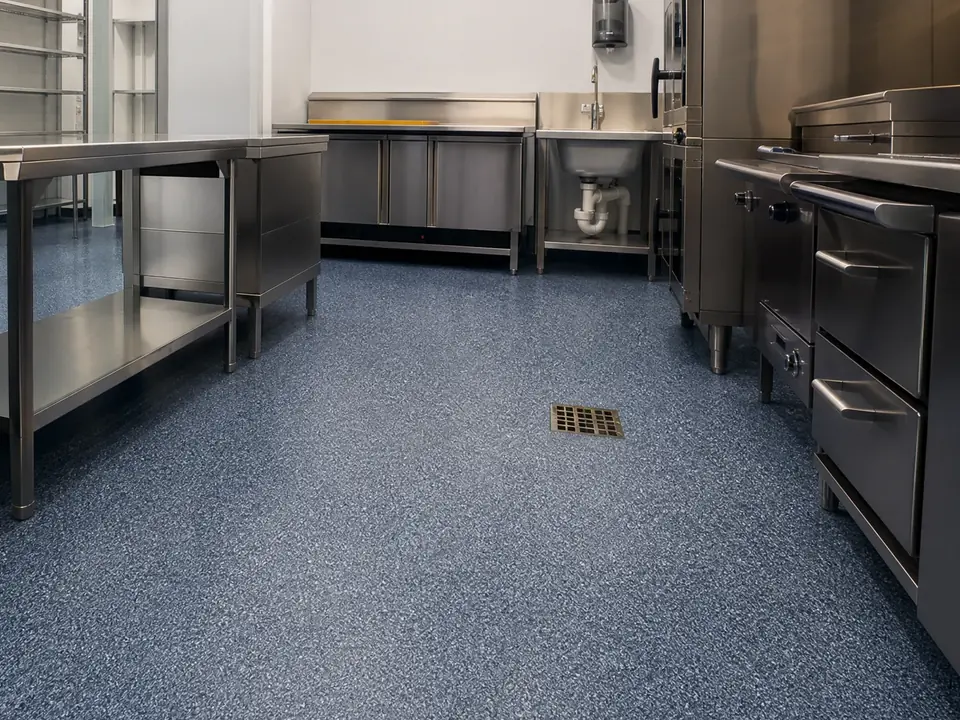
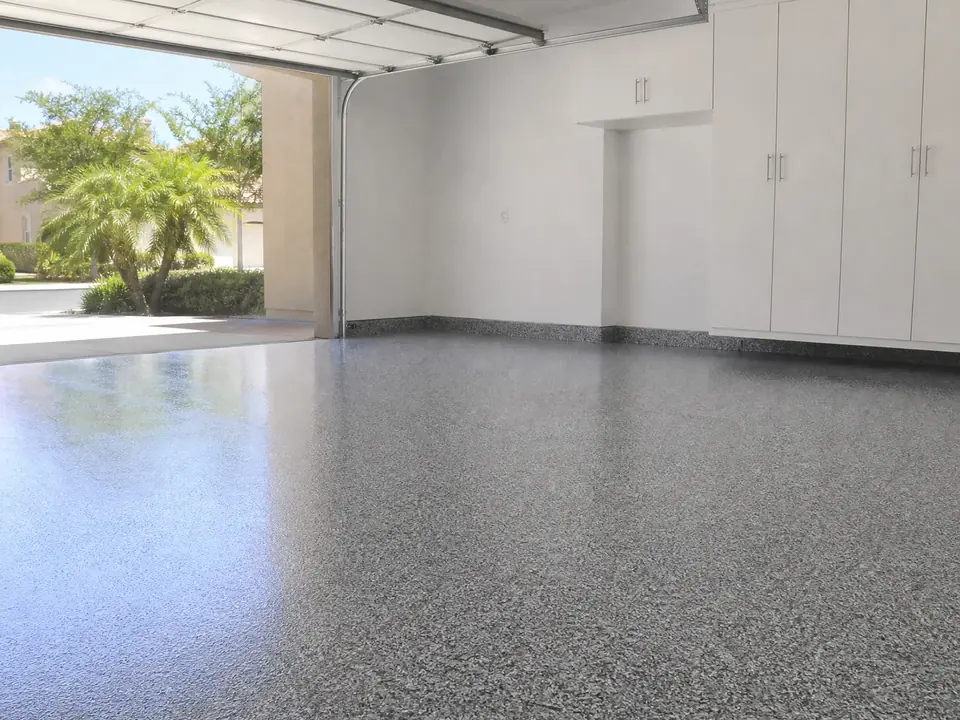
Walk into a finished flake garage and the first thing you notice is that it looks busy in a good way. Hundreds of small chips in blended colors, from charcoal and gray to tan and cream, sit under a clear glossy layer, so the floor reads like a speckled stone instead of a flat coat of paint. That pattern is not only decoration. It breaks up the line of every tire mark, drip and footprint, which is why flake is the most popular garage finish we install and the one we suggest to most homeowners who are not sure where to start.
In Simi Valley the speckle earns its keep. Fine dust blows in on Santa Ana wind days, ash drifts through open garage doors in wildfire season, and driveways that run uphill from the street deliver gravel and grit straight onto the slab. A solid, single-tone floor shows all of it. A flake floor hides most of it until you get around to sweeping. The texture of the chips also adds a little traction under shoes and wet tires, which many people appreciate in a garage that sees rainy-day foot traffic.
SV Epoxy Flooring installs flake systems from Simi Valley through the rest of Ventura County. We diamond grind the slab, lay a moisture-barrier epoxy basecoat, broadcast flake to full rejection and finish with a UV-stable polyaspartic topcoat. The whole job fits into one day for a standard two-car garage. Below you will find how the install works, how to choose between full and partial broadcast, where flake works best and how to care for it, plus honest notes on the tradeoffs.
Blended chips camouflage tire marks, dust, patched cracks and stained concrete, so the floor looks tidy longer between cleanings.
The chips add a gentle texture under the topcoat, giving shoes and wet tires more grip than a smooth coating.
A standard two-car garage is ground, coated, broadcast and sealed in a single day, so you can usually be back to normal quickly.
Blends range from soft grays and tans to dark charcoals and bold mixes. Pick from the color chart and match your cabinets, doors or trim.
The polyaspartic topcoat resists oil, coolant and common cleaners, and it is chosen to stand up to warm tires on summer days.
Residential flake systems carry a limited lifetime adhesion warranty on the bond with your concrete, explained in plain words before you sign.
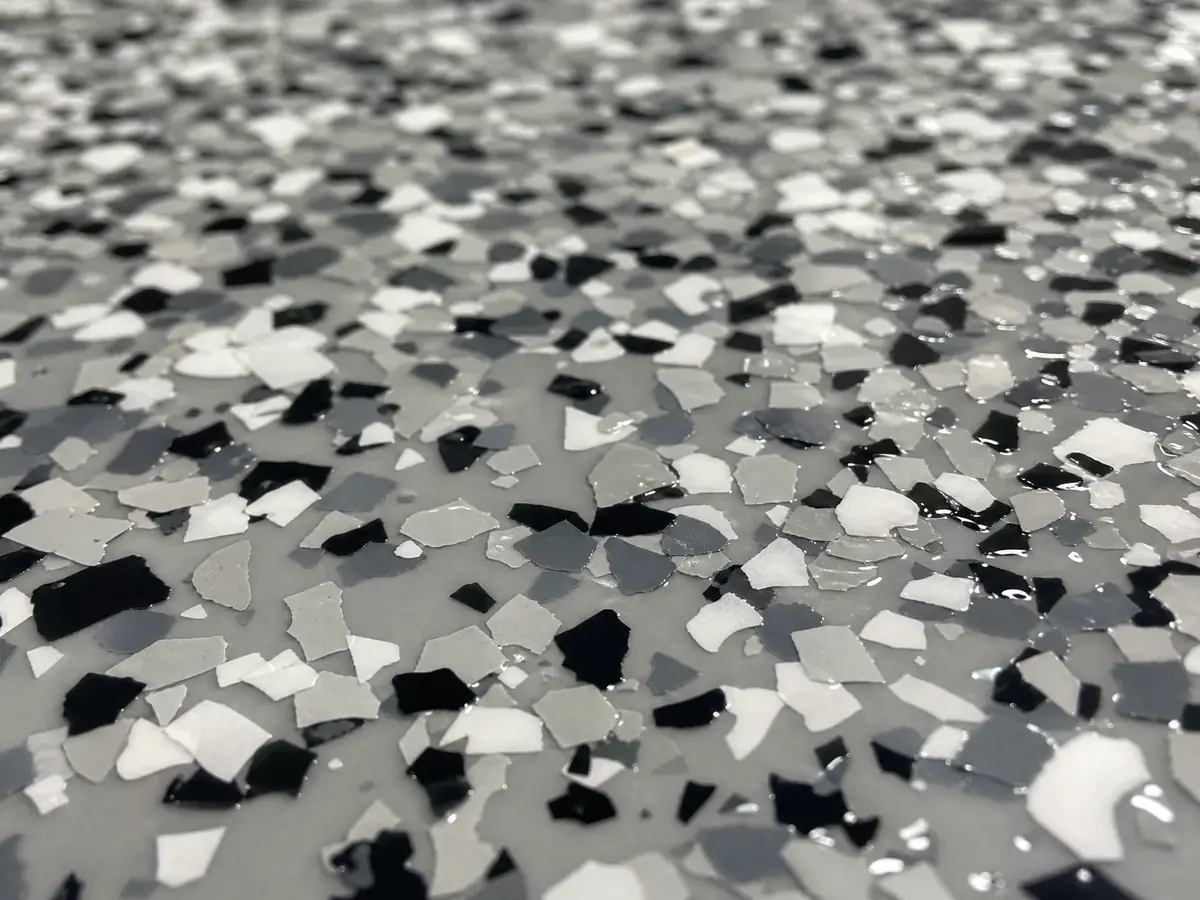
Flake is the fastest system we install, and the schedule is tight because each layer is timed to the one before it. The crew arrives in the morning and diamond grinds the slab to open the pores of the concrete and cut a bonding profile. Cracks are routed and filled, joints are treated and damaged edges are patched and ground flush. After a thorough vacuum, the moisture-barrier epoxy basecoat is poured and back-rolled to an even thickness. While that layer is still wet, flake is thrown into it by hand in an arc until the floor is completely covered and no resin shows through, which is what full-rejection broadcast means. The basecoat then firms up. Loose flake is scraped, swept and vacuumed away, and the surface is lightly sanded to knock down any sharp edges. A UV-stable polyaspartic topcoat is applied to lock the flake in place and add scratch, chemical and sun resistance. Everything is VOC-free, so odor stays modest in an attached garage. A standard two-car garage goes through all of this in one day. The crew walks you around the finished floor before leaving and tells you when it is safe to walk and park on it.
Most of what separates one flake floor from another comes down to how much flake goes in. In a full broadcast, flake is applied until the basecoat is completely hidden. The result is a thick, dense, textured floor with a stone-like look that hides slab flaws well and does not show the base color. In a partial broadcast, flake is scattered more lightly, so some of the pigmented basecoat peeks through. That gives a lighter, more open look and costs a little less material, but it shows more of what is underneath and offers less texture. We use full broadcast as our standard because it hides cracks, stains and patched spots best, and because it builds a stronger system. Chip blend is the second decision. Blends of three or four tones, such as gray, black and white, hide dirt better than a single flat color. Lighter blends brighten a dim garage but show more of the oil and dust that settles on them, while darker blends hide dirt and show lint. Choose from the color chart, and remember that a small sample never looks exactly like an entire floor in your own light. We can bring samples to the estimate.
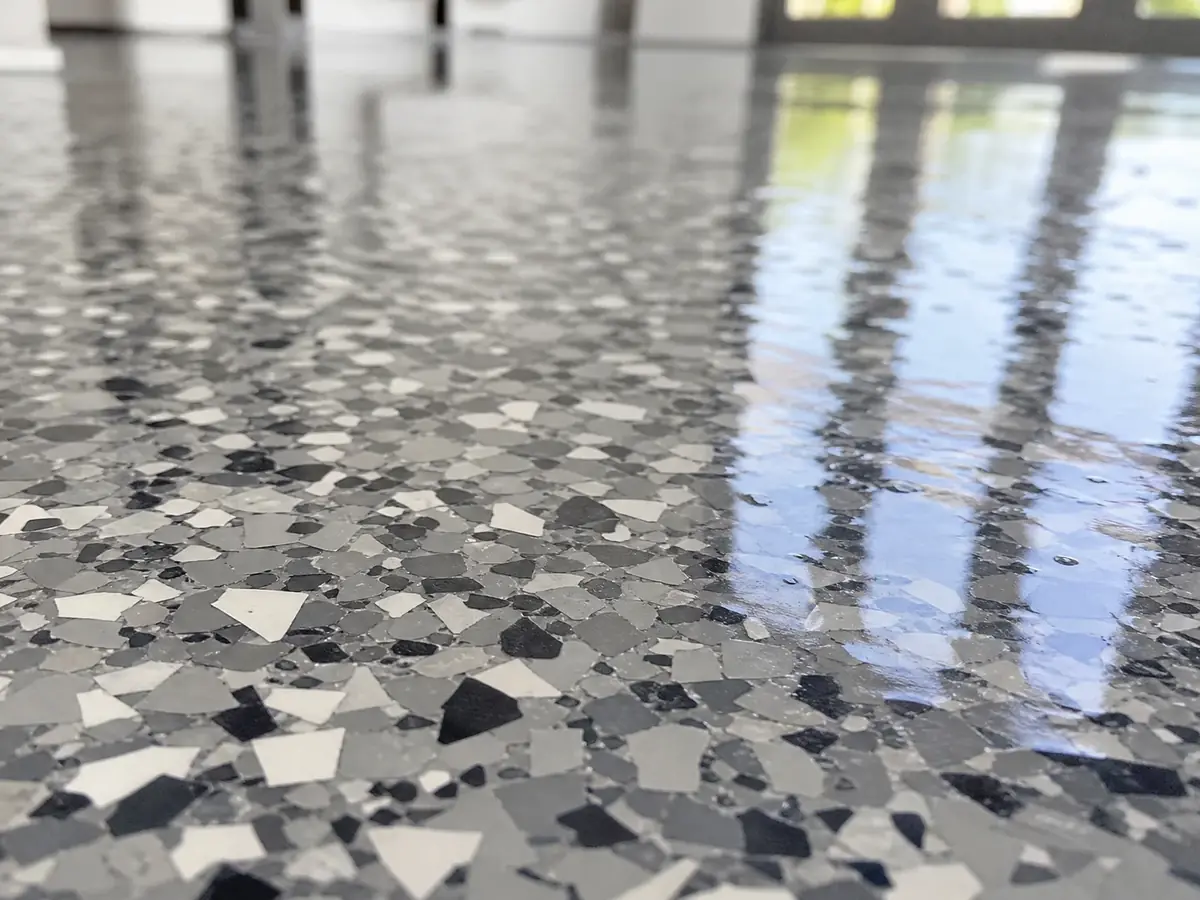
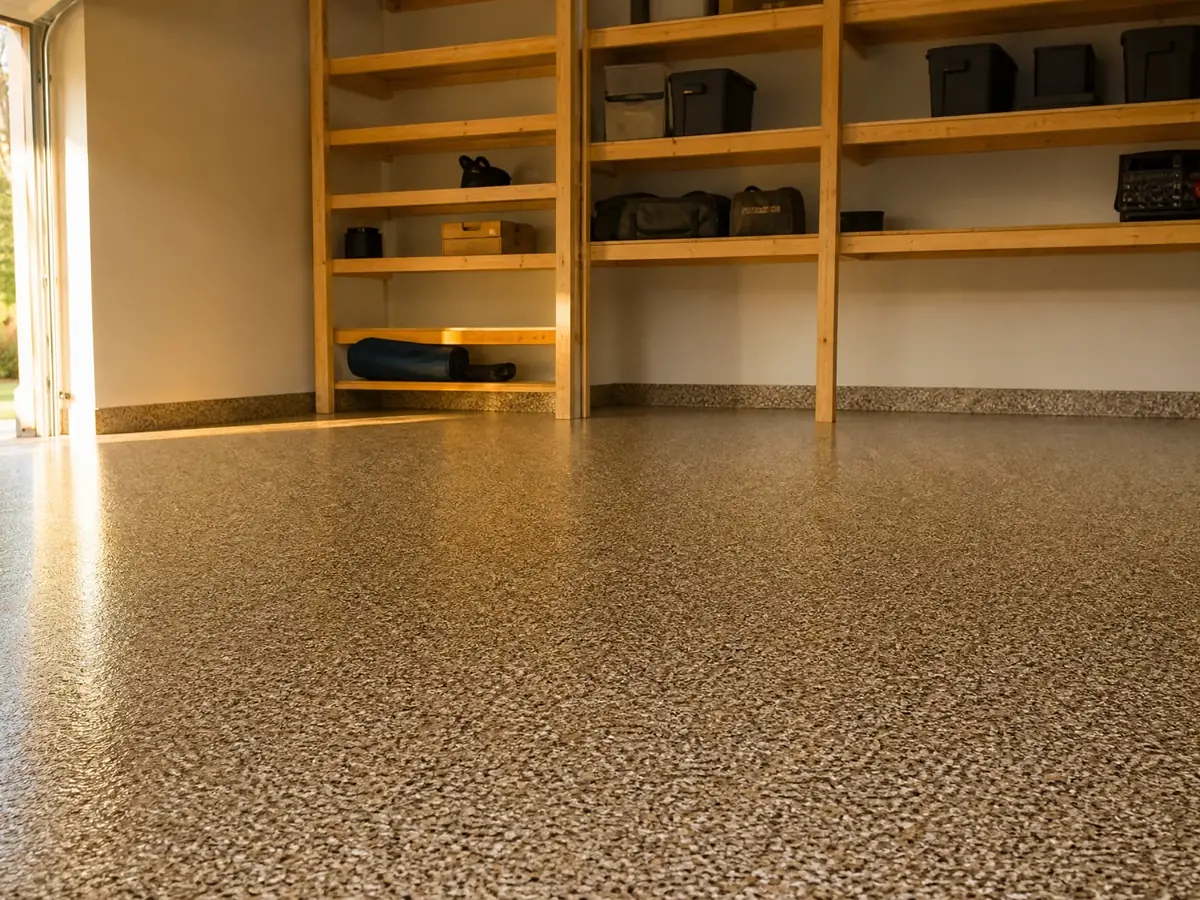
Flake suits the garage first. A two-car bay in a tract home on the valley floor is the classic case, with decades of oil stains and old paint that flake covers easily. Larger Wood Ranch style garages and hillside homes with three or four bays work just as well, and the one-day schedule is a real advantage when a family cannot park in the driveway for long. Flake also works in laundry rooms, mudrooms, workshops, storage rooms and covered patios that stay out of direct weather. In sun-exposed spaces such as a garage with a west-facing door, the UV-stable topcoat helps keep the chips from fading, though darker blends hold up best under strong light. Flake is not ideal everywhere. If you want a perfectly smooth, mirror-like surface, a solid color or metallic system will give you that. If traction is the top priority, a quartz or sand finish grips more. For open pool decks, driveways and patios in full sun, we use a different outdoor system designed for heat, wet feet and weather. Ask during the free estimate and we will tell you honestly if flake is the right fit for the space.
Flake floors are low maintenance, but the texture that hides dirt also holds a little of it. Sweep or dust mop regularly so grit does not sit in the valleys between chips and dull the finish. A damp mop with a neutral cleaner and warm water, or a microfiber mop with a soft brush for stubborn spots, keeps the surface bright. Wipe oil, brake fluid and coolant spills soon after they happen. Skip harsh solvents and abrasive pads, which can scuff the topcoat. Hot-tire pickup resistance is built into the polyaspartic layer, so the car can come and go without leaving marks, and a squeegee handles water tracked in on a rainy day. Over time, fine scratches may appear in high-traffic areas such as where tires turn and where you drag a toolbox. That is normal, and a worn topcoat can often be freshened with a recoat instead of a full removal. We do not promise a number of years, because lifespan depends on the slab, use and cleaning habits, but the limited lifetime adhesion warranty covers the bond between the system and your concrete. It does not cover impact damage, normal wear or spills left to sit.
A flake floor takes 1 day from the first grind to the final polyaspartic topcoat, which makes it the quickest system we offer. Solid color takes about 3 days, metallic 3 to 4 days and quartz or sand finishes 2 to 3 days. You can usually step onto a flake floor carefully soon after the topcoat sets, and we tell you at the walkthrough when it is safe to park. Keep heavy loads, wheeled tool chests and car lifts off the floor a bit longer while it finishes hardening. Temperature changes the schedule slightly, so your crew confirms the timing for your garage on installation day.
Choose flake when you want a forgiving, good-looking floor at the lowest price per square foot, installed in a day. It hides more than any other decorative system and has built-in texture. Choose solid color if you prefer a clean, uniform surface and can accept a three day schedule and a floor that shows more dust. Choose metallic for a dramatic marbled look at a higher price and a longer job. Choose a quartz or sand finish when grip and a very tough surface matter more than looks. Choose grind and seal if you only want to protect plain concrete. Flake prices run $6.50 to $10 per square foot, and every project has a $2,600 minimum.
Typical ranges for Simi Valley and Ventura County. Minimum project $2,600. Commercial and industrial work is quoted after a site visit.
| System | Price per sq ft | Typical project |
|---|---|---|
| Flake system (garage, up to 400 sq ft) | $6.50 – $10 per sq ft | $2,600 – $4,000 |
| Solid color system | $9.50 – $11.50 per sq ft | $3,800 – $4,600 |
| Metallic epoxy system | $12.50 – $18.50 per sq ft | $5,000 – $7,400 |
| Quartz & sand finish system | $9 – $16.50 per sq ft | $3,600 – $6,600 |
| Grind & seal (clear sealer) | $6.50 – $9 per sq ft | $2,600 – $3,600 |
| Patio, driveway & pool deck | $8 – $12 per sq ft | $3,200 – $4,800 |
| Commercial & industrial | Quoted after a site visit | Quoted per project |
Prices and details reviewed October 2026. Project examples assume a two-car garage up to 400 sq ft. Free on-site measurement and written estimate. See the color chart to pick your color.
Neither wins alone. Epoxy bonds deeply to concrete and builds body, while polyaspartic resists sun, scuffs and hot tires as a topcoat. The longest-lasting garage floors usually use both: a moisture-barrier epoxy basecoat for adhesion, then a UV-stable polyaspartic topcoat. Surface preparation matters more than either product.
Read the answer →A well-installed epoxy floor in Simi Valley should still look clean and intact after five years, with some gloss dulling in tire paths, light surface scratches and little color change under a UV-stable topcoat. Peeling, bubbling or lifting at five years points to a prep or moisture problem, not normal wear.
Read the answer →Choose flake for the best mix of value, grip and hiding power, solid color for a clean uniform look, and metallic for a one-of-a-kind showpiece. Flake takes one day at $6.50 to $10 per square foot, solid color takes three days at $9.50 to $11.50, and metallic takes three to four days at $12.50 to $18.50.
Read the answer →Epoxy flake flooring is a coating system where colored vinyl chips are scattered into wet epoxy over prepared concrete and then sealed beneath a clear topcoat. The result is a speckled, textured, stain-resistant surface. It is the most popular garage finish because it hides dirt and slab flaws while installing in a single day.
Flake costs $6.50 to $10 per square foot, which is $2,600 to $4,000 for a two-car garage up to 400 square feet. Our minimum project is $2,600. Slab condition, crack repair and the size of the space move the final number. The free estimate gives you a fixed written quote after we see the floor.
It is less slippery than a smooth gloss coating because the chips add texture under the topcoat. Any sealed floor can be slick when wet, though. If the space sees water, such as a wet entry or a sloped approach, we can add a slip-resistant additive to the topcoat or suggest a quartz or sand finish for more grip.
In a full broadcast, flake is applied until the basecoat is completely covered, producing a dense, textured floor that hides flaws. A partial broadcast scatters less flake, so some of the base color shows through and the surface is smoother. We use full-rejection broadcast as our standard because it hides stains and cracks best.
The amount depends on the size of the garage and the chip size, so there is no single number worth quoting. Our crew brings enough flake to broadcast to full rejection, which means the wet basecoat is completely covered. You choose the blend from the color chart and we handle the material calculation.
It hides most staining and the repaired look of patched cracks very well, thanks to the speckle pattern. Cracks are still routed, filled and ground flush first. An actively moving structural crack can reopen over time, and we will tell you honestly during the estimate if a crack needs more than a standard repair.
A standard two-car garage takes one day from the first diamond grind to the final polyaspartic topcoat. Larger or more damaged slabs can take longer, and we give you the schedule before the work begins. For comparison, solid color takes about three days, metallic three to four and quartz or sand two to three.
The vinyl chips are made to resist fading, and the UV-stable polyaspartic topcoat helps protect them. Strong sun through a garage door can still affect any floor over many years, with darker blends holding up best. We do not promise that nothing will ever change, but sun exposure should not be a worry.
Flake is better for hiding dirt, adding texture and keeping cost down, while metallic is better for a dramatic, one-of-a-kind marbled look. Flake takes one day and costs $6.50 to $10 per square foot. Metallic takes three to four days and costs $12.50 to $18.50. Tell us how you use the space and we will recommend one.
Durable, easy-to-clean garage floors that resist hot-tire pickup, oil and salt. Most two-car garages are done in one day.
Learn more →A clean, seamless pigmented floor in gloss, satin or matte for garages, workshops, interiors and commercial spaces.
Learn more →Double-broadcast colored quartz or a sand finish for extra grip and durability on stairs, patios, mudrooms and commercial floors.
Learn more →Call (805) 697-5483 or send the form at the top of the page. We reply the same day with a time to measure.