
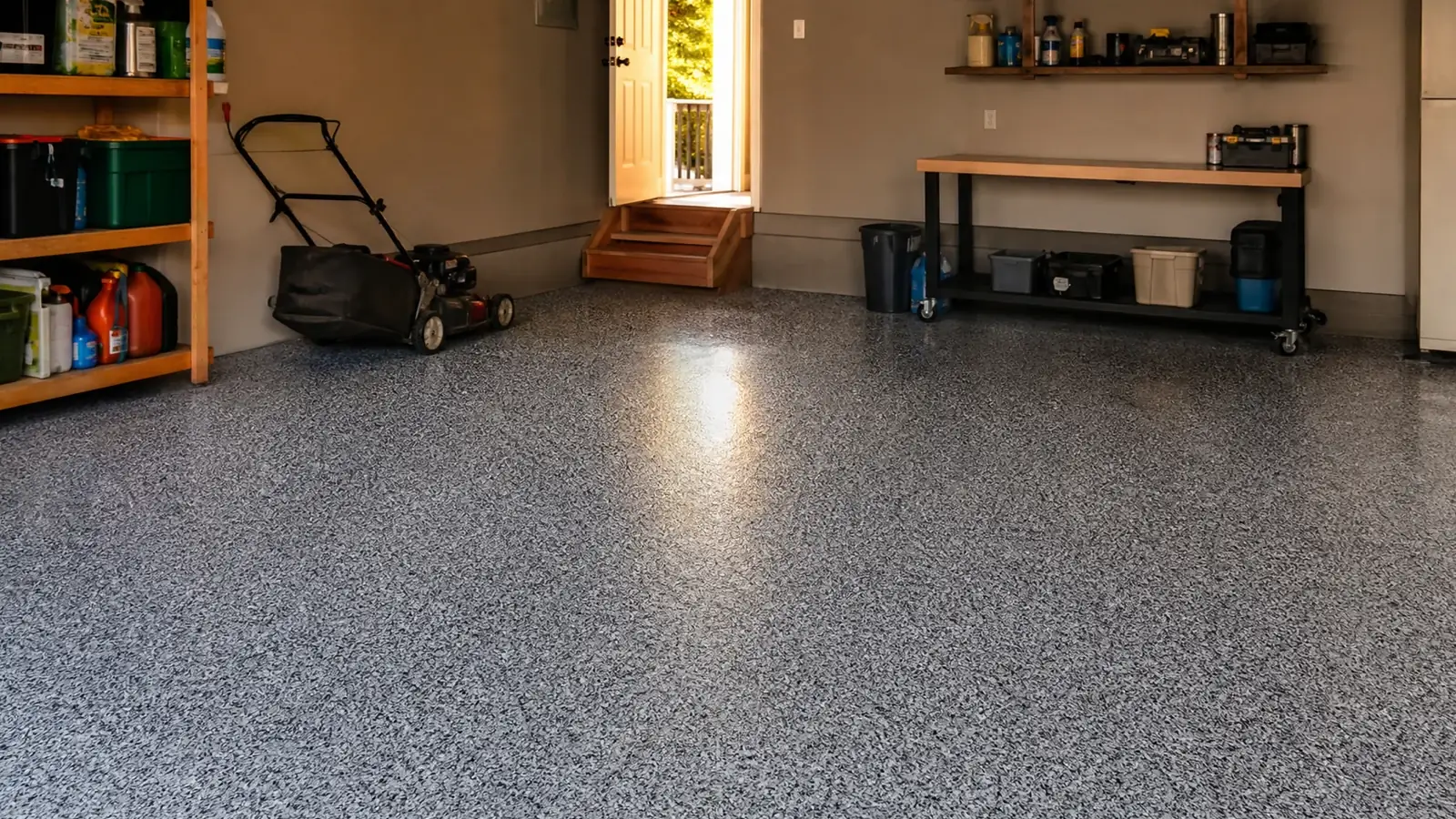
A well-installed epoxy floor in Simi Valley should still look clean and intact after five years, with some gloss dulling in tire paths, light surface scratches and little color change under a UV-stable topcoat. Peeling, bubbling or lifting at five years points to a prep or moisture problem, not normal wear.
A well-installed epoxy floor in Simi Valley should still look clean and intact after five years, with some gloss dulling in tire paths, light surface scratches and little color change under a UV-stable topcoat. Peeling, bubbling or lifting at five years points to a prep or moisture problem, not normal wear.
Most epoxy photos are taken the day the crew finishes, which is the one day the floor looks its best. What you really want to know is the fifth year, when the floor has taken thousands of parking cycles, a few dropped tools and a few Simi Valley summers. We cannot show you a floor that does not exist, and we will not invent numbers, so this post is a plain description of what normal wear looks like, what is not normal, and what you can do to keep a floor in good shape. Use it to set expectations before you commit.
The first thing to change on any coated floor is the shine. Over several years the topcoat picks up fine scuffs from shoes, grit, tires and sweeping, and the surface slowly goes from glassy to satin in the places that see the most traffic. Tire paths and the area around the driver's door are the usual spots. This is a topcoat wearing the way it was designed to, and it does not mean the floor is failing. A flake floor hides it well, because the broadcast texture breaks up the light, while a solid color or metallic floor shows the change more because it is smooth. A regular wash and a soft mop keep grit from acting like sandpaper. Grit is the main enemy of gloss, so a quick sweep before you park and a door mat at the house entry make a visible difference. If the shine dulls more than you like, the topcoat can often be refreshed, and we look at that on site rather than promise it in advance. If you want the shine to last longer, the habits in the last section matter more than any product choice.
After five years you will see where the cars live. A sealed floor does not absorb oil, brake dust or road film the way bare concrete does, so these things sit on top and wipe off when cleaned promptly. Neglected spills can leave a faint shadow, especially on light colors. Hot tires on a properly cured system should not lift the coating, and if they do, that is a sign the coating was thin or not fully cured at the time. Simi Valley's dry, dusty weather means the surface collects fine dust quickly, and Santa Ana wind days add more. That dust is cosmetic, and it mops off. A mid-tone flake blend is the most forgiving choice for hiding both dirt and wear, and you can compare blends in the color chart. Light solid colors look sharp when new but show tire marks sooner, which is the tradeoff to weigh when you pick. Garage floors also live under cars that drip a little: coolant, brake fluid and oil. Wiping fresh drips with a rag is a thirty-second job, and it keeps a tiny drip from becoming a permanent shadow years later.
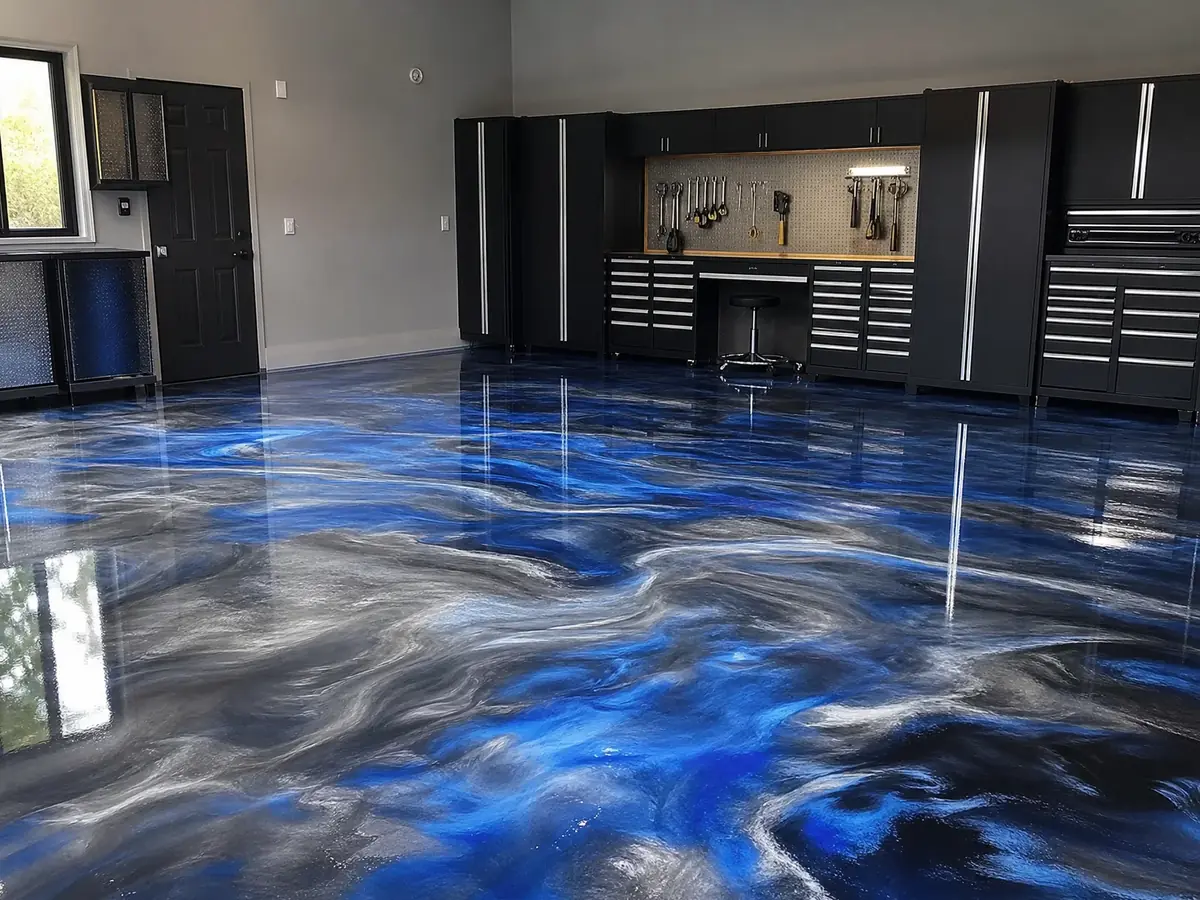
Expect some scratches. Dragged toolboxes, jack stands, bike pedals and wheels with grit stuck in them will mark a topcoat over time. Most are shallow and only visible at certain angles, and flake hides them better than any other finish. A chip happens when something heavy and sharp is dropped on the floor, and it is usually small. Cracks are the part owners worry about. Concrete moves slightly with temperature and with the ground under it, and a hairline crack that was repaired before coating can sometimes show faintly again as the slab flexes. That is not a coating failure. A wide or growing crack, or a floor that has lifted along a crack edge, deserves a look. Garage slabs on hillside lots are more likely to shift than slabs on flat ground, so mention the lot when you request an estimate. Surface scratches are wear and are not an adhesion issue. If you see a crack opening along the same line, take a photo with a coin for scale so we can tell whether the slab is moving or the coating is lifting, which is what a site visit is for.
Color change depends heavily on the topcoat. An epoxy-only finish can amber over time in direct sun, which is the yellowing people describe, and white or pale gray shows it most. A UV-stable polyaspartic topcoat is far more resistant, and that is why we use it over the epoxy basecoat. If your garage door faces the sun for hours each afternoon, or you leave the door open often, sun exposure is part of the picture. Flake colors are chips of pigmented material set into the coating and sealed under the topcoat, so the color you chose is protected by that clear layer. Metallic floors can show subtle shifts in depth as the surface wears, but the pattern stays. If a floor in your own garage has turned noticeably yellow within a few years, the likely cause is an epoxy-only topcoat in sun, not the flake itself. Ask any installer which topcoat they use. Fading in a metallic or flake floor is usually mild, because the pigments are set in the resin and sealed beneath the clear layer. A shaded, closed garage usually ages slower than one that sees sun for hours.
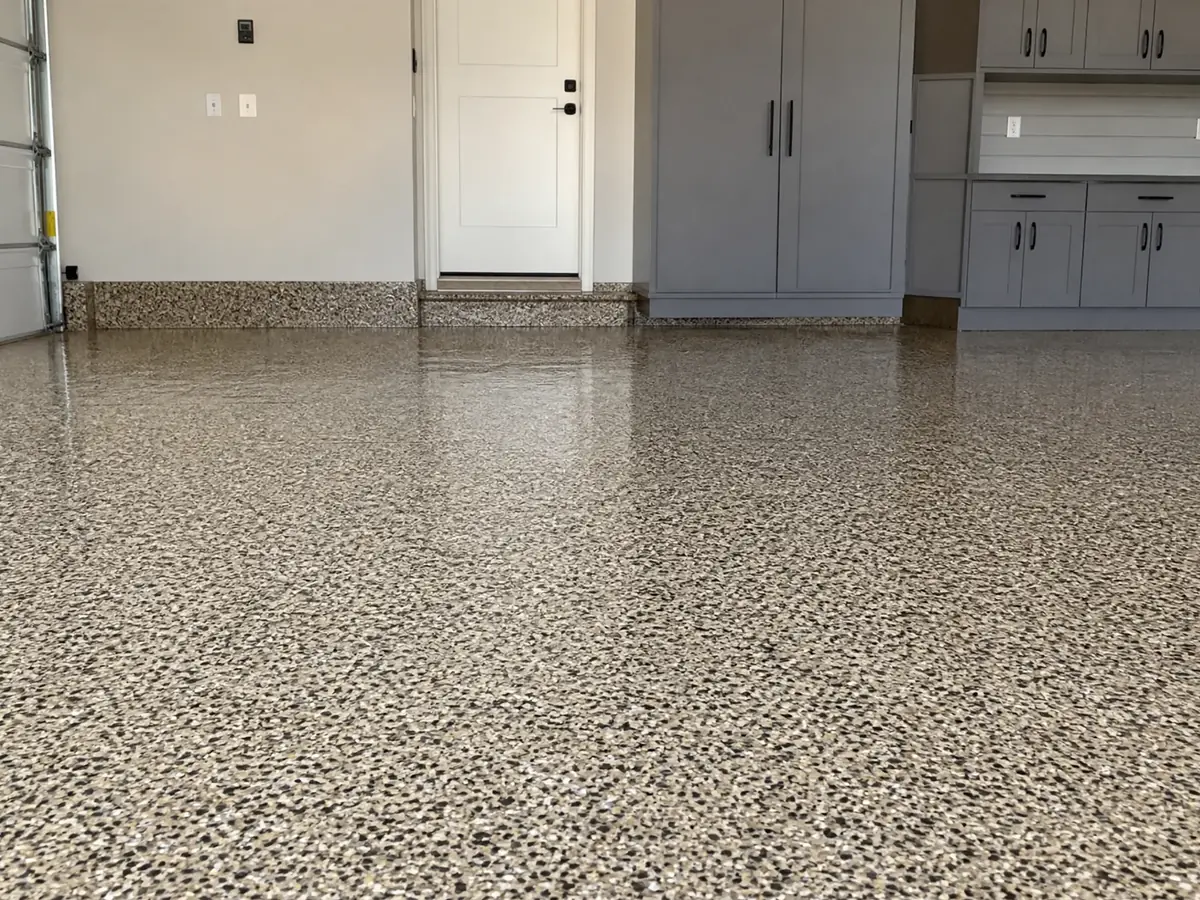
At five years, normal wear is a duller shine in tire paths, shallow scratches, a little dust-colored film that cleans off and maybe a faint line where a repaired crack sits. A failure looks different: sheets or edges of coating lifting from the slab, bubbles, large cloudy patches or cracks that have opened wide. Those point to a bond problem, which usually traces back to poor grinding, old paint left underneath or moisture. That is exactly what the limited lifetime adhesion warranty on residential floors is for. It covers the bond between the coating and your slab, and it does not cover surface scratches or normal wear, so read the terms. Commercial and outdoor floors carry a 3-year warranty. You can keep a floor looking good with simple habits: sweep weekly, mop with a mild cleaner, lift rather than drag heavy items and wipe spills quickly. For more on what goes wrong, see the downsides of epoxy. A practical rule is to photograph the floor every year in the same light. A slow change is wear. A sudden change, such as a new bubble or a lifted edge, is worth a call.
At five years, a well-built epoxy floor in Simi Valley should look clean with some gloss loss and light scratches. Peeling or bubbling means the prep failed, not that epoxy failed. Request a free estimate and we will explain how your slab, color and sun exposure will age. Call (805) 697-5483 for a free estimate.
A properly prepped floor can last many years, but the real number depends on prep, traffic, sun and care. We do not promise a specific lifespan because it would be a guess. Residential floors carry a limited lifetime adhesion warranty covering the bond to your slab.
Epoxy-only finishes can turn yellow in direct sun, and pale colors show it most. A UV-stable polyaspartic topcoat resists this much better. If your garage gets strong sun, ask any installer to confirm the topcoat type before you agree to the work.
It shows them more on light, smooth finishes and less on mid-tone flake. A sealed floor does not absorb marks, so most wipe off. Regular sweeping and a mop keep a floor looking good, while neglected spills on a light solid color can leave a faint shadow.
Often, yes. Small chips can be ground and patched, and a worn topcoat can sometimes be refreshed when the bond underneath is sound. A floor that is lifting needs a bigger repair. We assess the floor on site before recommending anything or quoting a price.
A hairline crack can sometimes show faintly again as concrete moves with temperature or the ground. Repairing cracks before coating reduces this, but no coating can stop a slab from moving. A wide or growing crack should be looked at rather than ignored.
Our limited lifetime adhesion warranty on residential floors covers the bond between the coating and your slab. It does not cover scratches, chips or normal surface wear. Commercial and outdoor floors carry a 3-year warranty. Ask for the written terms at your free estimate.
Durable, easy-to-clean garage floors that resist hot-tire pickup, oil and salt. Most two-car garages are done in one day.
Learn more →Full-rejection flake over a moisture-barrier epoxy basecoat, sealed with a UV-stable polyaspartic topcoat. Installed in one day.
Learn more →A clean, seamless pigmented floor in gloss, satin or matte for garages, workshops, interiors and commercial spaces.
Learn more →Choose flake for the best mix of value, grip and hiding power, solid color for a clean uniform look, and metallic for a one-of-a-kind showpiece. Flake takes one day at $6.50 to $10 per square foot, solid color takes three days at $9.50 to $11.50, and metallic takes three to four days at $12.50 to $18.50.
Read the answer →Neither wins alone. Epoxy bonds deeply to concrete and builds body, while polyaspartic resists sun, scuffs and hot tires as a topcoat. The longest-lasting garage floors usually use both: a moisture-barrier epoxy basecoat for adhesion, then a UV-stable polyaspartic topcoat. Surface preparation matters more than either product.
Read the answer →Hot tire pickup is when a warm tire lifts, softens or leaves marks in a garage floor coating where it sits. It usually comes from poor concrete prep, an under-cured or thin coating, or the wrong product. Diamond grinding, a well-bonded basecoat, full cure and a polyaspartic topcoat prevent it.
Read the answer →Call (805) 697-5483 or send the form at the top of the page. We reply the same day.