
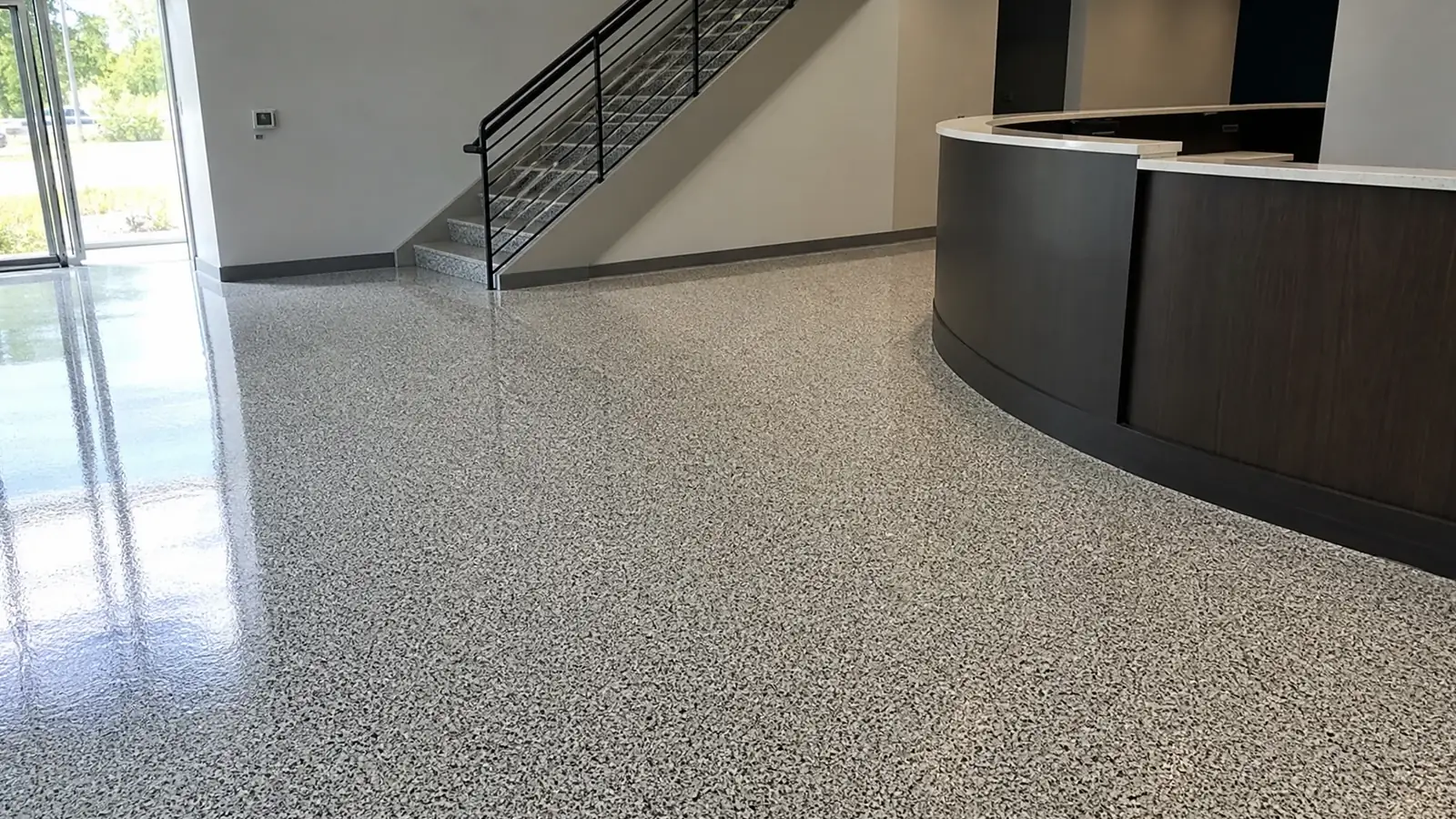
Durable, seamless, easy-to-sanitize floors for shops, warehouses, restaurants, offices and retail spaces, installed on a schedule that respects your business.
Commercial epoxy flooring is a seamless resin coating over ground concrete that handles forklifts, chemicals, foot traffic and washdowns in businesses. SV Epoxy Flooring installs it in Simi Valley shops, warehouses, kitchens and offices. Price depends on size, slab and system, so we quote after a free site visit, with a 3-year warranty.
A business floor does more than look good. It has to survive forklift turns, dropped tools, wet boots, oil, cleaning chemicals and hours of foot traffic, and it has to do it without closing the business for long. Bare concrete usually falls short. It dusts, stains, soaks up spills and breaks down at joints, and it is almost impossible to keep truly clean. A well-chosen epoxy system seals the slab, resists most of what a workday throws at it and wipes clean.
Simi Valley and the nearby cities have a mix of building types: business parks and light industrial units, auto and machine shops, restaurants and kitchens, medical and dental offices, retail shops, storage buildings and breweries. Each has different needs. A bakery needs a washable surface and cove base, a fabrication shop needs impact resistance and a warehouse needs a floor that stays flat under rolling loads. A single system does not suit all of them, so we begin by looking at how your floor is actually used.
SV Epoxy Flooring is based in Simi Valley and works across Moorpark, Camarillo, Oxnard, Thousand Oaks and the rest of our service areas. Commercial and industrial work is priced after a free site visit, because square footage alone does not tell the story. Once we have walked the space, you receive a fixed written quote, a phasing plan and a 3-year commercial warranty in plain language.
Install time follows the system you choose and the size of each phase: flake takes 1 day, solid color 3 days, metallic 3-4 days and quartz 2-3 days per area. Larger spaces are scheduled in zones, so total calendar time depends on how many zones we can work at once. Light foot traffic usually returns the day after the topcoat goes down. Forklifts, loaded pallet jacks and heavy equipment wait longer, typically several days, and your plan gives the exact date for each zone. Cool or damp conditions can stretch the cure, and heat can shorten it. A full chemical cure comes later, so keep harsh cleaners away from the floor for the first week or so. Your plan also lists when it is safe to stack inventory, reinstall racking and return heavy equipment to each finished zone.
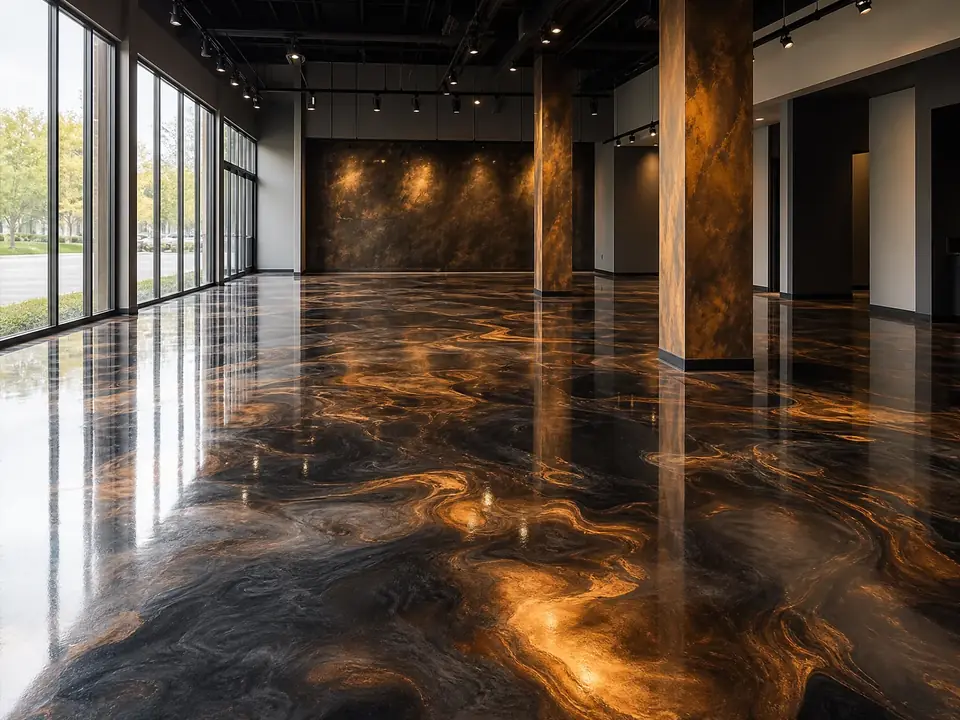
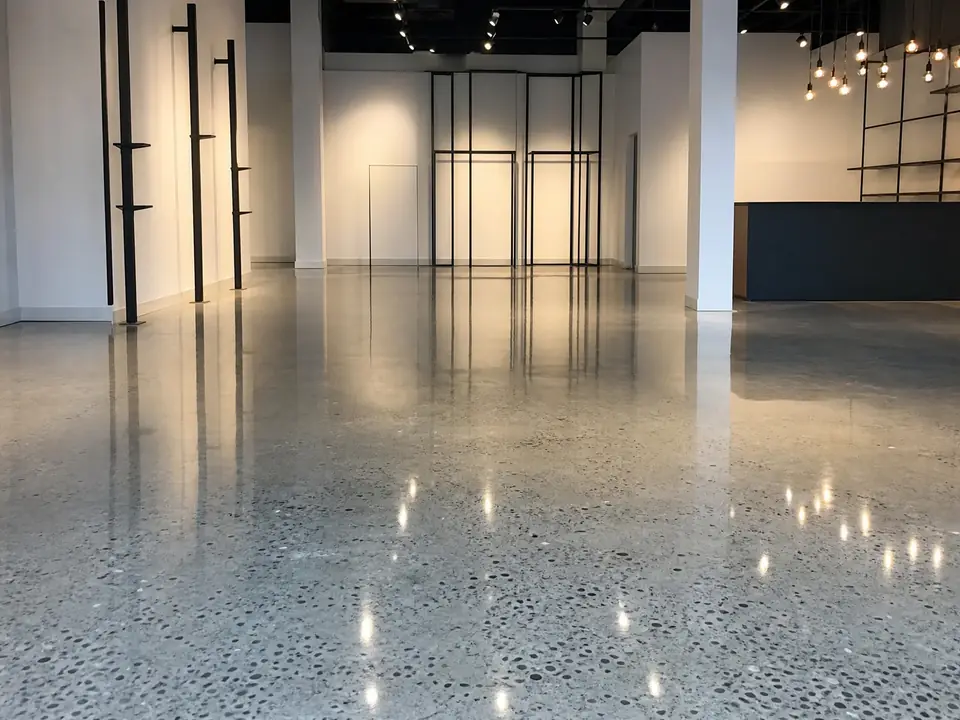
Choose a commercial epoxy floor when the space needs a seamless, washable and hard-wearing surface. A flake epoxy floor works for shops and garages because it is fast and hides marks. A solid color epoxy floor suits clean offices and retail. A metallic epoxy floor is ideal for showrooms, though it takes the longest. A quartz finish is best for kitchens and wet areas that need grip. Grind and seal is the budget choice for a storage area that only needs dust control. Outdoor concrete coatings cover loading docks and patios. We recommend the system after we see the space. Many businesses end up using two systems in one building, such as a quartz build in the kitchen and a solid color floor in the dining room, and we are glad to price that mix. Ask for a free estimate and bring your questions about budget.
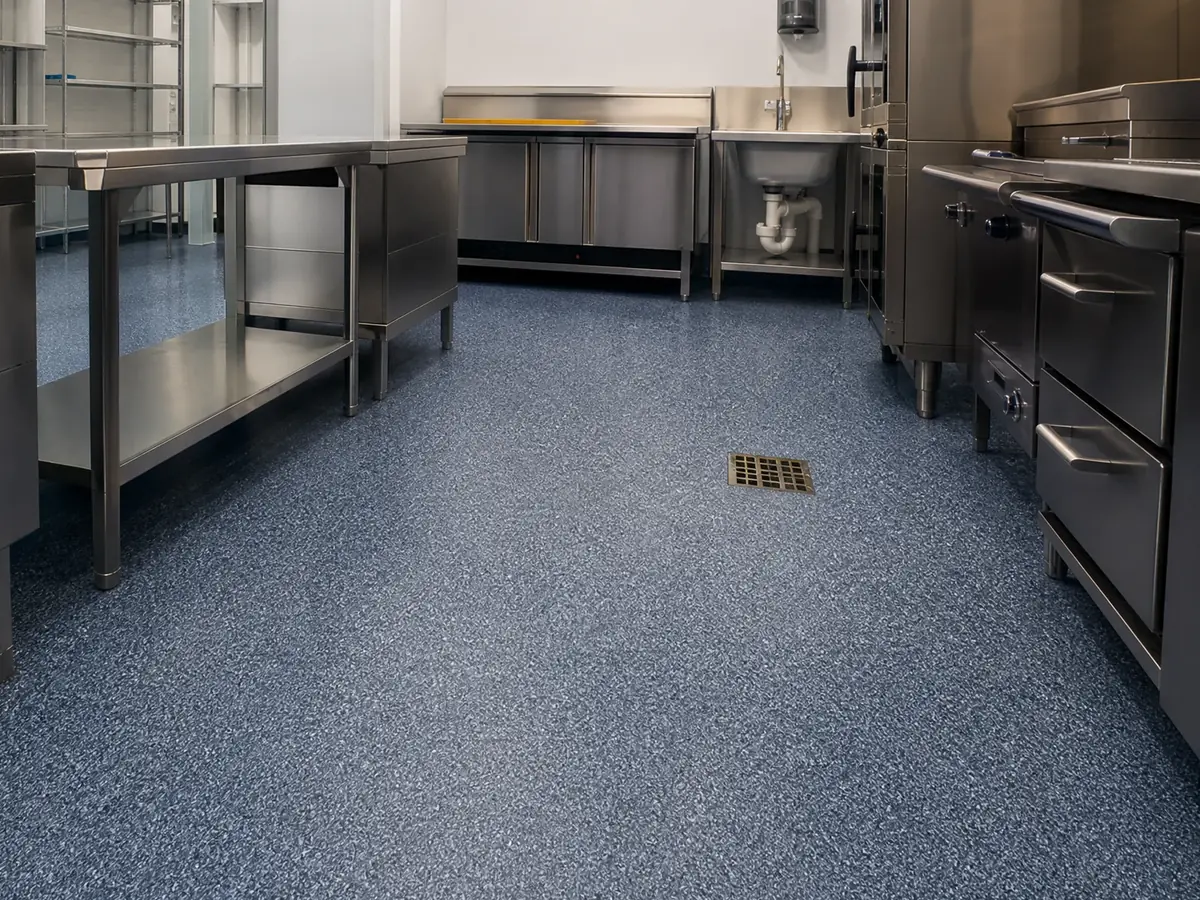
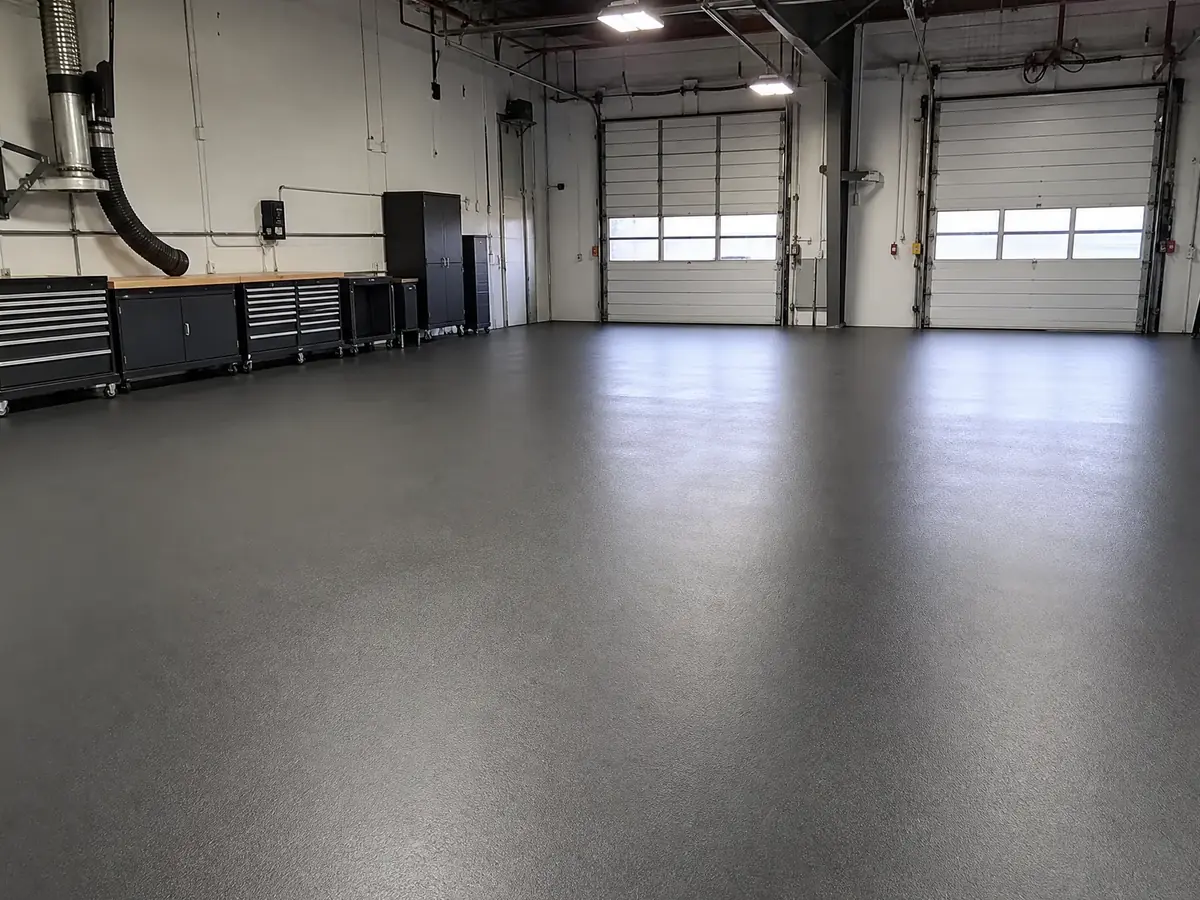
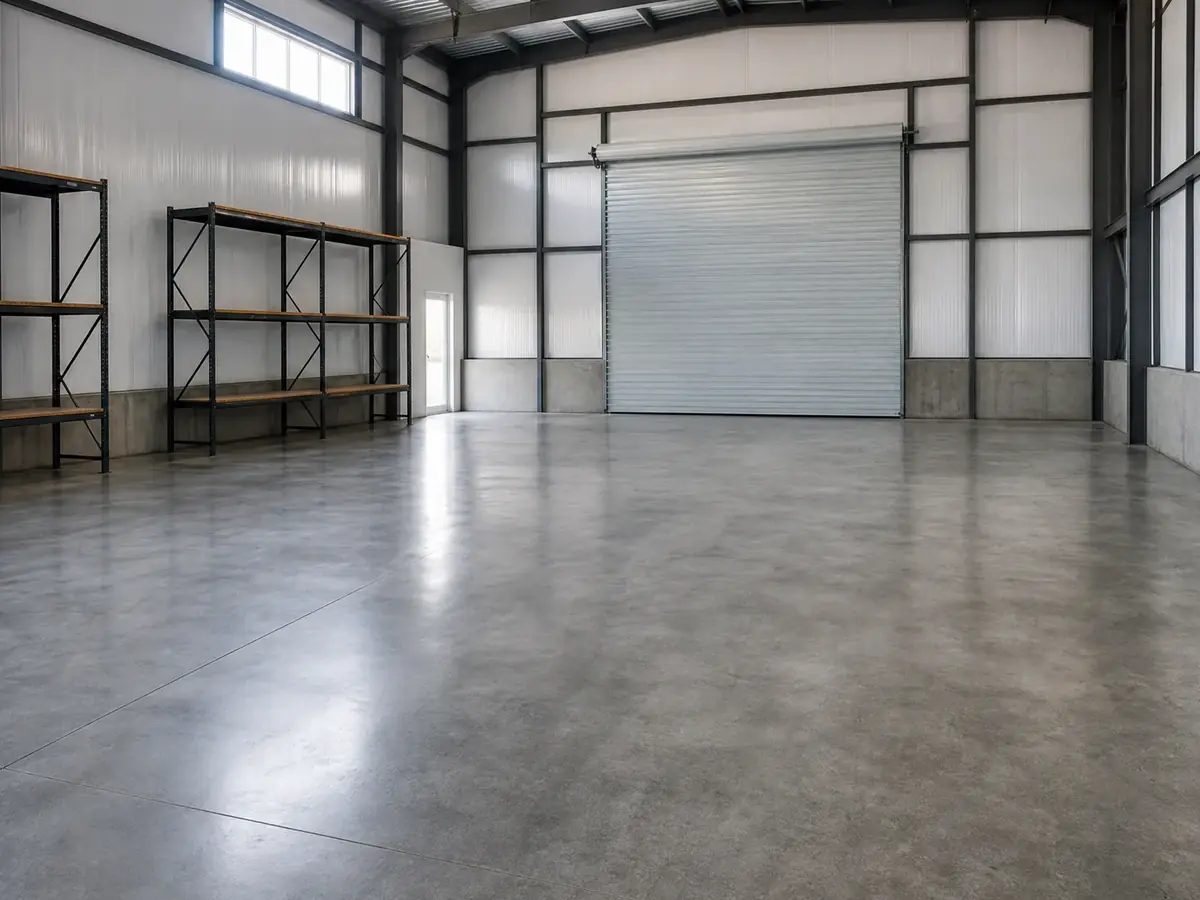
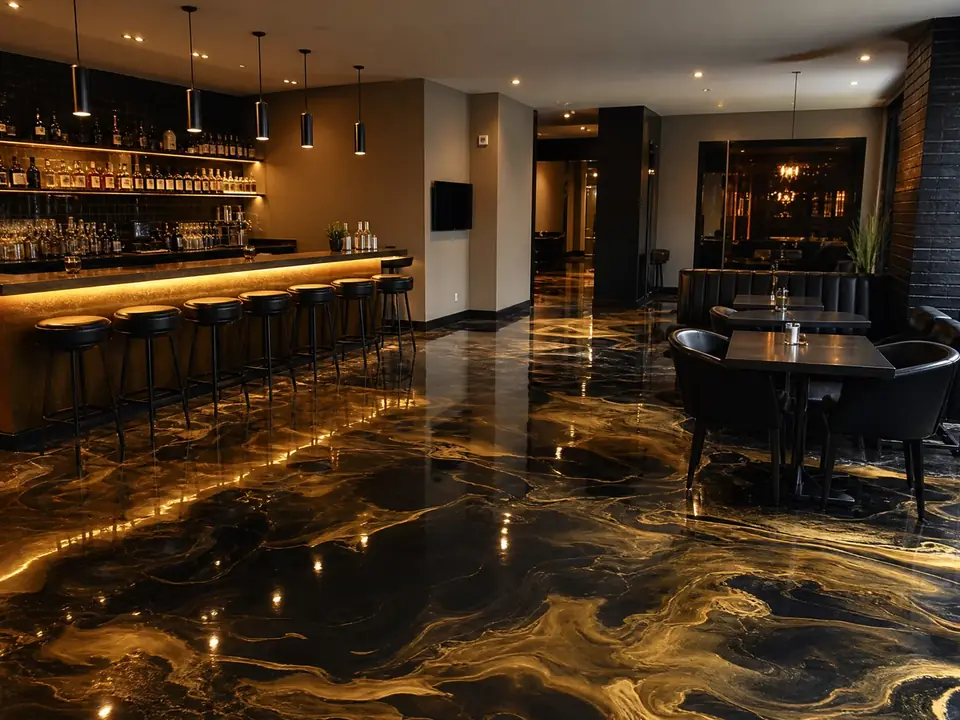
The right commercial floor depends on what happens on it. Offices, showrooms and retail spaces are usually about appearance and easy cleaning, so a solid color epoxy floor or a metallic epoxy floor gives a clean, branded look, and a quartz finish adds grip near entries. Auto bays, machine shops and maintenance garages need resistance to oil, brake fluid, coolant and dropped tools, and a flake or solid system with a UV-stable polyaspartic topcoat is a common fit. Restaurants and commercial kitchens need a floor that can be washed down daily, with traction around fryers and prep stations, which points to a quartz or sand build with cove base. Warehouses and storage buildings need a durable surface that tolerates pallet jacks and forklift tires, and sometimes striping for aisles and safety zones. Healthcare and lab spaces want a seamless surface with few places for germs to hide. Beyond system choice, we look at slab age, existing coatings, drains and slope. Each system has install times we can plan around: flake takes 1 day, solid color 3 days, metallic 3-4 days and quartz 2-3 days per area. The best way to choose is to tell us what rolls, drips or gets dropped on the floor.
Closing a business to coat the floor is rarely an option, so planning is half the job. We start by asking what has to keep working: the loading door, the front counter, a production line, a walk-in cooler. Then we divide the floor into zones and work one section at a time, moving the schedule around your busiest days. Slow weeks and quiet days are the best windows, and Sunday work is possible because our crew works Monday through Friday and Sunday. We are closed on Saturday, so a Friday start with a Sunday return is one way to protect a busy week. Fresh coatings need airflow and a clear area, so we set up barriers, mark foot paths and keep equipment off wet sections. The speed of each system helps. A flake system can often be finished in a day per zone, while metallic takes longer because of its layers. Heavy rolling loads like loaded pallet jacks and forklifts should wait until the coating is hard enough, which is typically several days after the final coat, and we put the exact date in your plan. Tenants in leased units should check with the landlord about lease terms and building rules before work starts, and we are happy to supply a written scope for that conversation. A good phasing plan includes where your inventory goes, who has the keys and what happens if weather or a late delivery pushes the schedule.
The details at the edges of a commercial floor decide how well it works. Cove base is a curved strip of the same coating that runs up the wall by several inches, so there is no sharp corner where water, grease and bacteria can collect. It is standard in kitchens, food areas, labs and clinics, and it protects the wall base from mops and splashes. Floor drains and slopes also matter. The coating should follow the slope to the drain, not hold puddles, and we can adjust the thickness near drains. Control joints and saw cuts need special care. If a joint moves, a hard coating bridging it will crack. We fill joints with a flexible material that can move, and we leave true expansion joints alone. Hygiene also depends on texture. A smooth floor wipes clean but can be slick, while a fine quartz texture grips better and takes a little more scrubbing. If a health inspector requires specific product data, ask us at the start and we will request it from the manufacturer. We do not claim a certification we cannot show. Cleaning is simple: sweep daily, mop with a neutral cleaner, use a deck brush on textured areas and wipe up spills quickly.
Epoxy handles forklift and pallet jack traffic well when it is built for it and the slab is sound. Thickness, aggregate and a durable topcoat all help, but the concrete underneath is just as important. If joint edges are crumbling, we repair them first, or the wheels will chew them out and take the coating with them. Hard polyurethane wheels and sharp turns are the main causes of wear. Expect scuffing and marks at the pivot points. Chemical resistance is good against oil, many cleaners and common shop fluids, though strong solvents, battery acid and some food acids can dull or stain a coating if left sitting. Wipe spills promptly and tell us about unusual chemicals at the estimate, so we can match the system. Moisture is another honest concern. A slab without a vapor barrier can push moisture upward and blister a coating, so we test and, where needed, apply a moisture-barrier epoxy basecoat. For very heavy industrial wear, no resin floor is indestructible, and sometimes the better answer is a thicker build or a planned recoat cycle. Our 3-year commercial warranty covers the system, and we explain what it covers in writing.
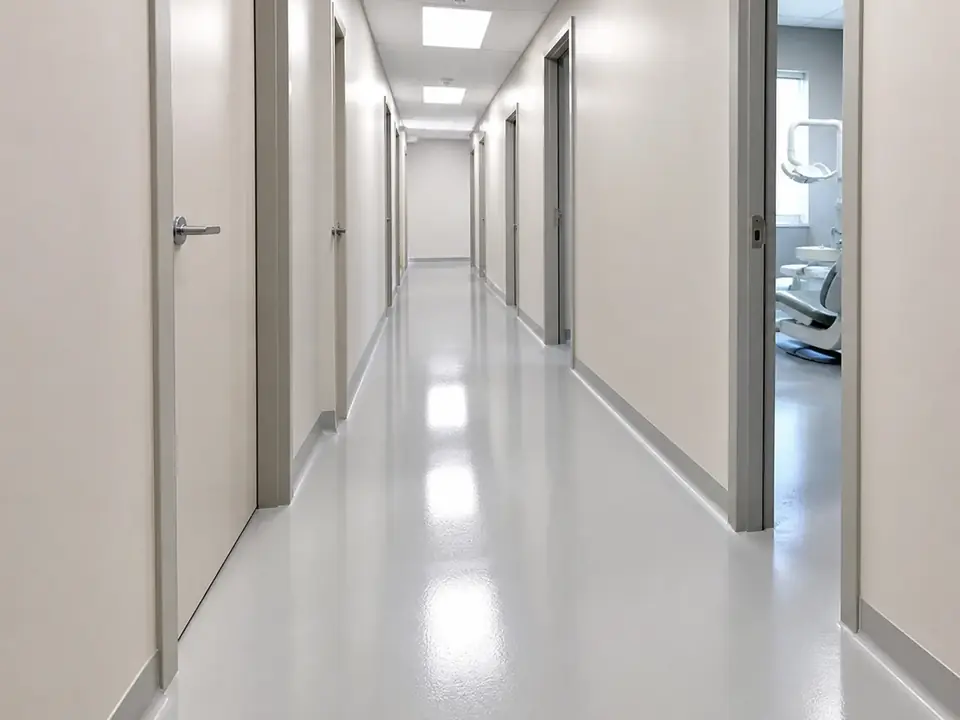
No grout lines or open pores means spills wipe up and washdowns work, which helps kitchens, clinics and food areas stay clean.
Thick systems over a repaired, ground slab hold up to pallet jacks, carts and forklift tires better than bare or painted concrete.
Zone-by-zone scheduling, Sunday availability and quick systems like flake keep the disruption to your operation small.
Cured epoxy and polyaspartic stand up to oil, coolant, most cleaners and shop fluids that destroy bare concrete.
Aisle striping, walkways, logos and color zones can be built into the floor, which improves safety and the look of a space.
Commercial installs carry a 3-year warranty, written clearly so that you know what is covered and what counts as normal wear.
Typical ranges for Simi Valley and Ventura County. Minimum project $2,600. Commercial and industrial work is quoted after a site visit.
| System | Price per sq ft | Typical project |
|---|---|---|
| Flake system (garage, up to 400 sq ft) | $6.50 – $10 per sq ft | $2,600 – $4,000 |
| Solid color system | $9.50 – $11.50 per sq ft | $3,800 – $4,600 |
| Metallic epoxy system | $12.50 – $18.50 per sq ft | $5,000 – $7,400 |
| Quartz & sand finish system | $9 – $16.50 per sq ft | $3,600 – $6,600 |
| Grind & seal (clear sealer) | $6.50 – $9 per sq ft | $2,600 – $3,600 |
| Patio, driveway & pool deck | $8 – $12 per sq ft | $3,200 – $4,800 |
| Commercial & industrial | Quoted after a site visit | Quoted per project |
Prices and details reviewed October 2026. Project examples assume a two-car garage up to 400 sq ft. Free on-site measurement and written estimate. See the color chart to pick your color.
A two-car flake epoxy garage floor in Simi Valley typically costs $2,600 to $4,000 for up to 400 square feet, or $6.50 to $10 per square foot. Our minimum project is $2,600. Solid color starts at $3,800, metallic runs $12.50 to $18.50 per square foot, and larger garages cost more because pricing follows square footage.
Read the answer →You can usually walk on a new epoxy floor within a day, but driving on it takes longer and depends on the system, the products and the temperature. Your installer should give you exact times at the walkthrough. Full chemical cure takes about a week, so treat the floor gently until then.
Read the answer →A well-installed epoxy floor in Simi Valley should still look clean and intact after five years, with some gloss dulling in tire paths, light surface scratches and little color change under a UV-stable topcoat. Peeling, bubbling or lifting at five years points to a prep or moisture problem, not normal wear.
Read the answer →Commercial and industrial floors are quoted after a free site visit, because size, slab condition, system, phasing and extras like cove base change the price. We give you a fixed written quote. For reference, our residential systems start at a $2,600 minimum project, but commercial scopes are priced on their own.
It depends on traffic, wheel types, chemicals, slab condition and maintenance, so we do not promise a number of years. A well-prepared floor in a light-use office will outlast one in a busy forklift lane. We back commercial installs with a 3-year warranty and explain normal wear in writing.
Plan on several days after the final coat for heavy rolling loads, though the exact time depends on the system, temperature and thickness. Foot traffic returns sooner. We build the date into a phasing plan, so you know which zone is usable when. Install time is 1 day for flake and 3 days for solid color.
Yes, when the system and slab are right. A thick, well-bonded build over repaired concrete holds up to pallet jacks and forklifts. Hard wheels and sharp turns will still scuff the surface, and weak joint edges must be repaired first. We discuss your equipment at the site visit.
Yes, it is one of the most common uses. A coated floor controls dust, resists oil and coolant, brightens the space and cleans easily. In a shop, flake or solid systems are popular, and a warehouse may add striping for aisles and safety zones. Heavy impact areas need a thicker build.
Yes, a seamless coating with cove base is a strong fit because it has no grout lines and washes down easily. Texture is important for grip near fryers and prep areas. If your health inspector asks for specific product data, tell us early and we will request it from the manufacturer.
Cove base is a curved edge of the same coating that runs several inches up the wall, so the floor and wall meet without a sharp corner. It stops water, grease and dirt from collecting in the joint, and it protects the wall base. It is standard in kitchens, labs and clinics.
Often yes, with a phased plan. We coat the floor in zones, keep foot paths clear and schedule around your busiest days, including Sundays. Some businesses can stay fully open, others close one area at a time. We map this out at the free site visit.
It can be, if the finish is chosen for it. A smooth gloss floor can be slick when wet, so wet or greasy areas get a quartz, sand or fine additive texture. No floor is slip-proof, and texture makes cleaning a little harder, so we balance grip and hygiene for each room.
Double-broadcast colored quartz or a sand finish for extra grip and durability on stairs, patios, mudrooms and commercial floors.
Learn more →Full-rejection flake over a moisture-barrier epoxy basecoat, sealed with a UV-stable polyaspartic topcoat. Installed in one day.
Learn more →A clean, seamless pigmented floor in gloss, satin or matte for garages, workshops, interiors and commercial spaces.
Learn more →Call (805) 697-5483 or send the form at the top of the page. We reply the same day with a time to measure.