
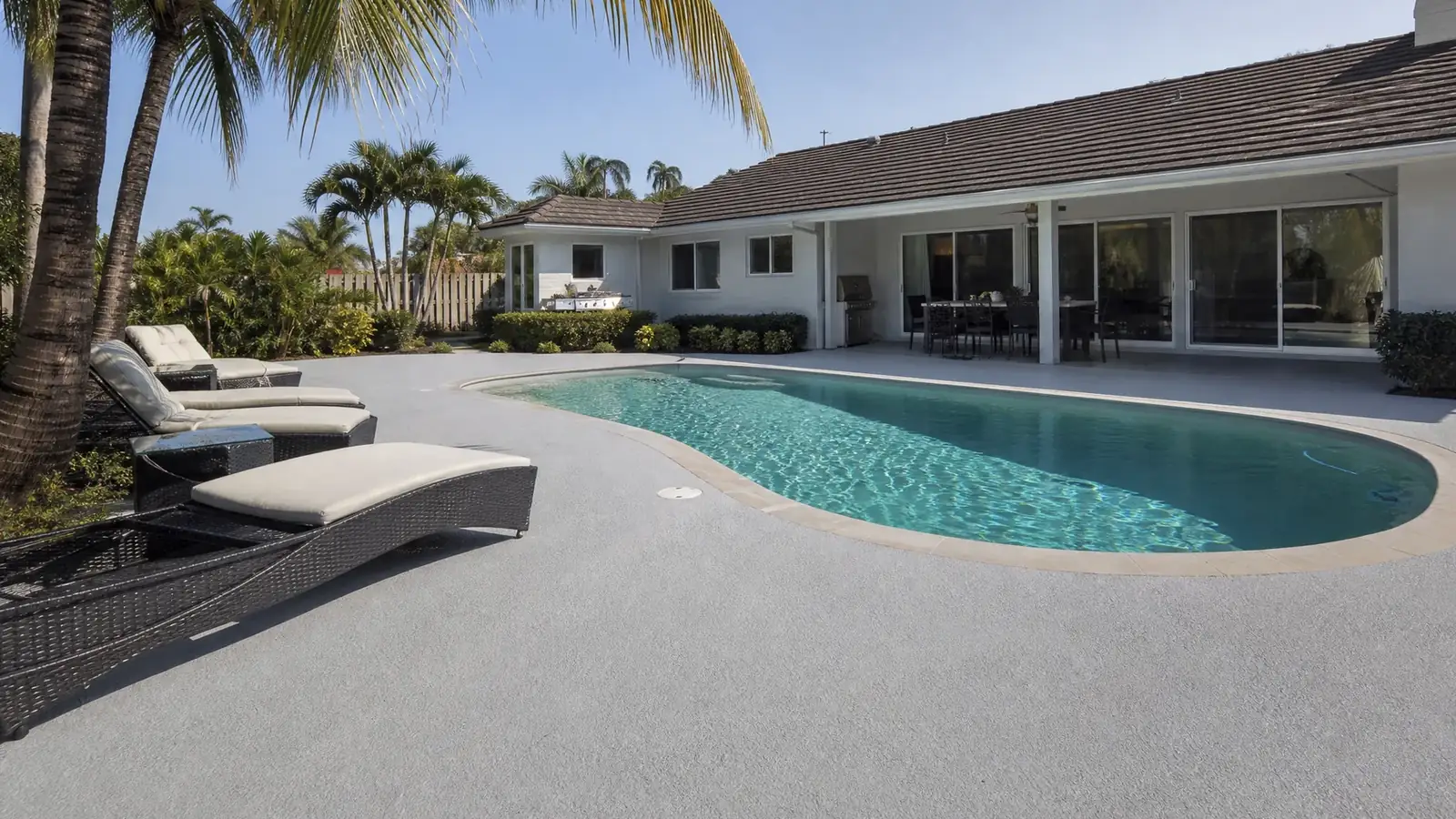
Patios, walkways, driveways, stairs and pool decks get a textured, UV-stable coating that grips wet feet, resists the sun and turns tired concrete into a clean outdoor floor.
The best outdoor concrete coating for a Simi Valley patio, driveway or pool deck is a textured, UV-stable system built over diamond-ground concrete. It resists sun, adds grip when wet and seals out stains. Outdoor coatings cost $8 to $12 per square foot, usually $3,200 to $4,800, with a 3-year warranty.
Bare outdoor concrete has a hard life in Ventura County. Sun bakes it for most of the year, the occasional rain turns it slick, sprinklers and pool splash keep it damp, and fine dust from Santa Ana wind days settles into every pore. Over time the surface goes gray and chalky, stains from leaves, grease and pool chemicals soak in, and hairline cracks open up. A good outdoor coating fixes the look and also changes how the surface behaves, with better grip and easier cleaning.
Outdoor work is a different job from an indoor garage floor. The coating has to handle ultraviolet light, heat, thermal movement and water on both the top and the underside of the slab. That is why we use a textured build with a UV-stable polyaspartic topcoat, and why we spend as much time on prep, drainage and crack repair as on the coating itself. We also tell you where a coating is the wrong answer, such as a slab that is moving or failing.
SV Epoxy Flooring is a service-area business based in Simi Valley, and our outdoor jobs run from hillside backyards in Simi Valley and Moorpark to pool decks in Thousand Oaks, Camarillo and Oxnard. Your free estimate includes a walk around the area, a look at slope and drainage, and a fixed written quote with the 3-year outdoor warranty spelled out.
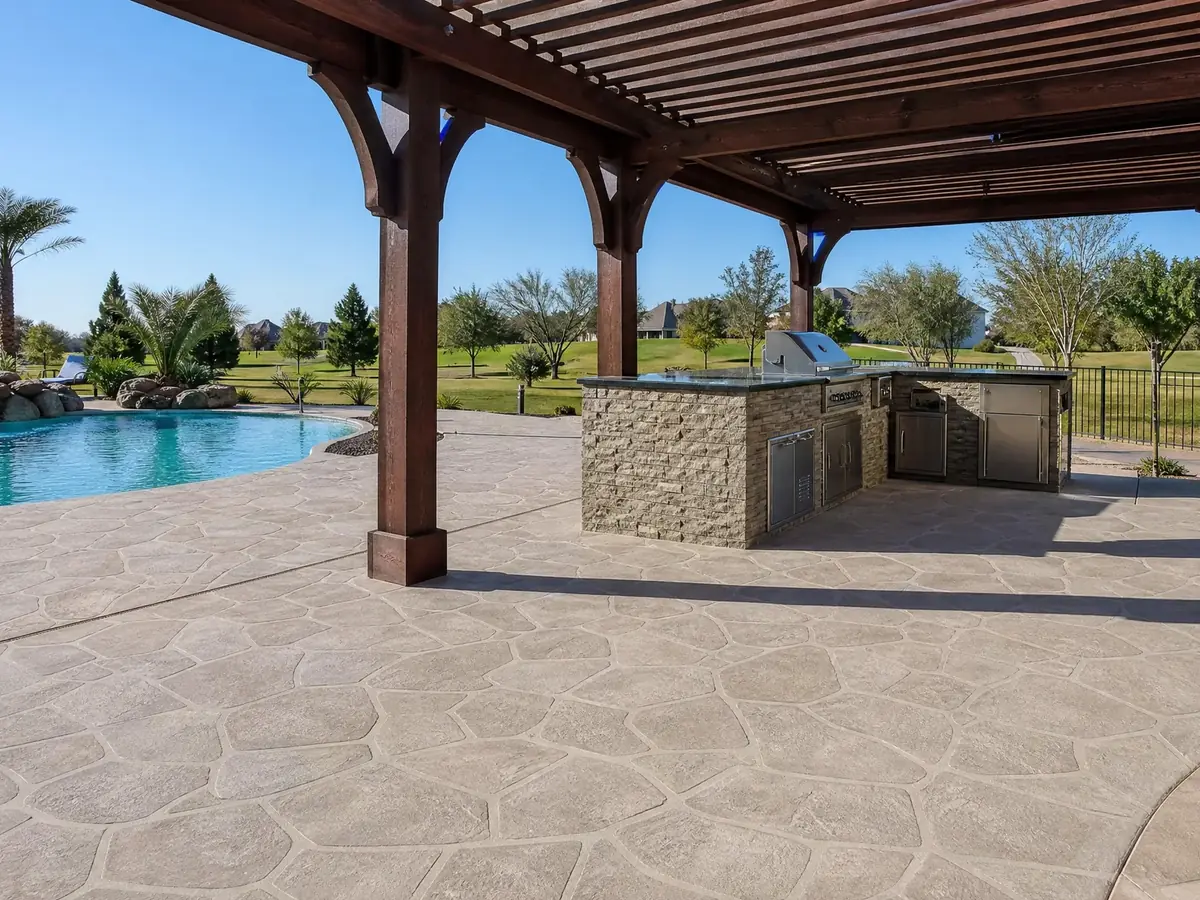
A durable outdoor coating begins with diamond grinding, exactly as it does indoors. The grinder removes old sealer, paint, algae film and the weak surface, and it opens the concrete so the resin can bond. Next come the repairs. Cracks are routed and filled with a flexible or rigid material depending on whether they move, and spalled areas are patched. Because outdoor slabs sit on soil and take up moisture from below, a moisture-barrier epoxy basecoat (MVB) usually goes down first. Texture is then added with a broadcast of quartz or sand, which gives the finished floor its grip. For many outdoor jobs we do a double broadcast, the same method used in our quartz finish, so the surface is dense and gritty rather than smooth. The last layer is a UV-stable polyaspartic topcoat. That topcoat matters outdoors, because standard epoxy can chalk and yellow in direct sun, while polyaspartic is designed to hold its color and clarity. It also cures fast, which narrows the window in which wind-blown dust can land in the wet film. The finished surface is a single sealed skin over the concrete, with its seams and expansion joints dealt with deliberately, not coated over blindly.
A pool deck is the toughest test for any coating. People walk it barefoot, wet, and in a hurry, and the surface has to give grip without feeling rough on skin. We build pool decks with a fine, even texture and keep the grain size comfortable for bare feet, which is a balance rather than a fixed setting, so ask to see a sample. Color matters too. Lighter tones reflect more sun and usually feel cooler underfoot than dark ones, though no coating stays cool in full summer sun, and a dark deck can get uncomfortably hot. Pool water, chlorine and salt can attack weaker coatings, so a chemical-resistant topcoat is part of the build. We also look hard at drainage. The deck should slope away from the pool, and we do not coat expansion joints or the coping in a way that blocks their movement. A coating cannot fix a deck that holds standing water or a slab that is shifting, and we will say so at the estimate. The alternative is a cementitious cool deck resurfacing, and we are glad to explain the tradeoffs between that and a polyaspartic-based system before you choose.
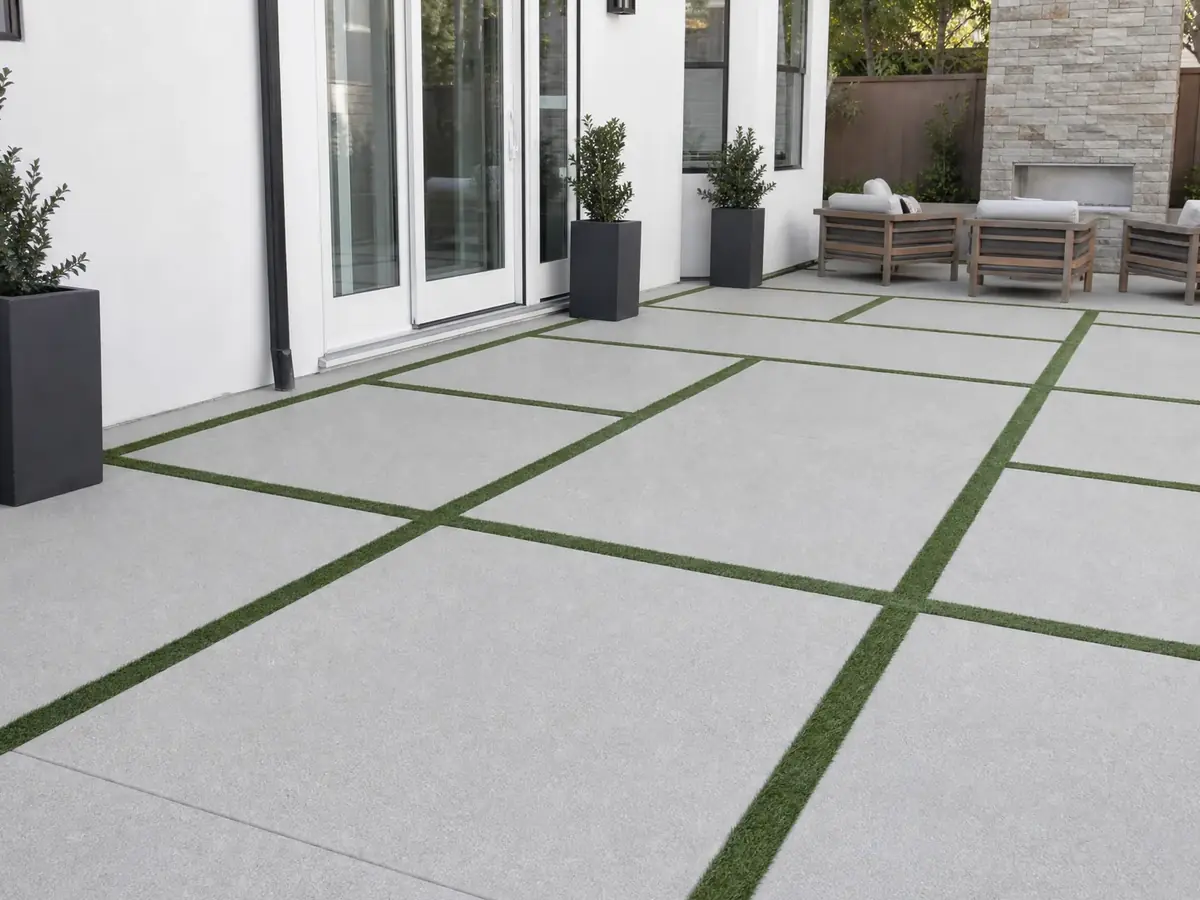
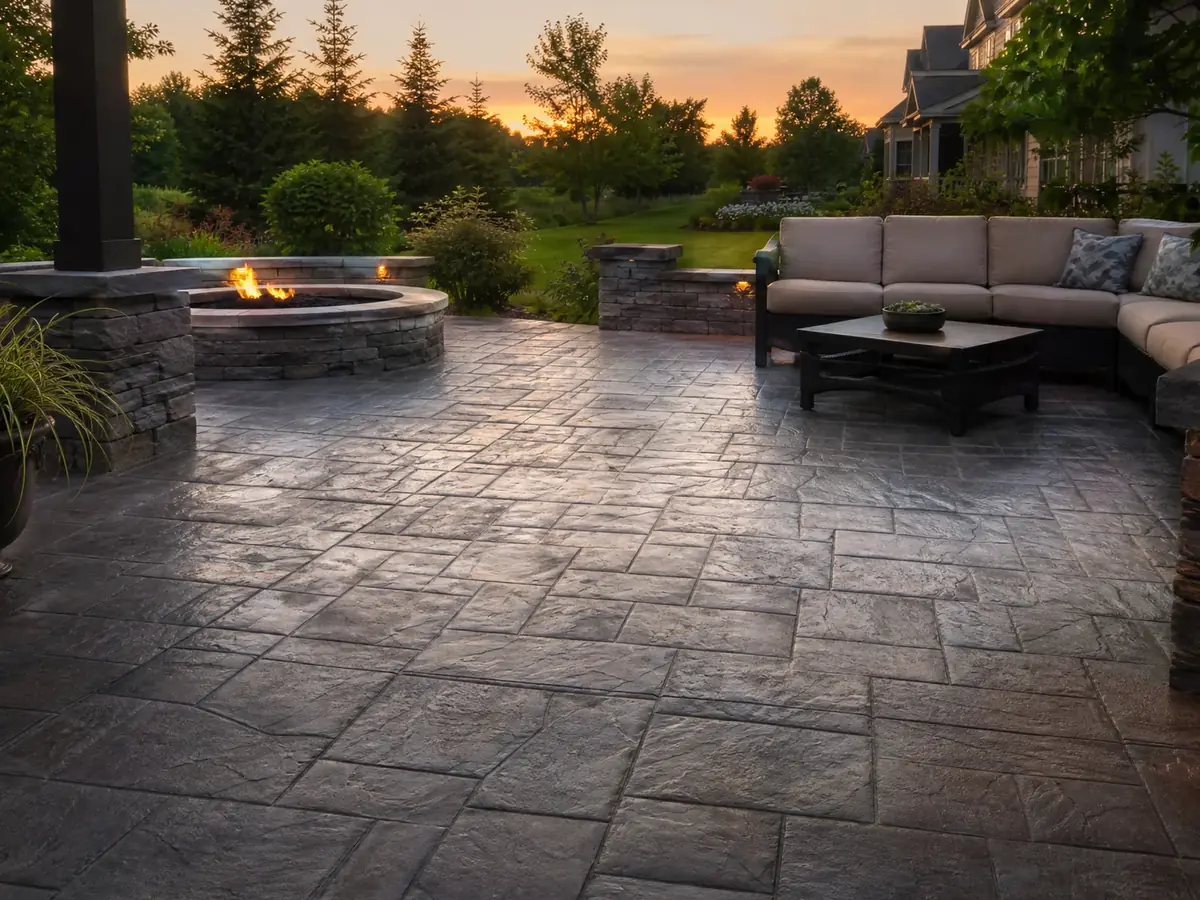
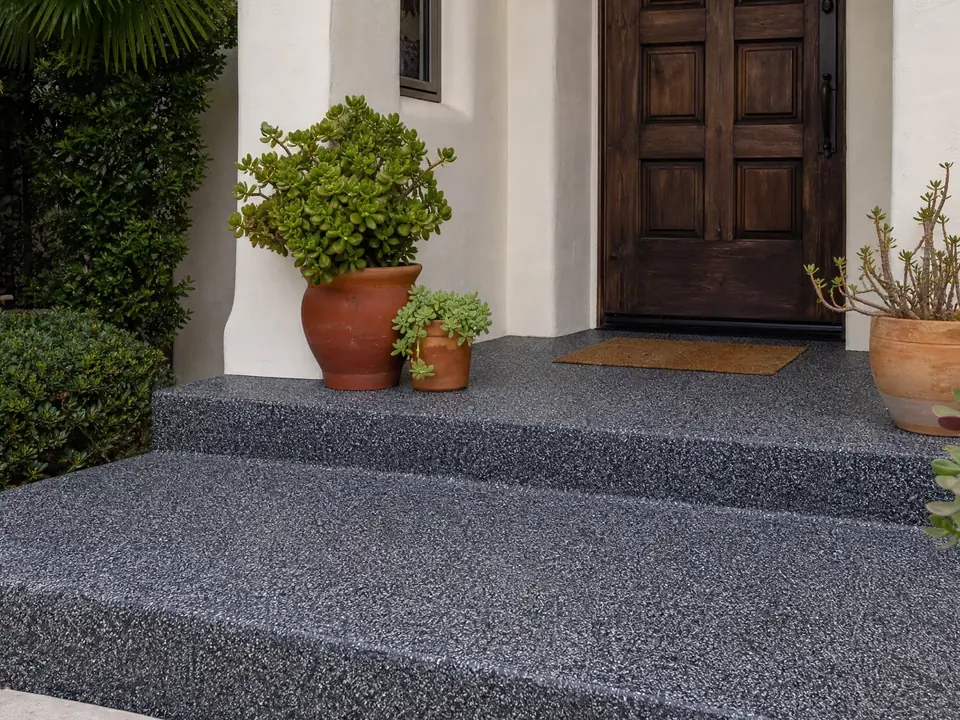
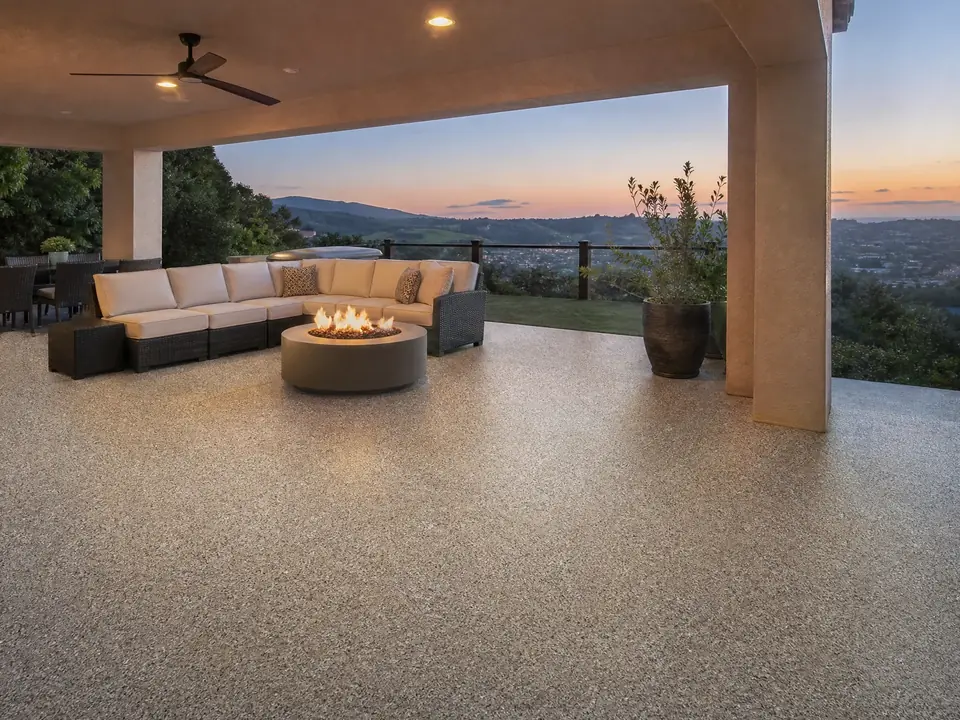
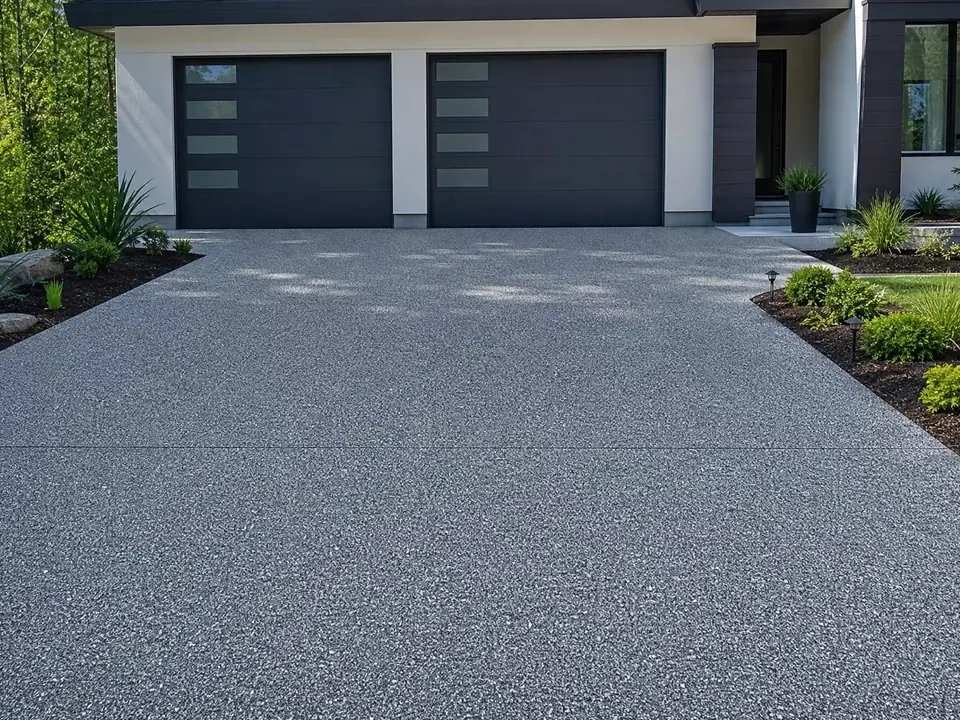
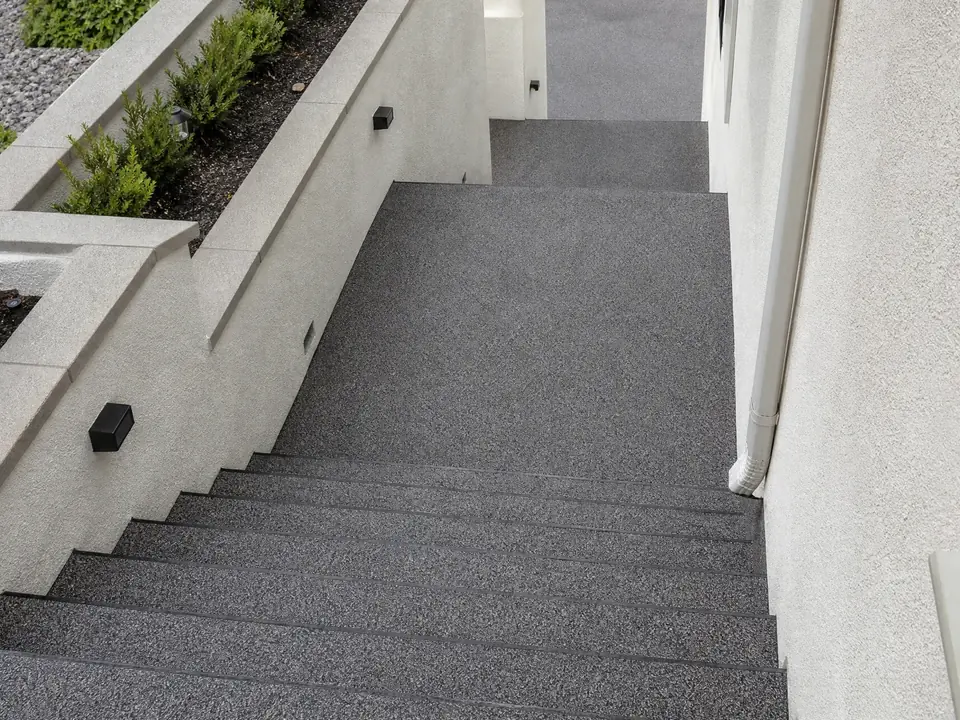
Patios are the most common outdoor request. A covered patio can take a decorative quartz finish with a clear topcoat that looks like stone, while an open patio in full sun benefits from the strongest UV protection. Walkways and side yards on hillside lots often have a slight slope, so traction is the main goal. Driveways need a tougher approach. Cars bring hot tires, oil drips and constant turning, so a driveway coating is a thicker, grippier build, and we are honest that heavy daily use will eventually show wear at the turning points. Stairs and landings are a great place for a texture coating. Each tread is ground, chipped edges are rebuilt, and the grain is carried across the nosing so the edge has grip too. Outdoor coatings suit sound slabs. If your concrete is sunken, heaved by tree roots or crumbling, a coating will not hold it together, and repair or replacement comes first. Free estimates include a quick check for those problems. If you also have a garage floor, we can price both together, which is often more economical than two separate visits. Use the color chart to pick a tone that suits your stucco, your pavers and the light on that side of the house, then confirm it against a sample outside, in real sun.
Weather decides when outdoor work happens. Resin needs a dry slab and a workable temperature, and surface heat matters as much as the air reading. On very hot days, a slab in direct sun can get hot enough to cause bubbles or shorten the working time, so we plan the work around the cooler parts of the day. Wind is the other factor. Santa Ana days can blow grit onto a wet coating, which is why we sometimes reschedule rather than risk a rough finish. Rain forecasts also matter. Water on a fresh coat or on a damp slab can cloud it, so we check the forecast before we commit to a start date. After the job, wash the surface with a hose and a soft brush, use a mild cleaner, and rinse well. Skip rock salt and harsh acids. Every coating has limits. Moisture coming up from below can still cause blisters in a poorly drained yard, a thin film can scuff where cars turn, and no outdoor finish stays like new forever. Our 3-year warranty covers the outdoor system, and we will explain exactly what it does and does not include before you sign.
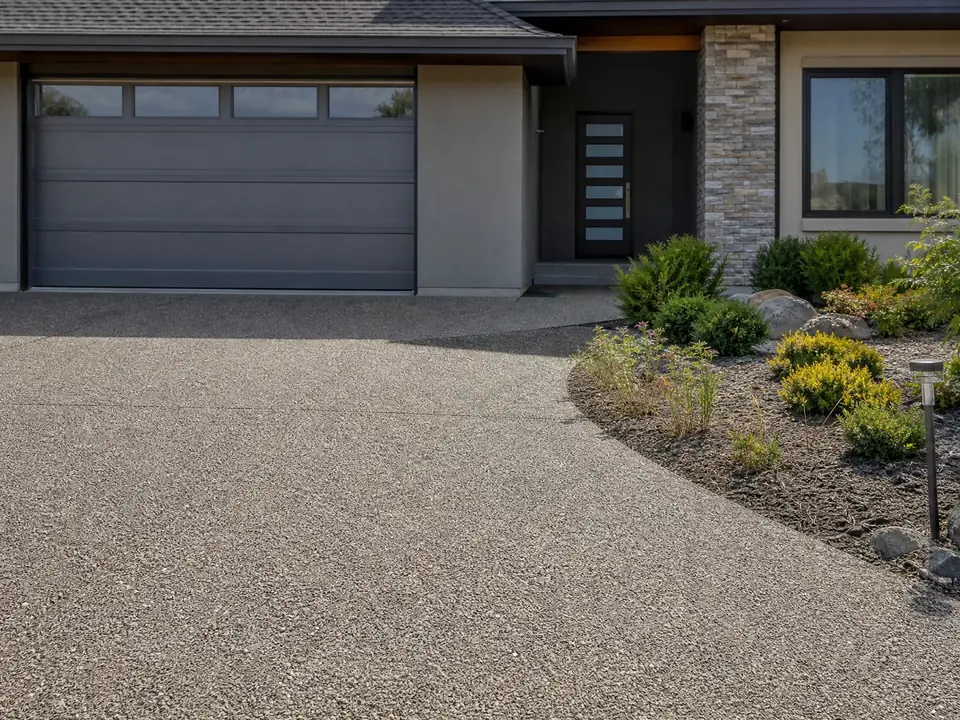
Outdoor coatings are built with the same layered method as our indoor systems, so the schedule depends on which build you choose. A patio or pool deck done with a double broadcast quartz or sand system follows our 2-3 day quartz schedule. A single-broadcast build can finish in as little as 1 day. Most surfaces can take light foot traffic the day after the topcoat goes on. Furniture and planters should wait a little longer, and cars on a driveway wait longer still. Water exposure is the one to ask about, because we want the topcoat fully firm before the pool is used or the sprinklers run. Your installer will confirm the right timing for your product and the weather that week. Plan to keep pets, kids and sprinklers off the area until you are told it is ready, and move patio furniture off the slab before the crew arrives so every edge can be ground and coated.
Choose an outdoor coating when the surface will see sun, water and bare feet. A quartz finish is the closest indoor relative, with the same grip, but the outdoor build adds UV-stable topcoats and drainage planning. A flake epoxy floor suits a covered, shaded patio. A solid color epoxy floor is too slick for most wet areas. A metallic epoxy floor is best kept indoors, since sun can alter the look. Grind and seal gives a simple protected surface, but a clear film is less grippy. If the area is a pool deck or stair, texture should come first. If the area is a driveway used daily by hot cars, ask about a thicker build and read the honest wear notes above before deciding.
A broadcast quartz or sand texture gives feet and shoes something to hold on to around pools, steps and sprinkler-damp patios.
A polyaspartic topcoat is formulated to resist yellowing and chalking in strong sun, which suits long Simi Valley summers.
The coating blocks leaf stains, grease and pool chemicals from soaking into bare concrete, and a hose-down handles most dirt.
Textured finishes cover pitting, patched cracks and uneven color, so tired concrete looks uniform and clean again.
The topcoat is chosen for chlorine and splash exposure, so a pool deck is protected where it gets wet most often.
Outdoor systems carry a 3-year warranty, and the terms are explained in plain words on your written quote.
Typical ranges for Simi Valley and Ventura County. Minimum project $2,600. Commercial and industrial work is quoted after a site visit.
| System | Price per sq ft | Typical project |
|---|---|---|
| Flake system (garage, up to 400 sq ft) | $6.50 – $10 per sq ft | $2,600 – $4,000 |
| Solid color system | $9.50 – $11.50 per sq ft | $3,800 – $4,600 |
| Metallic epoxy system | $12.50 – $18.50 per sq ft | $5,000 – $7,400 |
| Quartz & sand finish system | $9 – $16.50 per sq ft | $3,600 – $6,600 |
| Grind & seal (clear sealer) | $6.50 – $9 per sq ft | $2,600 – $3,600 |
| Patio, driveway & pool deck | $8 – $12 per sq ft | $3,200 – $4,800 |
| Commercial & industrial | Quoted after a site visit | Quoted per project |
Prices and details reviewed October 2026. Project examples assume a two-car garage up to 400 sq ft. Free on-site measurement and written estimate. See the color chart to pick your color.
A textured, UV-stable system over diamond-ground concrete is the best fit for most Simi Valley pool decks. It combines broadcast quartz or sand for grip with a polyaspartic topcoat that tolerates sun and pool chemicals. Lighter colors usually feel cooler underfoot. We also explain cool deck resurfacing so you can compare.
Outdoor coatings run $8 to $12 per square foot, which typically means $3,200 to $4,800. Our minimum project is $2,600. Area, slope, crack repair, stairs, drainage work and the texture you choose all affect the quote. A free on-site estimate gives you a fixed written price.
Yes, with the right outdoor build. Straight indoor epoxy can chalk and yellow in direct sun, so we use a textured system finished with a UV-stable polyaspartic topcoat. Prep is the key step: diamond grinding, crack repair and a moisture-barrier basecoat help the bond last on slabs that sit on soil.
It does not have to be. A textured quartz or sand build gives noticeably better grip than smooth concrete or a gloss coating. No surface is slip-proof, and a finer grain feels gentler but grips a little less, so we show you samples and match the texture to how the deck is used.
Often, if the color is light. Pale tones reflect more sunlight than gray or dark finishes, and a textured coating can feel less harsh on bare feet. No coating stays truly cool in full summer sun, and a dark color can run hotter than bare concrete, so pick the tone with that in mind.
A properly chosen topcoat is built to resist both, but heavy exposure can still dull any surface over time. A UV-stable polyaspartic topcoat resists yellowing in the sun and tolerates normal pool splash. Rinse the deck with fresh water, wipe up spilled chemicals soon and avoid harsh acids and rock salt.
It depends on sun exposure, traffic, drainage and how well the slab was prepared, so we do not promise a set number of years. A deck or patio sees gentler wear than a driveway. Our outdoor work carries a 3-year warranty, and we explain its coverage in plain words on the quote.
Usually yes, if the slab is stable. Cracks are routed and filled before coating, and expansion joints are left to move. Active cracks can reopen, and a deck that is sinking or heaving needs repair first. We check the slab at the free estimate and tell you honestly if a coating is a poor fit.
It can if the moisture is ignored. Outdoor slabs sit on soil and can pass vapor upward, so we test the surface and use a moisture-barrier epoxy basecoat where needed. Good drainage around the slab also helps. A slab with a serious drainage problem should be fixed before any coating goes on.
Yes, a properly installed epoxy garage floor holds up in Simi Valley heat. The risks come from poor prep, an epoxy-only topcoat that amber-tints in sun, and hot tires on a weak bond. A diamond-ground slab, a moisture-barrier basecoat and a UV-stable polyaspartic topcoat handle summer well.
Read the answer →A well-installed epoxy floor in Simi Valley should still look clean and intact after five years, with some gloss dulling in tire paths, light surface scratches and little color change under a UV-stable topcoat. Peeling, bubbling or lifting at five years points to a prep or moisture problem, not normal wear.
Read the answer →We cannot give you a rule for every address, because requirements depend on your HOA and on the city. A coating is a surface finish, not structural work, but you should confirm it. Read your HOA documents, call the Simi Valley Building and Safety office, and get the answer in writing before you book.
Read the answer →Double-broadcast colored quartz or a sand finish for extra grip and durability on stairs, patios, mudrooms and commercial floors.
Learn more →Durable, easy-to-clean garage floors that resist hot-tire pickup, oil and salt. Most two-car garages are done in one day.
Learn more →Seamless, hygienic floors for offices, retail, restaurants, warehouses and plants, installed around your hours.
Learn more →Call (805) 697-5483 or send the form at the top of the page. We reply the same day with a time to measure.