
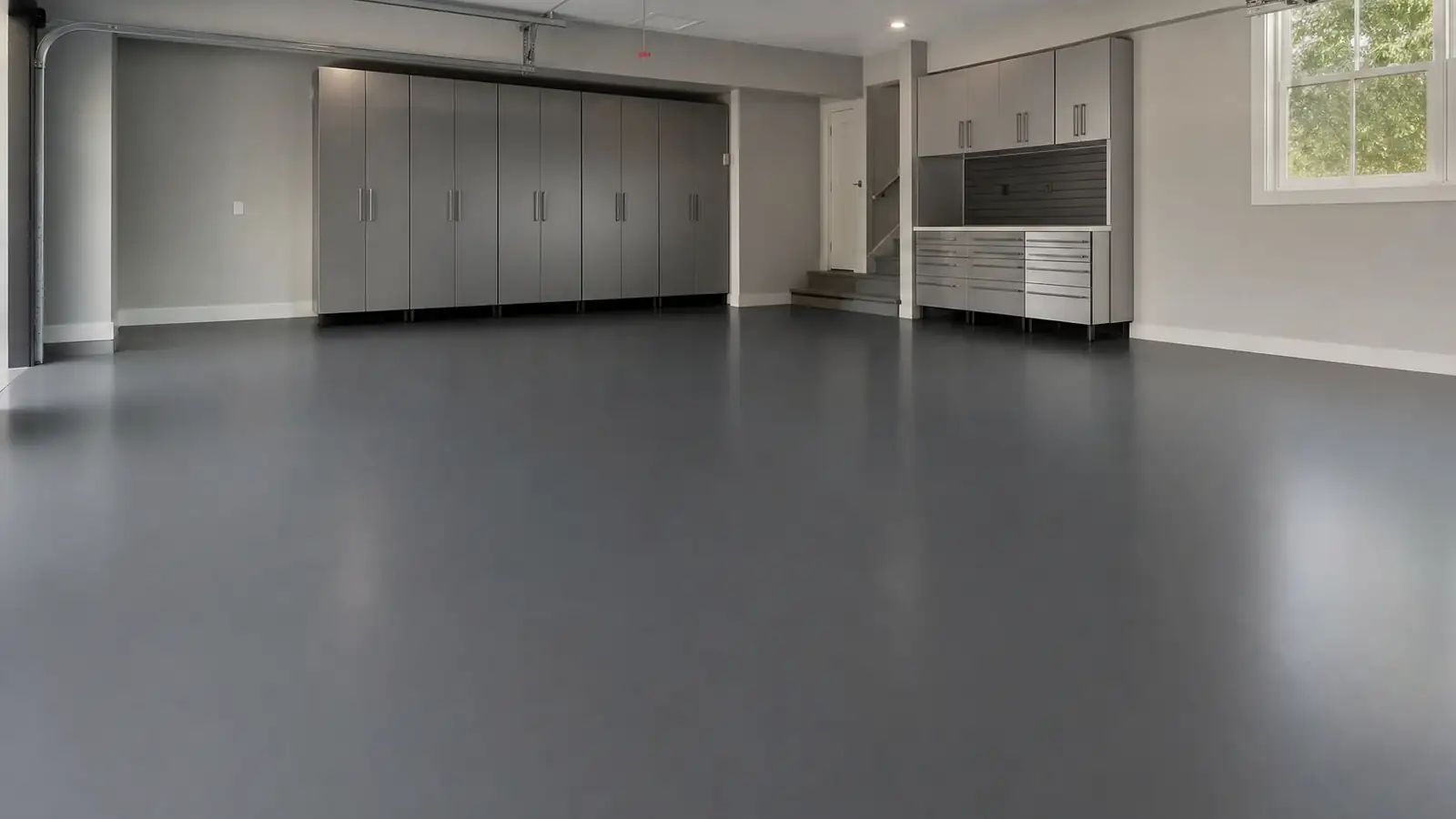
Epoxy garage floors fail mainly from peeling, hot-tire pickup, yellowing, bubbling and slipperiness. Nearly all trace back to skipped prep, moisture in the slab or the wrong topcoat. Diamond grinding, a moisture test, a moisture-barrier basecoat and a UV-stable polyaspartic topcoat prevent most of them before the first coat goes on.
Epoxy garage floors fail mainly from peeling, hot-tire pickup, yellowing, bubbling and slipperiness. Nearly all trace back to skipped prep, moisture in the slab or the wrong topcoat. Diamond grinding, a moisture test, a moisture-barrier basecoat and a UV-stable polyaspartic topcoat prevent most of them before the first coat goes on.
Search for epoxy garage floor reviews and you will find horror stories: sheets of coating lifted off the slab, tire marks baked into the surface, a floor that turned yellow in a year. Those stories are real, and pretending otherwise would not help you. What is also true is that the causes are narrow and mostly visible before the work begins. This post goes through the problems we see discussed most, explains why each happens in Simi Valley garages, and describes what correct prep does about it. If you read it before collecting quotes, you will know exactly what to ask.
Peeling is the failure people fear most, and it almost always starts at the bond. Epoxy needs a rough, clean, open concrete surface to grip. If the slab was only acid etched, cleaned with a degreaser or rolled over old paint or sealer, the coating sits on top instead of locking in. Then a tire turns, a hot car pulls in or the slab moves slightly, and the edge lifts. The fix is diamond grinding, which strips contaminants and creates a bonding profile the coating can hold, plus proper crack and joint repair so movement does not telegraph through. Old paint and sealer have to be ground off, not covered. Moisture is the other major cause, and it gets its own section below. When a floor is ground and built correctly, a residential installation carries a limited lifetime adhesion warranty, which is a promise about this exact failure. Ask any contractor you are comparing what their warranty covers and in what words. If you only remember one rule from this post, make it this: grinding is not optional, and a contractor who calls it an extra is selling you something closer to a coat of paint.
Concrete is never completely dry. Water vapor moves up through a slab-on-grade, and a garage slab sits directly on the ground. If a coating seals that vapor in with nowhere to go, pressure builds underneath and shows up as bubbles, blisters or a cloudy patch. Tract homes in Simi Valley and across Ventura County were built with slabs of many ages and conditions, and we do not assume anything about yours. We test the slab for moisture before choosing the system. When the reading calls for it, a moisture-barrier epoxy basecoat is applied to hold the vapor back. If the moisture is too high for any coating to manage, the honest answer is to deal with the water source first. This is one reason to be suspicious of a quote that never mentions testing. A coating that goes down over a damp slab can look perfect on day one and fail months later. A quick way to spot a careful bidder is to ask how they test for moisture and what they do with the result. A clear answer is a good sign, and a shrug is a bad one.
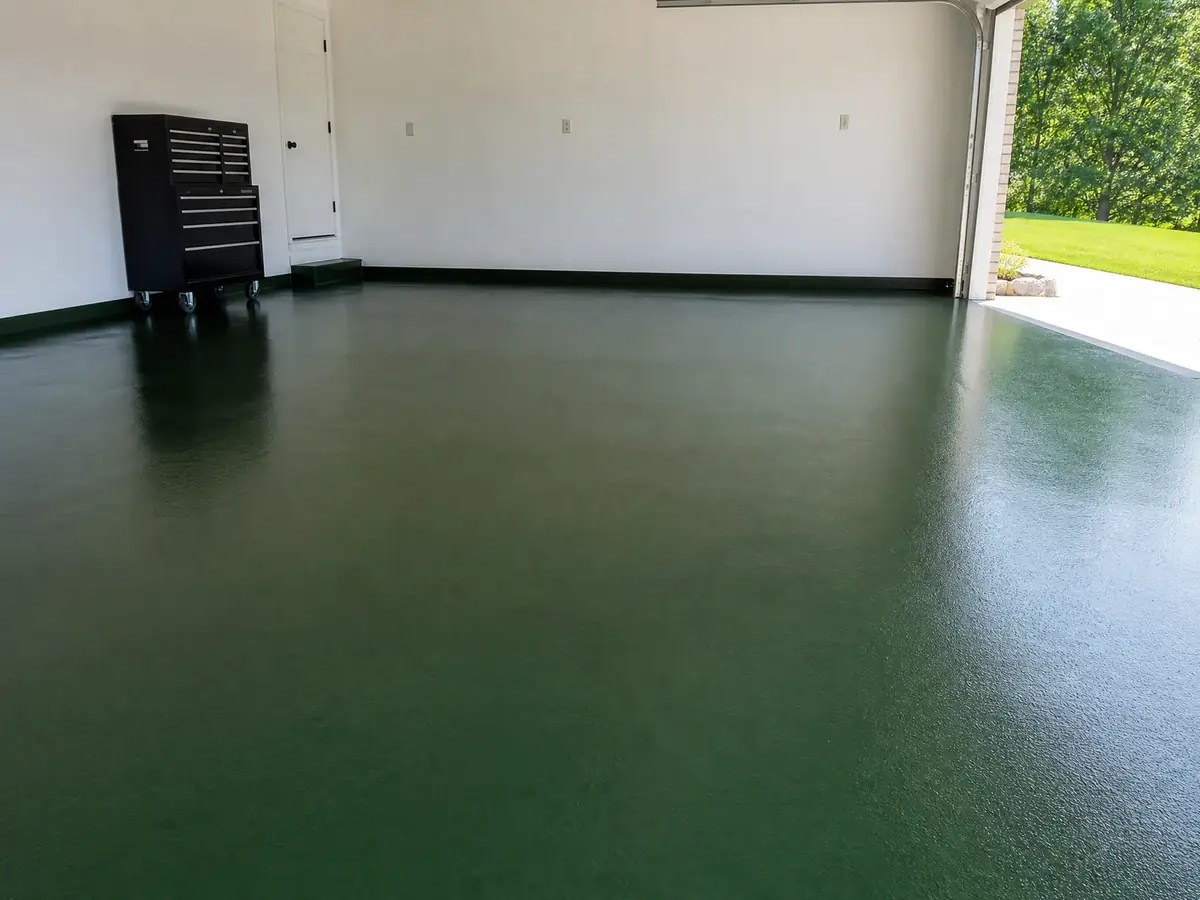
Hot-tire pickup happens when a tire that has been driven for a while is parked on a floor and pulls the coating up with it as it cools. It is common with budget products, thin films and coatings that were not cured fully before the car returned. Cars often arrive in the garage hot from the road, especially in a Simi Valley summer, so this is a fair worry. A properly mixed, fully cured system is built to resist it. That means the right basecoat thickness, a full-rejection flake broadcast, a UV-stable polyaspartic topcoat and a proper cure before vehicles go back on the floor. We tell you when you can walk on the floor and when you can park, and you should follow it. Be careful with any claim that a floor is completely immune to anything. No coating is. The goal is a bond that tolerates normal driving without lifting. Ask what the cure time is before you park, and ask every bidder the same question. A crew that gives you a vague answer is guessing, and a floor driven on too early can lift even when the product itself is good.
Two cosmetic problems come up often. The first is yellowing. Standard epoxy reacts to UV light, so an epoxy-only top layer in a garage with afternoon sun can amber over time, and light colors show it most. The answer is a UV-stable polyaspartic topcoat, which is part of our system, though ask about it in any quote. The second is scratching. Dragging a metal toolbox, a jack stand or a sharp-edged shelf across the floor can mark the topcoat. A flake floor hides small scratches better than a smooth solid color, and a metallic floor shows more of its depth. Scratches in the finish are surface wear and are not a bond failure, so they are not what the adhesion warranty covers. A felt pad under heavy items and a lift rather than a drag cuts the risk. You can see how flake, solid and metallic differ in the color chart before choosing. If you are choosing between a glossy and a satin look, remember that gloss shows scratches more, while a flake blend with some texture hides them. Light colors in sun are where the yellowing question matters most.
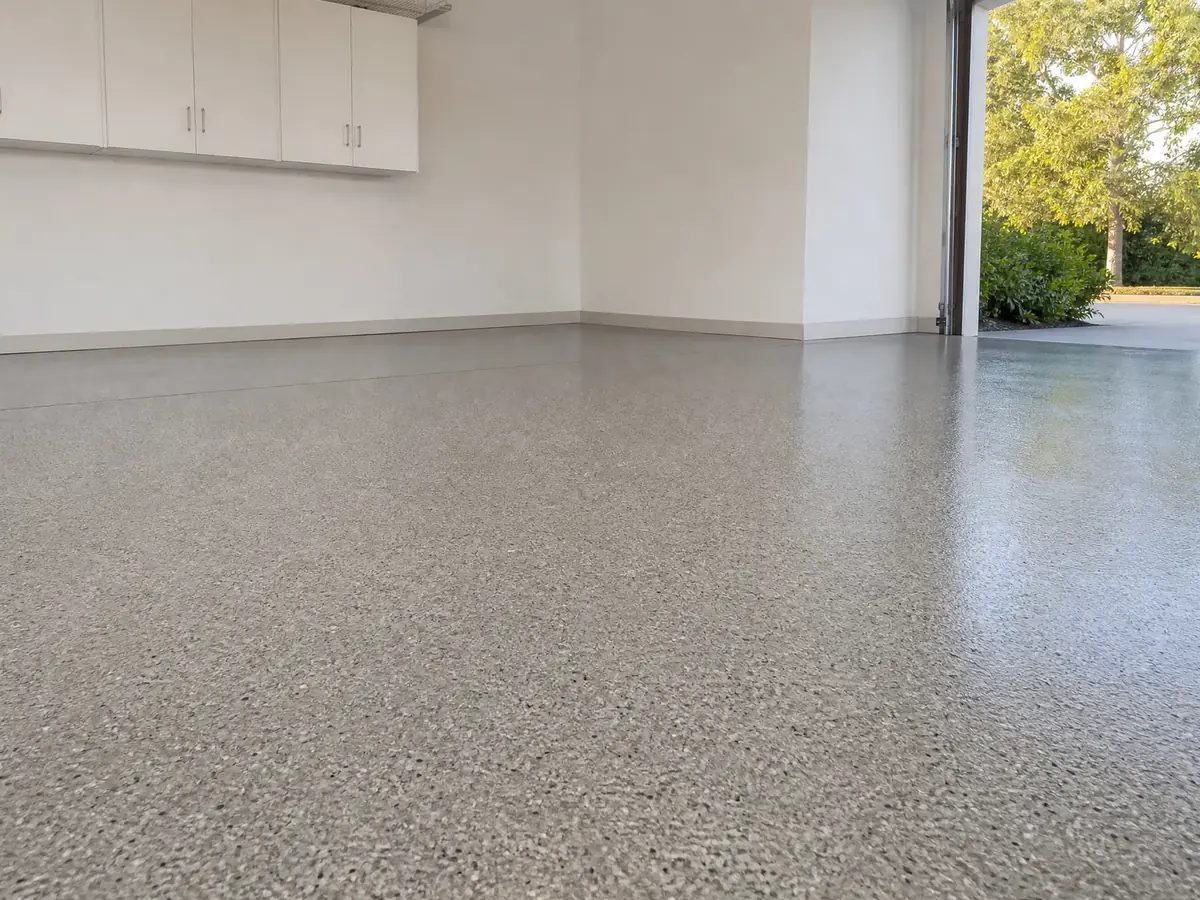
A smooth, glossy epoxy floor can be slick when wet, especially with soap, oil or a wet tire. Flake adds natural texture, and a quartz or sand finish adds more. For extra grip you can add an anti-slip additive to the topcoat. It does make the floor slightly harder to sweep, which is a real tradeoff, so we choose it with you. The last problem is not chemical at all. It is a rushed or careless installation. Dust is a factor in this region, because Santa Ana wind can blow fine particles into an open garage, and that dust can settle into wet coating and leave a rough finish if the crew does not control the area. Temperature matters too, since the coating has to be applied and cured within the manufacturer's range. A careful crew checks conditions, closes the space and does not rush. If you are in an HOA community, check the rules before you pick a color or finish. For these reasons we treat the install day as part of the product, not just the chemistry. Ask what the crew does to control dust and temperature.
Almost every epoxy floor problem comes from the same few causes: skipped grinding, untested moisture and the wrong topcoat. Ask every contractor how they handle each one. If you want a floor built to avoid them, request a free estimate and we will walk you through the slab and the system. Call (805) 697-5483 for a free estimate.
Peeling nearly always comes from poor preparation: acid etching instead of grinding, coating over old paint or sealer, or moisture pushing up through the slab. The coating never bonded to open, clean concrete. Diamond grinding and a moisture test before coating are the prevention.
It is when a hot tire pulls the coating up as it cools after you park. It happens with thin, low-quality or under-cured coatings. A properly cured system with a UV-stable polyaspartic topcoat is built to tolerate normal driving, and you should follow the return-to-service timing.
Epoxy-only finishes can turn yellow in sunlight over time, especially light colors. A UV-stable polyaspartic topcoat resists this much better. If your garage gets strong afternoon sun through the door or windows, confirm that the topcoat in your quote is UV-stable before you sign.
It can be when wet if the surface is smooth and glossy. Flake and quartz finishes add natural texture, and an anti-slip additive can be mixed into the topcoat. More grip makes the floor a little harder to sweep, so choose the level of texture that fits how you use the space.
Trapped vapor can cause bubbles, blisters and eventual peeling. That is why a moisture test matters. If the slab has moderate moisture, a moisture-barrier epoxy basecoat can manage it. If it is severe, fix the water source first, because no coating will hold reliably.
Often, yes. A small chip or localized lifted area can be ground out and repaired. A widespread failure points to a bond problem and usually needs a larger repair. We assess the floor on site before recommending anything, and the adhesion warranty covers adhesion failures in line with its terms.
Durable, easy-to-clean garage floors that resist hot-tire pickup, oil and salt. Most two-car garages are done in one day.
Learn more →Full-rejection flake over a moisture-barrier epoxy basecoat, sealed with a UV-stable polyaspartic topcoat. Installed in one day.
Learn more →Diamond-ground concrete finished with a clear sealer for a natural, low-maintenance floor at the lowest installed price.
Learn more →A well-installed epoxy floor in Simi Valley should still look clean and intact after five years, with some gloss dulling in tire paths, light surface scratches and little color change under a UV-stable topcoat. Peeling, bubbling or lifting at five years points to a prep or moisture problem, not normal wear.
Read the answer →Choose flake for the best mix of value, grip and hiding power, solid color for a clean uniform look, and metallic for a one-of-a-kind showpiece. Flake takes one day at $6.50 to $10 per square foot, solid color takes three days at $9.50 to $11.50, and metallic takes three to four days at $12.50 to $18.50.
Read the answer →Neither wins alone. Epoxy bonds deeply to concrete and builds body, while polyaspartic resists sun, scuffs and hot tires as a topcoat. The longest-lasting garage floors usually use both: a moisture-barrier epoxy basecoat for adhesion, then a UV-stable polyaspartic topcoat. Surface preparation matters more than either product.
Read the answer →Call (805) 697-5483 or send the form at the top of the page. We reply the same day.