
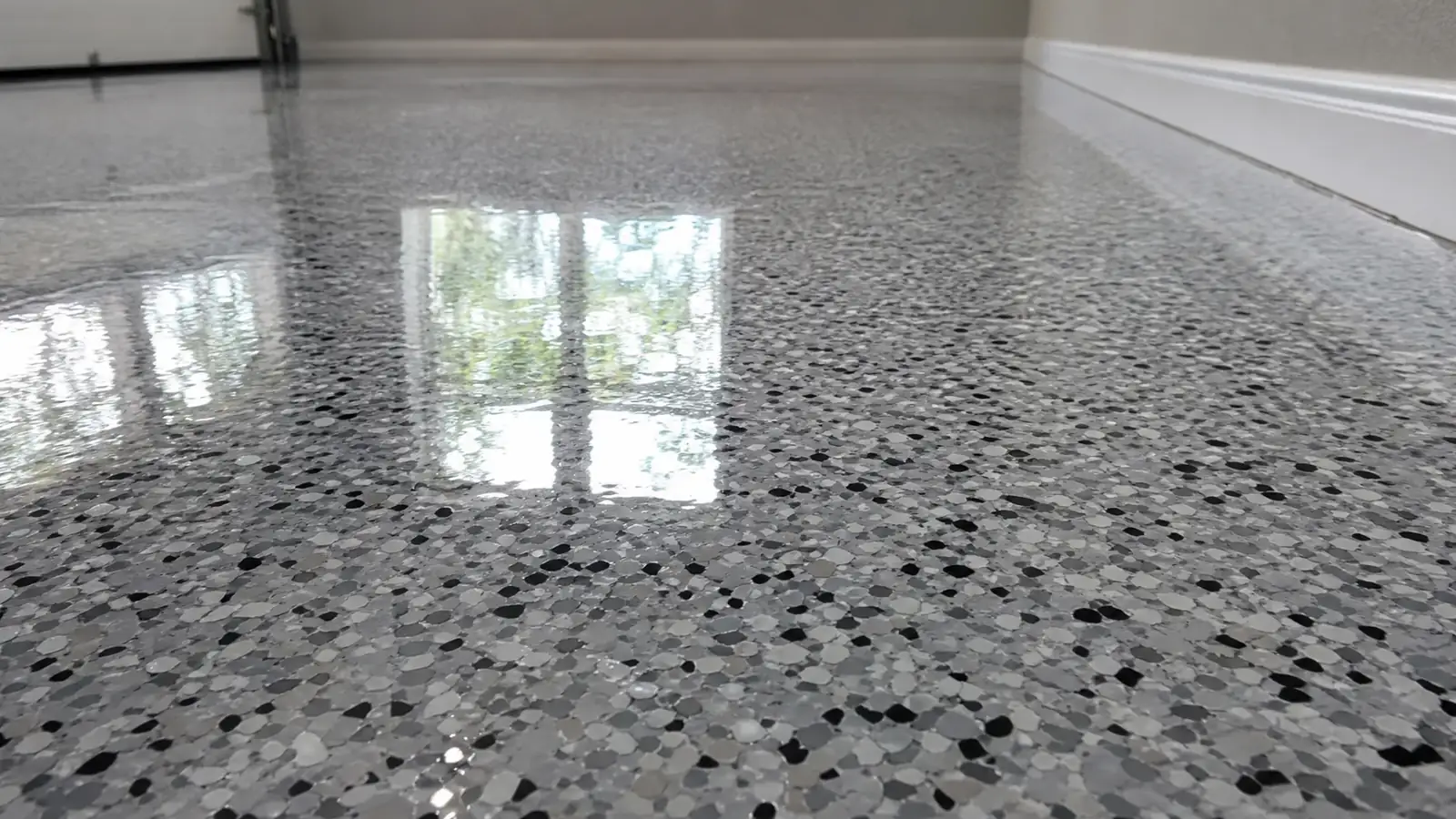
Neither wins alone. Epoxy bonds deeply to concrete and builds body, while polyaspartic resists sun, scuffs and hot tires as a topcoat. The longest-lasting garage floors usually use both: a moisture-barrier epoxy basecoat for adhesion, then a UV-stable polyaspartic topcoat. Surface preparation matters more than either product.
Neither wins alone. Epoxy bonds deeply to concrete and builds body, while polyaspartic resists sun, scuffs and hot tires as a topcoat. The longest-lasting garage floors usually use both: a moisture-barrier epoxy basecoat for adhesion, then a UV-stable polyaspartic topcoat. Surface preparation matters more than either product.
If you have been collecting garage floor quotes around Simi Valley, you have probably heard two pitches. One contractor says epoxy is the proven choice. Another says polyaspartic is the modern upgrade and epoxy is outdated. Both can sound convincing and both can mislead, because the question is framed as a contest. In practice the two materials do different jobs, and a well-built floor uses each where it is strongest. This post explains what each coating does, where each one falls short, why we pair them, and what really decides how long your floor lasts. We also avoid quoting lifespans in years, because nobody can honestly promise a number without knowing your slab.
Epoxy is a two-part resin. A base and a hardener are mixed on site, applied to the concrete, and react to form a hard plastic layer. It has been used on concrete floors for a long time. Polyaspartic is also a two-part coating, but it belongs to the polyurea family and cures through different chemistry. It is normally applied in a thinner film and reacts quickly. Both are coatings, which means they sit on top of the concrete and bond to it, rather than soaking in like a penetrating sealer. That is the first thing to understand. Concrete is porous and the coating is a skin. If the skin does not grip the slab, it does not matter which material it is made from. Products also come in different grades. A bargain kit and a professional-grade system can share a name and little else, so comparing the two chemistries in the abstract only gets you part of the way. What goes on the concrete, how thick it is, how it was mixed, and how well the slab was prepared all change the result. Keep that in mind as you read the rest of this comparison.
Epoxy's greatest strengths are adhesion and body. A moisture-barrier epoxy basecoat grips a diamond-ground slab tightly, fills small pores and surface flaws, and builds a solid layer that flake or color can sit in. It also has a longer working time, which gives installers room to roll the material evenly and broadcast flake across a whole garage before it sets. That matters on a warm Ventura County day when everything wants to cure faster than you would like. A moisture-barrier formulation is designed to slow vapor moving up through the slab, a real concern on a garage slab that sits on the ground. The tradeoffs are honest ones. Epoxy left exposed at the surface can amber or yellow in ultraviolet light, which matters near an open garage door that catches afternoon sun. An epoxy surface can also scuff more easily than some alternatives, and it usually takes longer to cure before it can carry weight. None of this makes epoxy a bad product. It makes epoxy the right layer to put against the concrete, and a less ideal layer to leave alone at the top, facing sunlight and tires.
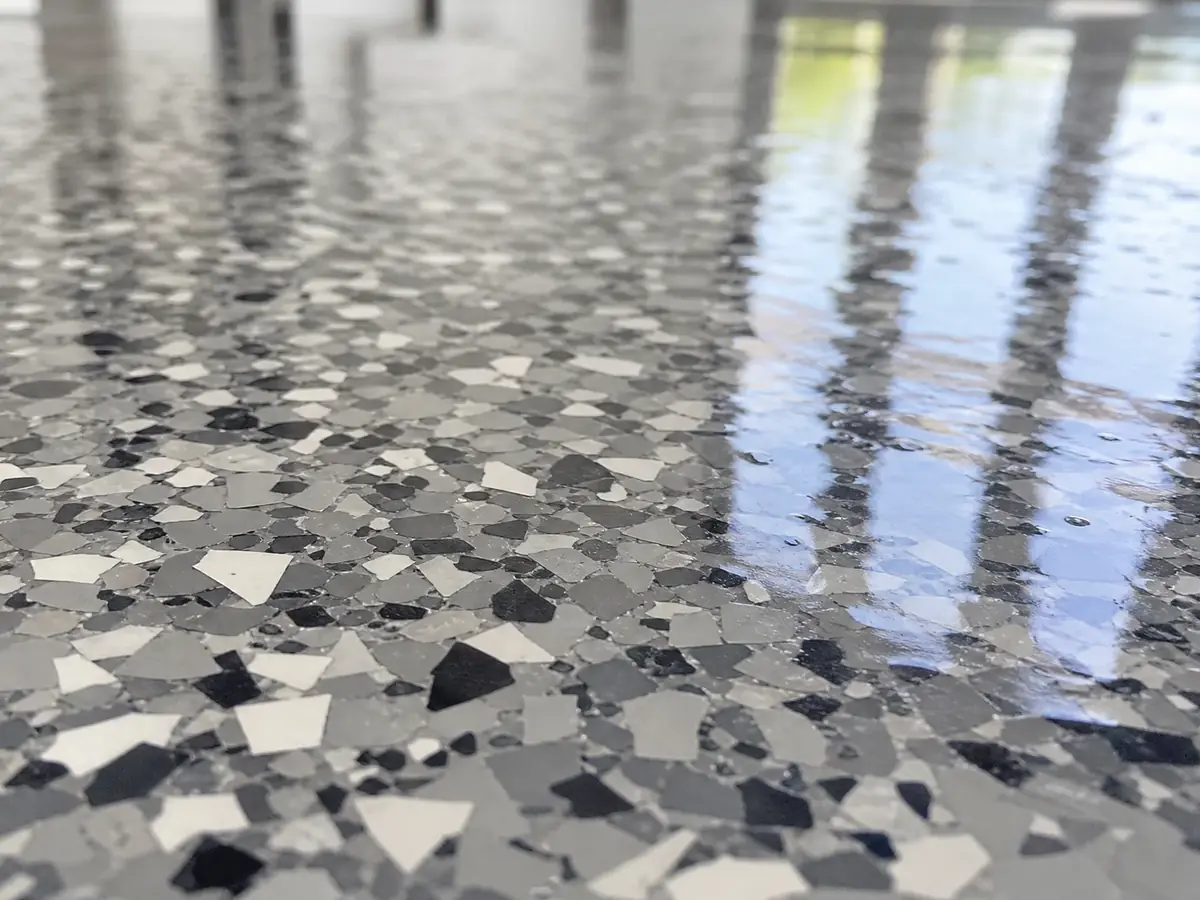
Polyaspartic works best as a topcoat. A UV-stable formulation is designed to resist the sun yellowing that affects epoxy, so colors and flake stay true near doors and windows. It cures quickly, which shortens the wait before the floor can be walked on, and it forms a hard surface that resists scuffing and the heat and weight of tires. Hot-tire pickup, where a warm tire lifts a weak coating, is one of the most common complaints in hot climates, and a quality polyaspartic topcoat over a well-bonded basecoat is a sensible defense. The tradeoffs matter too. That fast cure leaves installers very little working time, so application takes speed and skill, and mistakes are harder to correct. It is applied thin, so it is not meant to fill a rough or damaged slab by itself. It also typically costs more than epoxy, which is part of why some contractors leave it out. Used alone straight on bare concrete, a thin polyaspartic film depends completely on how well the slab was prepared and how moisture is handled. That is why we treat it as the top layer of a system rather than a stand-alone fix.
The strongest approach is not epoxy or polyaspartic. It is epoxy, then polyaspartic. Our standard system starts with diamond grinding to open the concrete and create a bonding profile. Cracks and joints are repaired. A moisture-barrier epoxy basecoat goes down next, giving a firm, well-bonded layer. For a flake epoxy floor, the flake is broadcast into the wet basecoat until the surface is fully covered, which we call full-rejection broadcast. Then a UV-stable polyaspartic topcoat seals everything in. Each layer does the job it handles best. Epoxy handles adhesion, filling and moisture. Polyaspartic handles sun, scuffs and the contact at the surface from tires, shoes and spills. A single coat of either material asks one product to do everything. A two-stage system shares the work. It also reflects how coatings really fail: at the bond, at the surface, or from moisture beneath. Covering all three is simply sensible, not an upsell. If a contractor quotes one product and calls the job complete, ask two questions. What protects the surface from sun, and what protects the bond from moisture? A clear answer to both is a good sign.
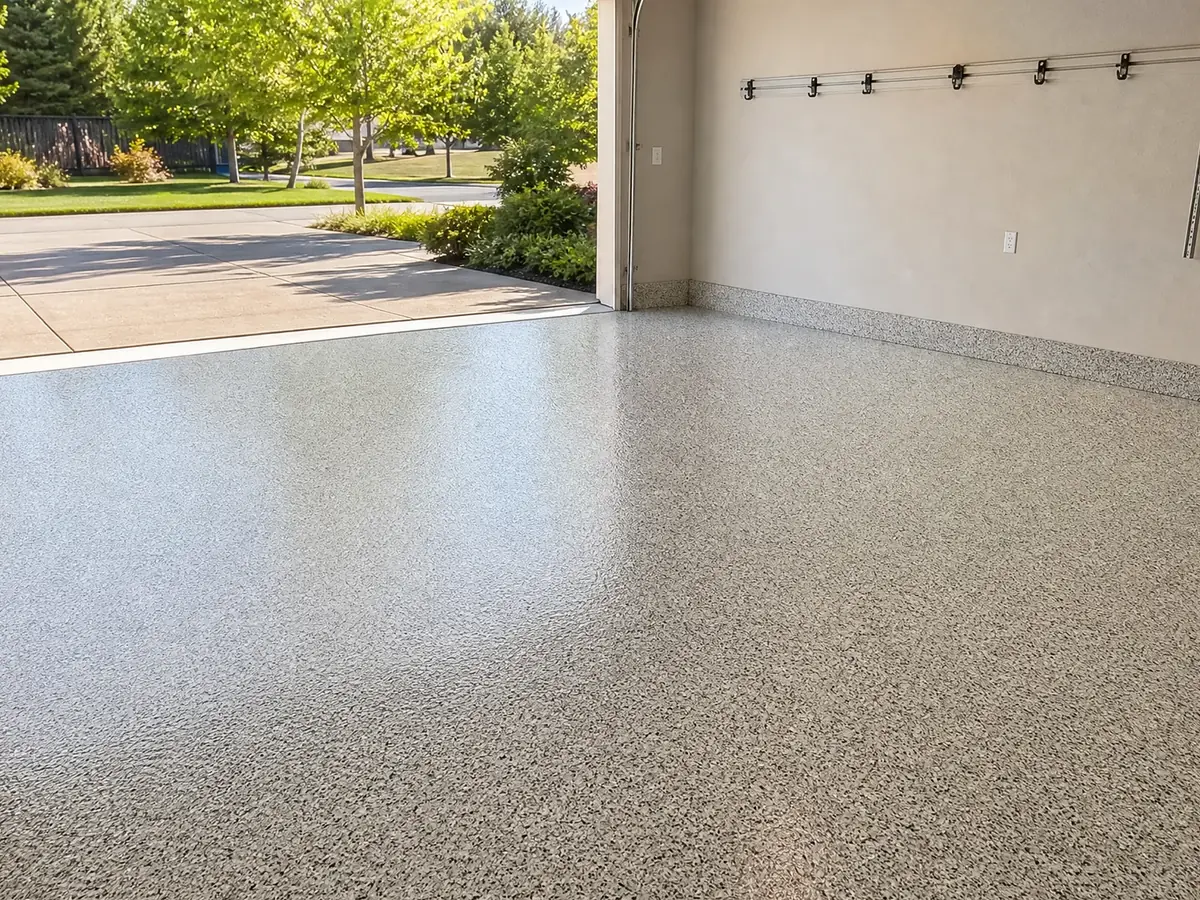
Be wary of anyone who promises a specific number of years. Published lifespans for both materials vary widely from one source to the next, and many come from companies selling the product. What we can tell you is what separates floors that hold up from floors that do not. First, preparation. Diamond grinding creates a clean, open surface a coating can grip. Acid etching and light scuffing usually do not. Second, moisture. A slab pushing vapor upward will challenge any coating, so testing and a moisture-barrier basecoat matter. Third, thickness and cure. A thin, rushed system wears faster than a properly built one. Fourth, daily use. Dragging jack stands, dropping tools, and letting grit pile up under tires shorten the life of any surface. We back our residential work with a limited lifetime adhesion warranty, and our commercial and outdoor work with a three-year warranty. Read any warranty carefully, ours included, because the word limited means there are terms. Ask what is covered, what is excluded, and what you must do to keep it valid. A warranty with clear terms tells you far more than a promise of ten, twenty or thirty years.
Simi Valley is inland and summers are hot, and many garages in tract-home neighborhoods stay closed and warm for hours. Cars pull in after a commute with tires that have been rolling on hot pavement. That combination is hard on a weak coating, which is why a durable topcoat matters here. If your garage door faces the afternoon sun, or you keep it open during the day, sunlight on the floor is another reason to want a UV-stable top layer. Heat also affects how any coating is applied, since warm slabs and warm air make materials set faster, so ask your installer how that is managed. If you live in an HOA community, check your CC&Rs before choosing a color or finish, because associations differ and we cannot tell you what yours requires. A short call to your management company settles it. A free estimate covers your slab, how you use the garage, and which system fits, and you get a fixed written quote. For context, a flake system with this epoxy and polyaspartic build runs $6.50 to $10 per square foot, or $2,600 to $4,000 for a two-car garage up to 400 square feet.
Epoxy and polyaspartic are partners more than rivals. Epoxy bonds and protects from below, and polyaspartic shields the surface from sun and tires. If you want a plain recommendation for your own garage, call SV Epoxy Flooring at (805) 697-5483 for a free estimate. Call (805) 697-5483 for a free estimate.
Polyaspartic is better as a topcoat, and epoxy is better as a basecoat. Epoxy grips the concrete and fills the surface, while polyaspartic resists sun, scuffs and hot tires. The best result usually comes from combining them instead of choosing one.
Yes. That is exactly how a two-stage system is built. A moisture-barrier epoxy basecoat is applied first, flake or color is added, and a UV-stable polyaspartic topcoat is applied over it. Compatibility and timing between layers matter, so this is work for an experienced installer.
A UV-stable polyaspartic is designed to resist yellowing in sunlight, while epoxy left exposed at the surface can amber. Formulations differ between manufacturers, so ask which product your installer uses and why they chose it for a garage that gets sun.
For most garages it is, because the topcoat is the layer that faces sun, scuffs and tires. Paying for it only makes sense over a well-prepared, well-bonded base, though. A polyaspartic topcoat cannot make up for poor grinding or an untreated moisture problem underneath.
It is a hard product to apply yourself. It sets quickly, which leaves little time to roll it evenly, and mistakes show up as lines, bubbles or missed spots. Professional installers also grind the slab with equipment most homeowners do not own.
No honest number can be given without seeing the slab. Published lifespans vary widely, and most depend on grinding, moisture control, film thickness and how the garage is used. A clearly written warranty, like our limited lifetime adhesion warranty, is a better guide than a promised number of years.
Durable, easy-to-clean garage floors that resist hot-tire pickup, oil and salt. Most two-car garages are done in one day.
Learn more →Full-rejection flake over a moisture-barrier epoxy basecoat, sealed with a UV-stable polyaspartic topcoat. Installed in one day.
Learn more →Diamond-ground concrete finished with a clear sealer for a natural, low-maintenance floor at the lowest installed price.
Learn more →Hot tire pickup is when a warm tire lifts, softens or leaves marks in a garage floor coating where it sits. It usually comes from poor concrete prep, an under-cured or thin coating, or the wrong product. Diamond grinding, a well-bonded basecoat, full cure and a polyaspartic topcoat prevent it.
Read the answer →Epoxy floors peel when the coating loses its bond to the concrete. The usual causes are moisture rising through the slab, poor surface prep such as acid etching instead of diamond grinding, a thin or unsuitable topcoat, and cheap kits. Proper grinding, moisture testing and a barrier basecoat prevent most peeling.
Read the answer →You can usually walk on a new epoxy floor within a day, but driving on it takes longer and depends on the system, the products and the temperature. Your installer should give you exact times at the walkthrough. Full chemical cure takes about a week, so treat the floor gently until then.
Read the answer →Call (805) 697-5483 or send the form at the top of the page. We reply the same day.