
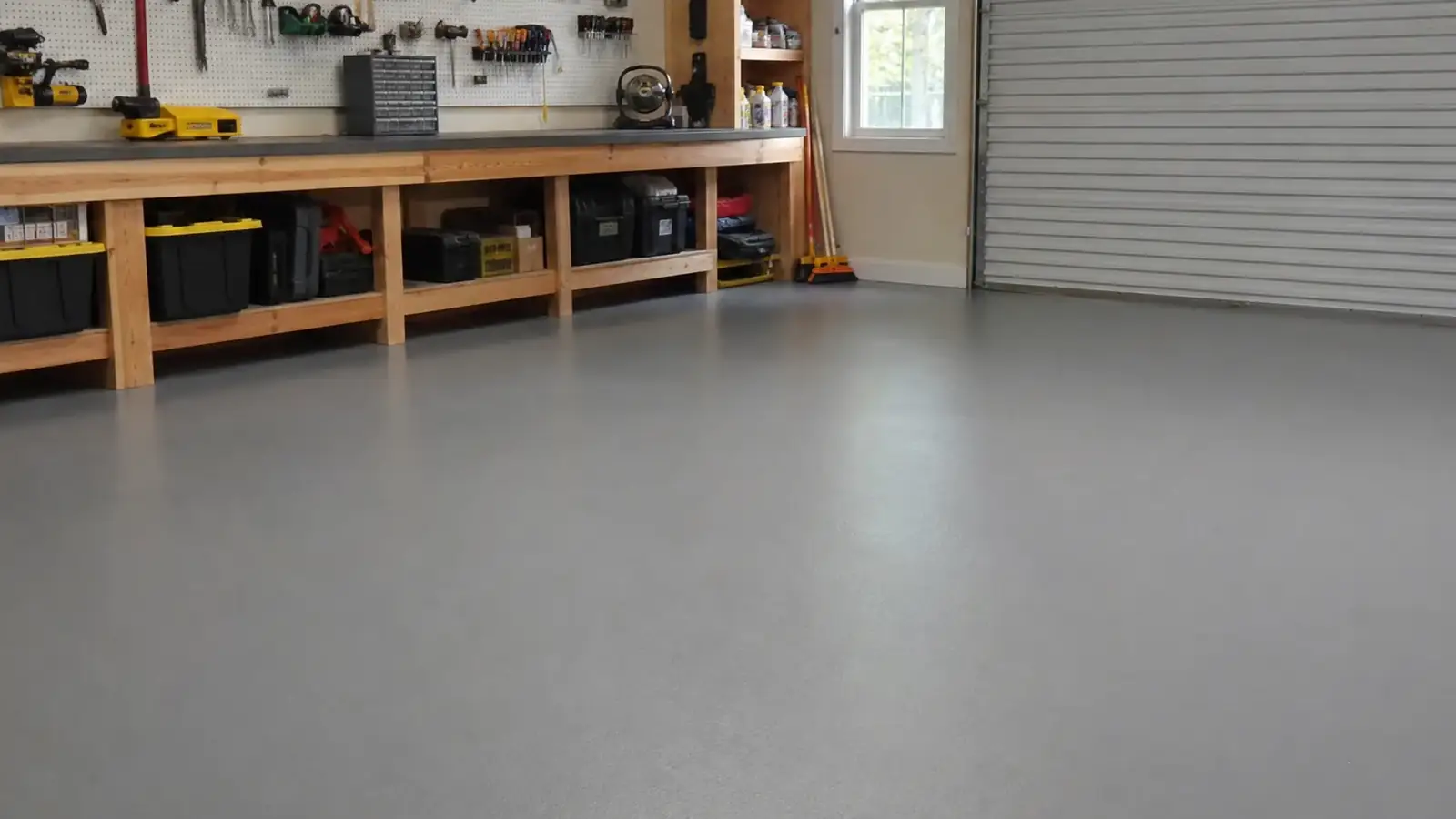
Hot tire pickup is when a warm tire lifts, softens or leaves marks in a garage floor coating where it sits. It usually comes from poor concrete prep, an under-cured or thin coating, or the wrong product. Diamond grinding, a well-bonded basecoat, full cure and a polyaspartic topcoat prevent it.
Hot tire pickup is when a warm tire lifts, softens or leaves marks in a garage floor coating where it sits. It usually comes from poor concrete prep, an under-cured or thin coating, or the wrong product. Diamond grinding, a well-bonded basecoat, full cure and a polyaspartic topcoat prevent it.
Few things frustrate a new garage floor owner like pulling in after a drive and finding a faint outline of the tires left behind, or worse, a patch of coating stuck to the rubber. This is called hot tire pickup, and it is one of the most common complaints about coated garage floors. It is also one of the most misunderstood. Some people blame epoxy as a whole, and some contractors promise it can never happen. Neither view is quite right. Here is what hot tire pickup is, why it happens, why Simi Valley driving conditions make it a fair concern, and what a properly built floor does about it.
Hot tire pickup shows up where tires rest after the car has been driven. You may see raised or sticky patches, small flakes of coating on the tread, dull outlines in the shape of the tire contact patch, or a spot where the surface has peeled away down to the layer below. In mild cases the coating is only marked and the damage is cosmetic. In worse cases the coating itself has lost its grip on the concrete, and the tire pulls it up as the car moves. The location is the clue. Pickup happens in the same two or four places, usually in front of where the car parks, and it tends to appear first at the spots with the most weight and heat. A floor with pickup is telling you that something about the bond, the cure or the product was not right. It is not simply the price of having a coated floor. A properly built system can keep ordinary driving from leaving any trace on the surface. Knowing what you are looking at helps you ask better questions of any installer you talk to.
A tire that has just been driven is warm, heavy and pressing on a small area. Heat, weight and time together test a coating in a way almost nothing else in a garage does. If the coating is strong and well bonded, it takes that in stride. If something is wrong, the weakest link gives way. The usual causes are these. The concrete was not properly ground, so the coating only grips weakly and can be tugged loose. The coating was applied too thin, so there is little material to resist the load. The material did not fully cure before the car went back in, which leaves it soft. The product is a lower-grade coating, such as garage floor paint or a thin kit, that was not designed for hot rubber. Or moisture or contamination under the coating weakened the bond. Notice that most of these are about preparation and application, not about the type of resin. That is why the same product can hold up beautifully in one garage and fail in another. Ask any contractor how they prepare the slab and what they do to make sure each coat cures fully.
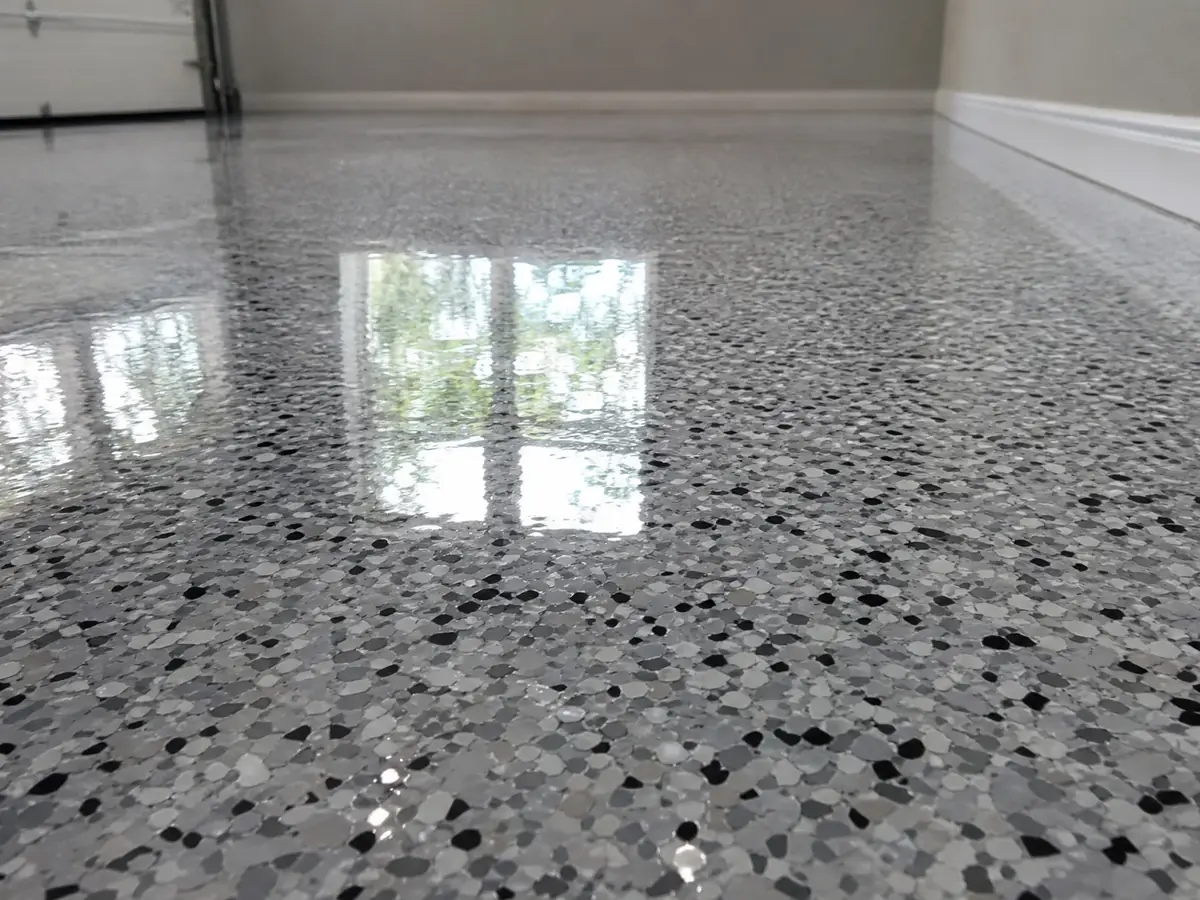
Simi Valley is inland, and summer days get hot. Pavement in full sun can be too hot to touch, and tires pick up that heat on the way home. A commute over local streets or the freeway adds more. A garage that is closed all day also stays warm, so a coating there may already be warm before the car pulls in. Put those pieces together and tires can reach the garage hotter in July than in January, which is when weak coatings tend to show the problem. It is a fair thing to think about when choosing a system. We would not describe it as a reason to avoid coating a garage floor. We would describe it as a reason to avoid shortcuts. Hot weather also affects installation, because warm slabs and warm air make coatings set faster and leave less working time, so experience matters. We do not claim any floor is immune to every situation. We do build ours with this exact complaint in mind, and a UV-stable polyaspartic topcoat over a properly bonded base is the combination we recommend for cars that are driven daily.
Prevention is mostly a chain of good steps, each depending on the last. It starts with diamond grinding, which removes the weak surface layer of the slab and creates a bonding profile so the first coat has real texture to grip. Acid etching and scrubbing do not do the same thing. Cracks and joints are repaired so the base is sound. A moisture-barrier epoxy basecoat then bonds to the ground surface and builds a firm foundation, and flake or color is added. Finally a UV-stable polyaspartic topcoat is applied. It is a hard, cross-linked surface that resists the heat and pressure of tires and is designed for exactly this type of contact. The layers are allowed to cure as directed, and the floor is not put back into service until it is ready. None of that is flashy. It is the difference between a floor that is stuck to the concrete and a floor that is merely lying on it. Ask to hear this sequence in your installer's own words. If grinding, curing time and topcoat type all come up without prompting, that is a good sign.
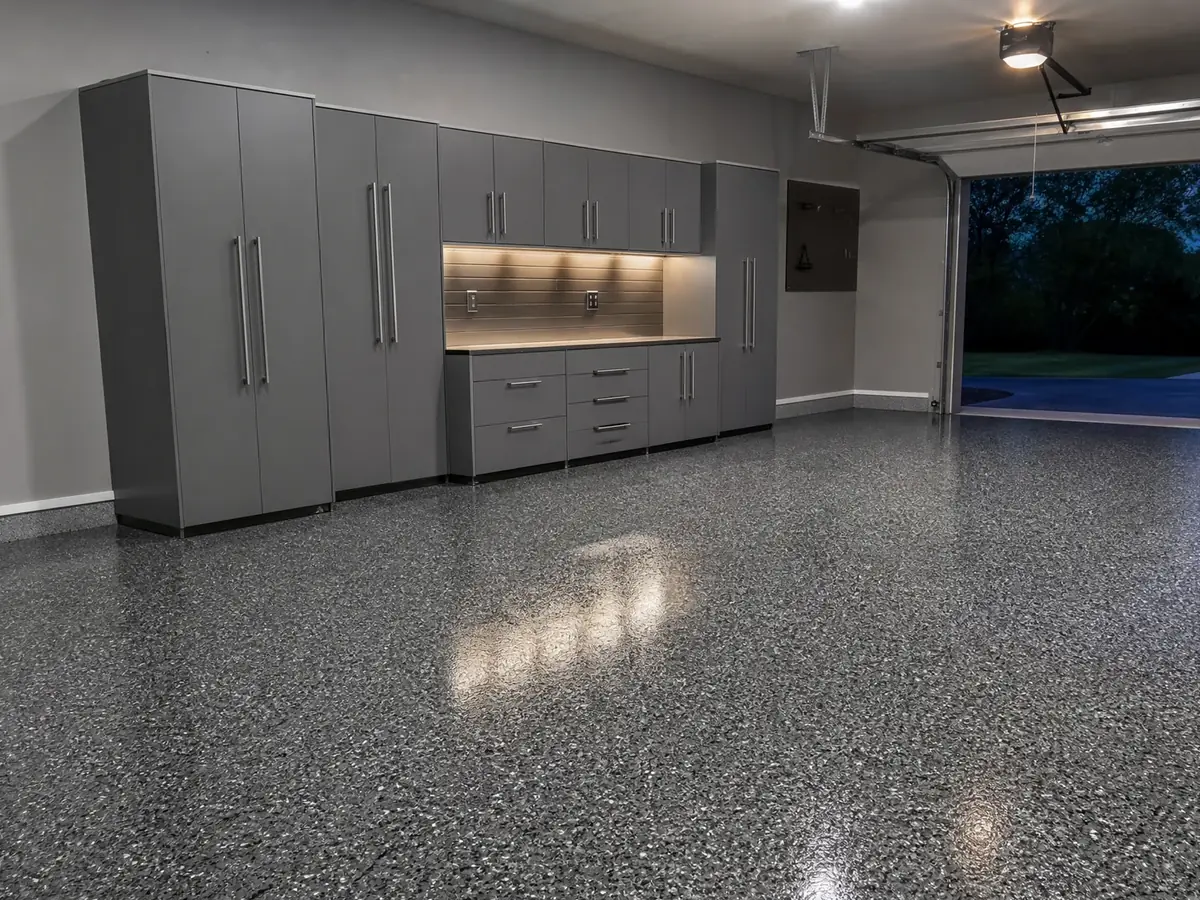
The biggest single cause of early pickup is driving on a floor too soon. A coating can feel dry to the touch and still be soft underneath, and a hot tire is the fastest way to find out. Each system has its own return-to-service guidance, and it depends on the product and on the temperature in your garage. Ask for the specific timing for your floor at the final walkthrough, and the safest approach is to follow it exactly, even when the floor looks and feels ready. If the crew says foot traffic is fine and cars must wait, believe them. Plan ahead for that period by parking in the driveway or on the street, and check with your HOA if street parking is limited where you live. Do not roll heavy items across a new floor or park a hot car on it early to save a day. Another sound habit is giving the floor a little time at the start. You are asking a new surface to bond and harden completely, and a slow start is far cheaper than a repair.
Once the floor is in service, a few simple habits lower the risk further. Keep the surface clean, because grit and debris trapped under a tire act like sandpaper and can concentrate pressure. Sweep or dust mop regularly and wash with a mild cleaner as needed. Avoid turning the steering wheel while the car is stopped, since twisting a hot tire on the floor puts stress on a small patch. Wipe up fluids that leak from the car, because some chemicals soften coatings over time. If you see a small spot starting to lift, call us early. Catching an edge before it spreads is much easier than repairing a large area. Keep in mind that garage floor paint and thin DIY kits are the products most often blamed for this problem. If you already have one and it is lifting, the usual fix is to grind it off and start over, since patching a failing layer rarely works. A free estimate includes a look at your existing floor and an honest recommendation, and our limited lifetime adhesion warranty covers residential installations according to its written terms.
Hot tire pickup is a preventable problem. It comes from weak bonding, thin or uncured coatings and shortcuts, not from epoxy itself. If your current floor is lifting, or you want one built to handle summer driving, call SV Epoxy Flooring at (805) 697-5483 for a free estimate. Call (805) 697-5483 for a free estimate.
Hot tire pickup is when a warm tire lifts, softens or marks the coating where it sits. It can leave sticky spots, raised patches or peeled areas. It usually points to a weak bond, a thin or under-cured coating, or a lower-grade product rather than epoxy itself.
Not on a properly built floor. A diamond-ground slab, a well-bonded basecoat, full cure and a polyaspartic topcoat are designed to handle warm tires. Floors fail when prep is skipped, coats are too thin, or the car is parked on the floor before it has fully cured.
Small spots can sometimes be repaired by removing the loose coating, preparing the area and recoating it. If the coating has lost its bond across a wider area, the better fix is to grind it off and rebuild the system, because patching a weak layer usually fails again.
No. Pickup is not a built-in trait of epoxy. It is a failure of bond, cure or product choice. Garage floor paint and thin kits are far more likely to show it than a professionally ground and layered system, though no one should promise any coating is immune.
Follow the return-to-service timing your installer gives you, since it depends on the system and on garage temperature. Feet usually come before cars. Driving on a floor early, even when it feels dry, is a leading cause of hot tire pickup, so patience here saves money.
No coating is immune, but a quality polyaspartic topcoat over a well-bonded base is designed to resist the heat and pressure of tires. It works best as the top layer of a prepared system. It cannot fix poor grinding or a weak basecoat underneath.
Durable, easy-to-clean garage floors that resist hot-tire pickup, oil and salt. Most two-car garages are done in one day.
Learn more →Full-rejection flake over a moisture-barrier epoxy basecoat, sealed with a UV-stable polyaspartic topcoat. Installed in one day.
Learn more →Diamond-ground concrete finished with a clear sealer for a natural, low-maintenance floor at the lowest installed price.
Learn more →Epoxy floors peel when the coating loses its bond to the concrete. The usual causes are moisture rising through the slab, poor surface prep such as acid etching instead of diamond grinding, a thin or unsuitable topcoat, and cheap kits. Proper grinding, moisture testing and a barrier basecoat prevent most peeling.
Read the answer →You can usually walk on a new epoxy floor within a day, but driving on it takes longer and depends on the system, the products and the temperature. Your installer should give you exact times at the walkthrough. Full chemical cure takes about a week, so treat the floor gently until then.
Read the answer →Yes, a properly installed epoxy garage floor holds up in Simi Valley heat. The risks come from poor prep, an epoxy-only topcoat that amber-tints in sun, and hot tires on a weak bond. A diamond-ground slab, a moisture-barrier basecoat and a UV-stable polyaspartic topcoat handle summer well.
Read the answer →Call (805) 697-5483 or send the form at the top of the page. We reply the same day.