
Epoxy floors peel when the coating loses its bond to the concrete. The usual causes are moisture rising through the slab, poor surface prep such as acid etching instead of diamond grinding, a thin or unsuitable topcoat, and cheap kits. Proper grinding, moisture testing and a barrier basecoat prevent most peeling.
Epoxy floors peel when the coating loses its bond to the concrete. The usual causes are moisture rising through the slab, poor surface prep such as acid etching instead of diamond grinding, a thin or unsuitable topcoat, and cheap kits. Proper grinding, moisture testing and a barrier basecoat prevent most peeling.
A peeling epoxy floor looks alarming, and it is an expensive lesson for anyone who has paid for one. The coating curls at the edges, lifts in sheets near the garage door, or comes away in patches under the tires. It is easy to conclude that epoxy simply does not last. In most cases, though, the material was not the problem. A coating peels when its bond to the concrete fails, and bonds fail for specific, identifiable reasons. This post walks through the real causes, explains how to recognize each one, and describes what a properly built system does to stop them. If you are comparing quotes, it will also help you ask the questions that separate careful installers from fast ones.
An epoxy coating does not sink deeply into concrete like water into a sponge. It holds on at the surface, gripping the tiny peaks and valleys of the slab. When that grip is strong, the coating and the concrete behave as one. When the grip is weak, any stress can start a lift: a hot tire, a dropped tool, a burst of vapor from below, or simple shrinkage as the slab changes temperature through the day. Once an edge lets go, the rest tends to follow, which is why peeling often starts at a door, a crack, a wall edge or the spot where a car sits. This is useful to know, because it moves the question away from which brand of epoxy you picked. Almost every peeling floor traces back to one of four things: moisture, preparation, the system that went on top, or the cheap product that was used. We will take them one at a time. The good news is that each of them is visible and checkable before any coating goes down, if you know what to ask.
Concrete is not a solid barrier. Water vapor can travel up through a slab, especially one that sits directly on the ground, and when it reaches a coating that does not allow it to pass, pressure builds underneath. The result is bubbles, blisters, white or cloudy patches, and eventually peeling sheets. Whether a given garage slab has a vapor barrier below it is something you often cannot tell by looking, and building age and landscaping can both matter. Sprinkler water close to the slab edge, for example, can add moisture to a nearby garage floor. The fix is to test rather than guess. Moisture testing methods range from a simple plastic sheet taped to the floor to calcium chloride kits and in-slab probes, and a professional can advise which makes sense for your garage. Where moisture is a concern, a moisture-barrier epoxy basecoat is designed to hold vapor back so it cannot push the coating off. Ask any installer whether the slab will be tested and what happens if the reading is high. The honest answer sometimes includes advice not to coat until the slab is addressed.
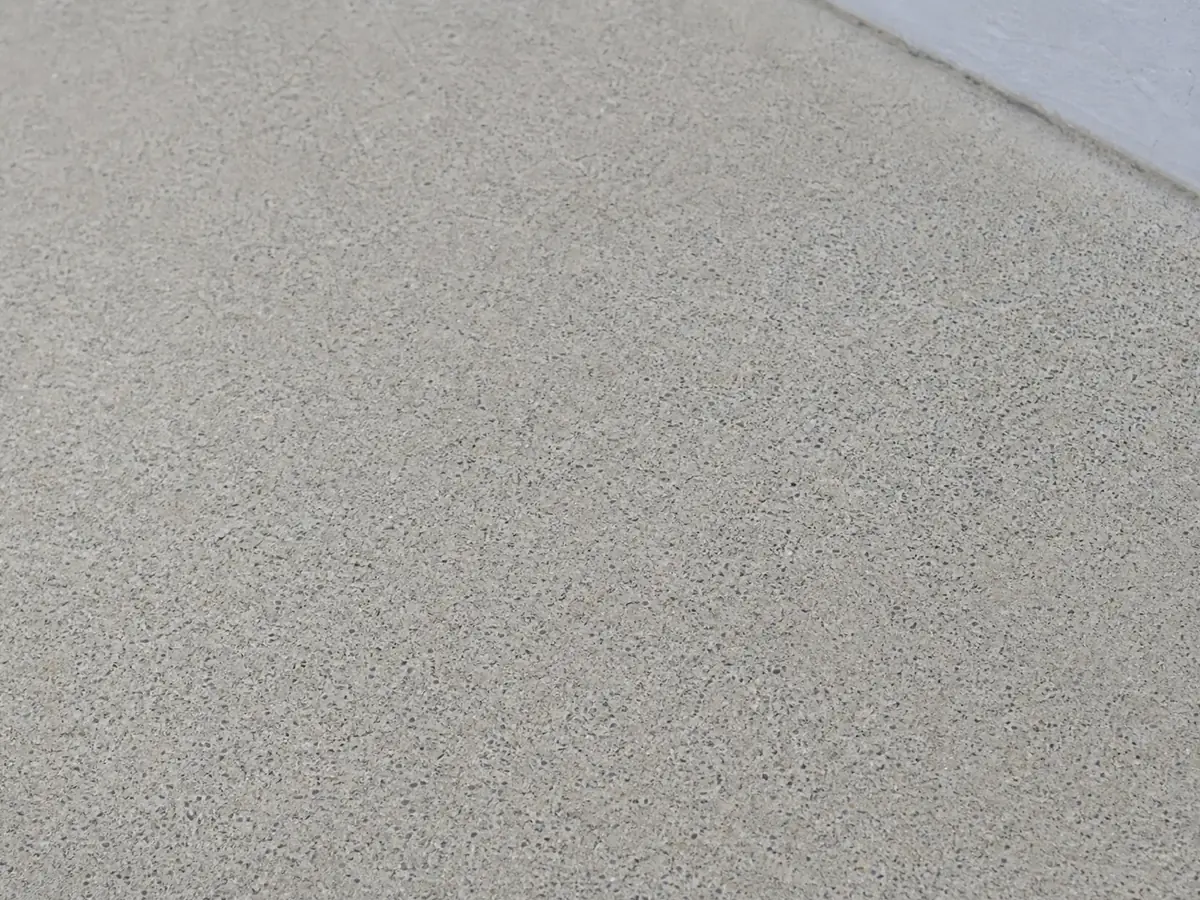
Preparation is where most peeling is decided. Concrete usually arrives at a coating job with a weak surface layer, laitance, dust, oil traces, curing compounds, or old paint and sealer. Acid etching and a quick scrub rinse some of that away but do not reliably create the rough, open texture a coating needs. Diamond grinding does. A grinder with diamond tooling removes the weak top layer and leaves a bonding profile, a controlled roughness the coating can lock into. The depth and consistency matter, and so does what the grinder meets along the way. Old paint and sealer must be taken off, not coated over. Cracks and joints need proper repair first, because a coating bridged over a moving crack will often split along it. Edges and corners need hand work where the machine cannot reach. All of this takes time, dust control and equipment, which is why it is the step most often cut when a job is priced too low. If you want to know how serious an installer is, ask how the slab will be prepared and what the finished surface will look like before any coating is applied.
Not every product sold as epoxy is built for a garage. Garage floor paint and many do-it-yourself kits are thin, often water-based, and designed to be easy to apply rather than to last under cars. Their instructions usually call for light prep, which leaves the bond weak from the start. Even a good basecoat can fail if it is left bare, because a topcoat takes the daily abuse: tire heat, scuffs, chemicals, and sunlight. An epoxy-only surface that sits in direct sun can yellow over time, and a surface that is too thin wears through. A UV-stable polyaspartic topcoat over a well-bonded epoxy basecoat is the combination we use to deal with those stresses. Film thickness also matters. A system with proper layers and a fully broadcast flake gives you body that a single thin pass cannot. This is not an argument that every kit fails or that every professional floor lasts forever. It is a reminder to compare what is actually going on the floor, layer by layer, and not just the price at the bottom of a quote.
Installation conditions can decide whether a good product bonds. Warm slabs and warm air speed up the way coatings set, which leaves less time to apply them evenly. That is a real consideration in a hot inland city like Simi Valley, where an enclosed garage can stay warm through the day, and it is why experience and scheduling matter. Cure time matters too. If a car goes back in before the system has hardened, the floor can be damaged at the very beginning of its life. Later, ordinary use can start trouble that a weak bond cannot absorb. Hot tires, jack stands dragged across the floor, and grit trapped under tires all concentrate stress. Keep the floor clean and avoid dragging heavy items. If you see a small lifted edge, deal with it early. If a floor is already peeling in sheets, the realistic repair is usually to grind off the failing coating and rebuild, because patching over a poor bond tends to fail again. We stand behind our residential work with a limited lifetime adhesion warranty, and our commercial and outdoor work with a three-year warranty. Ask to read the terms in writing, and check any association rules with your HOA before changing a garage that is visible from the street.
Epoxy peels because of how it was installed, not because epoxy cannot last. Moisture testing, diamond grinding and a layered system address the real causes. To have your own slab or a failing floor looked at, call SV Epoxy Flooring at (805) 697-5483 for a free estimate. Call (805) 697-5483 for a free estimate.
It peels when the coating loses its bond to the concrete. The main causes are moisture vapor rising through the slab, weak surface preparation, a thin or unsuitable topcoat, and low-grade kits or paints. Diamond grinding, moisture testing and a layered system prevent most failures.
Yes. Vapor moving up through a slab can build pressure under a coating, causing bubbles, blisters and peeling. Testing the slab shows the risk, and a moisture-barrier epoxy basecoat helps hold the vapor back. Very wet slabs may need to be addressed before any coating is applied.
Not reliably. Old paint and sealer can block the new coating from gripping the concrete, and the new layer may peel off together with the old one. They should be removed by diamond grinding so the epoxy bonds to clean, bare concrete and not to a failing surface.
Usually not. Acid etching can clean the surface but does not reliably create the open texture a coating needs, and rinse water and residue can cause problems of their own. Diamond grinding removes the weak top layer and gives the epoxy a consistent bonding profile.
Often, yes. Many kits are thin and rely on light prep, which leaves the bond weak. They can work in a lightly used space, but under cars they are a common source of peeling. A professional system adds grinding, repair, thicker layers and a durable topcoat.
Small lifted spots can sometimes be repaired if the cause is found and fixed. When peeling covers a wider area, the dependable fix is to grind off the failed coating, correct the cause such as moisture, and apply a new system. Patching over a poor bond usually fails again.
Durable, easy-to-clean garage floors that resist hot-tire pickup, oil and salt. Most two-car garages are done in one day.
Learn more →Diamond-ground concrete finished with a clear sealer for a natural, low-maintenance floor at the lowest installed price.
Learn more →Full-rejection flake over a moisture-barrier epoxy basecoat, sealed with a UV-stable polyaspartic topcoat. Installed in one day.
Learn more →You can usually walk on a new epoxy floor within a day, but driving on it takes longer and depends on the system, the products and the temperature. Your installer should give you exact times at the walkthrough. Full chemical cure takes about a week, so treat the floor gently until then.
Read the answer →Yes, a properly installed epoxy garage floor holds up in Simi Valley heat. The risks come from poor prep, an epoxy-only topcoat that amber-tints in sun, and hot tires on a weak bond. A diamond-ground slab, a moisture-barrier basecoat and a UV-stable polyaspartic topcoat handle summer well.
Read the answer →Yes, in most cases you can epoxy over old concrete, but not over the problem itself. Cracks are repaired, joints are treated, oil is ground and cleaned out, old coatings are tested or removed, and moisture is checked first. The coating is only as good as what it bonds to.
Read the answer →Call (805) 697-5483 or send the form at the top of the page. We reply the same day.