
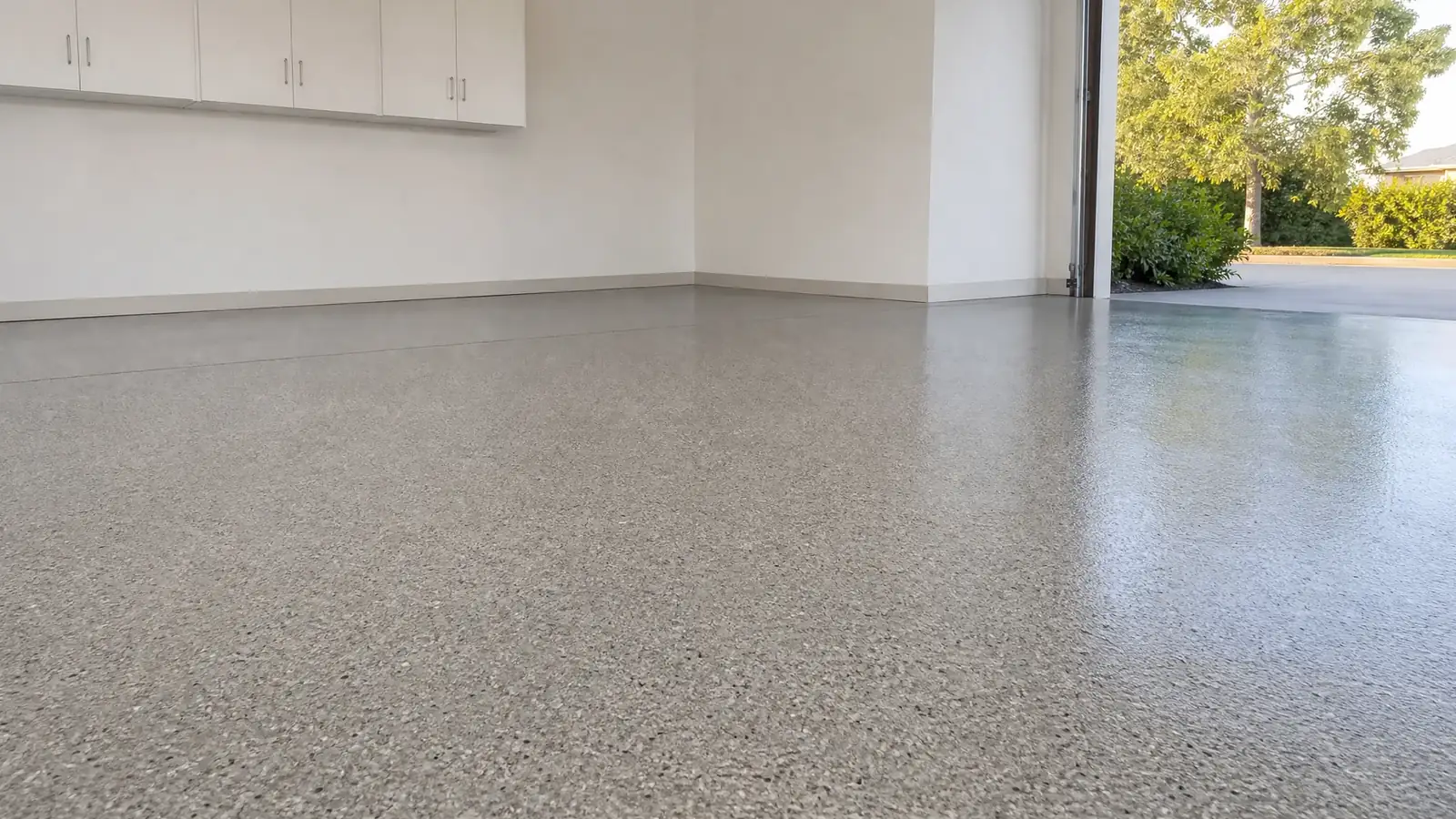
We diamond grind the surface of your slab, repair what needs repair and seal it with a clear coating, so you keep the natural look of concrete without the dust and stains.
Grind and seal means diamond grinding the top of a concrete slab to remove stains and old coatings, then applying a clear sealer to protect it. The floor keeps its natural concrete look. In Simi Valley it costs $6.50 to $9 per square foot, or $2,600 to $3,600 for typical projects.
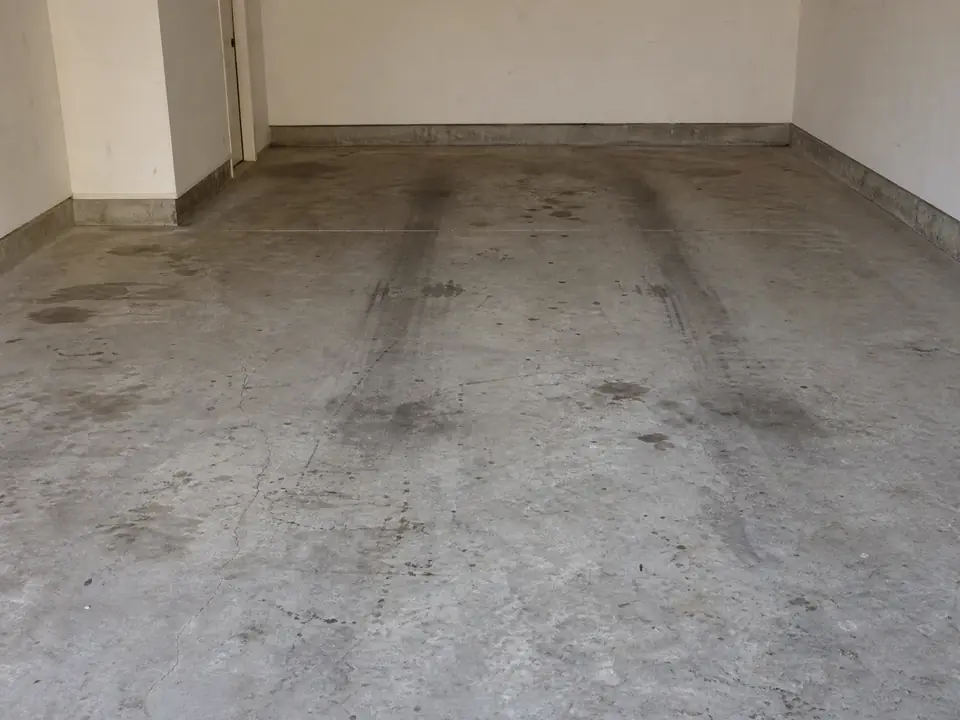
Not every floor needs a color. Plenty of Simi Valley garages, workshops and back rooms have perfectly good concrete that just looks tired: gray and chalky, dotted with oil, dusted with old paint, and shedding fine powder onto everything stored on it. Grind and seal is the answer for that floor. A diamond grinder cleans and refines the surface, and a clear sealer goes on top to stop the dust and keep liquids from soaking in.
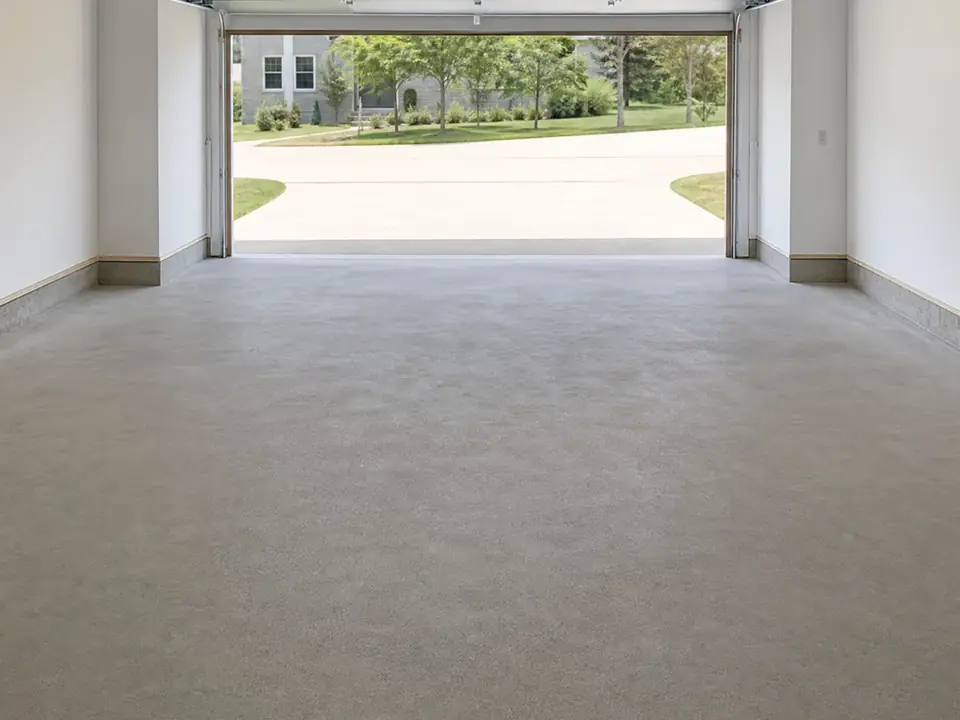
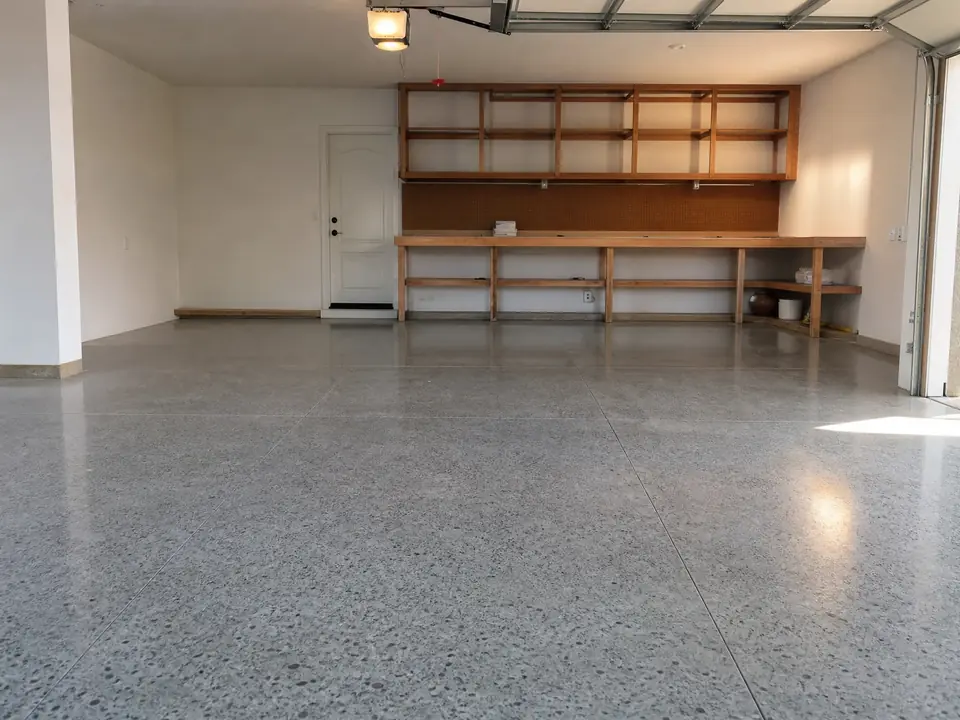
The result is concrete that still looks like concrete, only cleaner, more even and easier to live with. Depending on how deep we grind, you may see a smooth, uniform gray, a light salt-and-pepper speckle, or more of the stone in the mix. Because nothing is pigmented, the finish does not pretend to be something else. It suits people who like the industrial look, and it suits budgets that need a protective floor more than a decorative one.
SV Epoxy Flooring is based in Simi Valley and travels to Moorpark, Thousand Oaks, Camarillo, Oxnard and the other service areas listed on our site. This page covers how the process works, what it costs, what it can and cannot hide, and how it compares with a full epoxy system and with polished concrete. If you are unsure which route fits your slab, a free estimate will settle it, because we look at the floor before recommending anything. We would rather tell you a simple grind and seal is enough than sell you a bigger system you do not need.
Grinding and sealing stop the chalky powder that bare concrete sheds, so your tools, cars and storage boxes stay cleaner.
The concrete shows through the clear sealer, so you keep a clean, honest, industrial appearance instead of a colored coating.
At $6.50 to $9 per square foot, it is one of the leanest ways to protect a floor, and the ground surface can be upgraded to a colored coating later if you change your mind.
A sealed surface wipes clean with a damp mop, and most spills lift off before they soak into the pores of the slab.
Diamond grinding takes off tired paint, glue and weak sealer, giving you a sound surface instead of a peeling one.
Residential grind and seal work carries a limited lifetime adhesion warranty, and outdoor and commercial work carries 3 years.
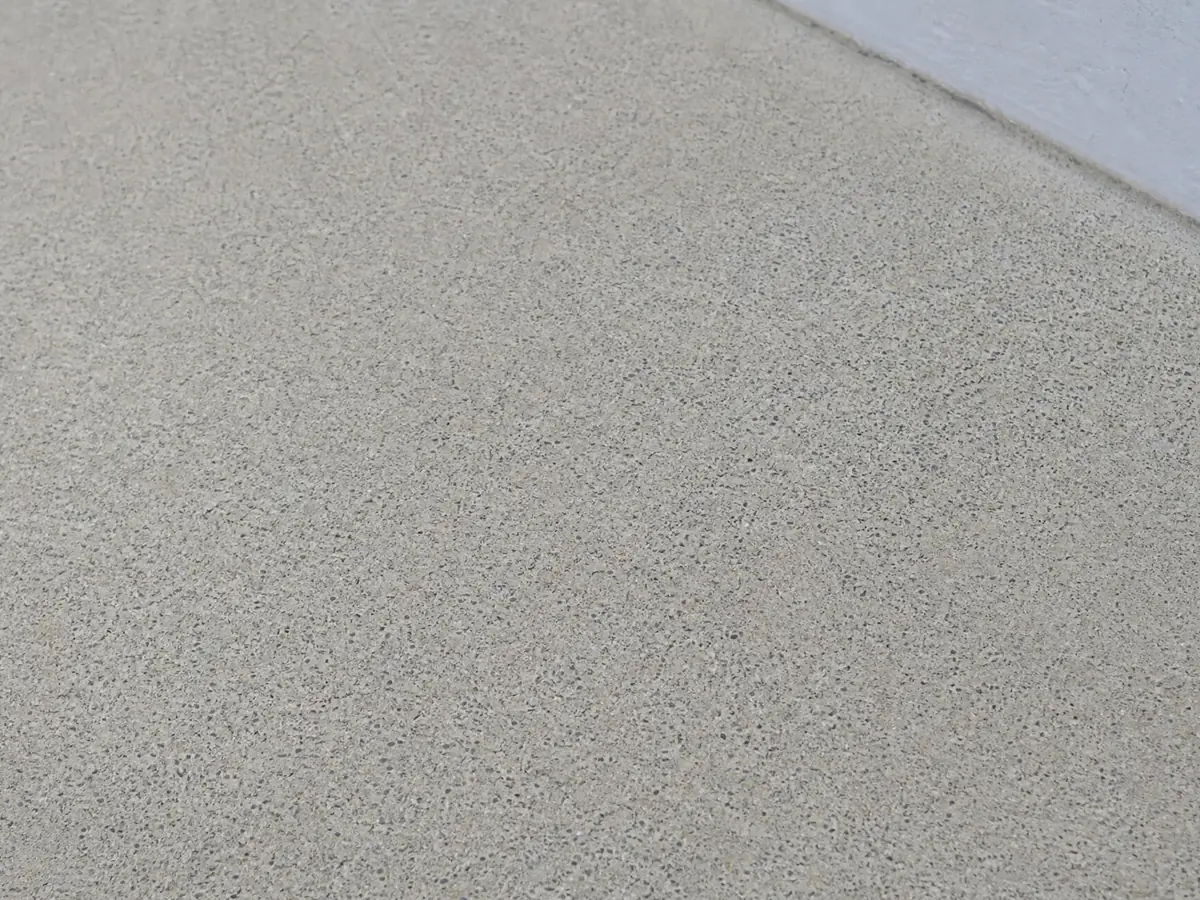
We begin by walking the floor and testing it. A scratch test, a water-drop test and a moisture check tell us what is on the slab and how hard it is. Then the diamond grinder goes to work. Metal-bonded diamond segments cut away oil-soaked surface, old paint, glue, curing compound and the weak, powdery top layer. That is the step that gives the sealer something solid to bond to, and it is the reason a ground floor performs so differently from one that is only rinsed and rolled. Cracks, divots and joint edges are cleaned and filled with a repair material, then ground flush. A heavy-duty vacuum follows every pass, so the surface goes into sealing clean and dry. The clear sealer is applied in even coats, working in small sections so there are no lap marks, and a second coat is added where the project calls for one. The material is VOC-free, which keeps odor low in an attached garage or an occupied building. Before we leave, we walk the finished floor with you in daylight and in shadow, because ground concrete can look different depending on the angle of the light.
Concrete is a natural material, so no two ground floors look the same. How the floor turns out depends on how the slab was poured and finished, how deep the grinder goes and how much sealer is applied. A light grind removes the surface film and leaves a smooth, mostly uniform gray. A deeper grind exposes sand and small stone for a speckled, terrazzo-like effect. Trowel marks, shadows from past patches and color shifts between pours may show through, and cracks stay visible even after they are filled, since this is a clear coating with no pigment to cover them. Oil that has soaked deep into the slab can leave a darker patch that grinding reduces but cannot always erase. If a certain stain bothers you, tell us at the estimate and we will check it, because it may make sense to choose a colored system instead. The sealer can be satin or gloss, and a satin finish tends to look more natural and forgiving. Ask to see sample squares at the estimate, so you can judge the grind depth and sheen in your own light before you commit. If you want an even tone across the whole garage floor, a solid color epoxy floor or a flake epoxy floor is the better route.
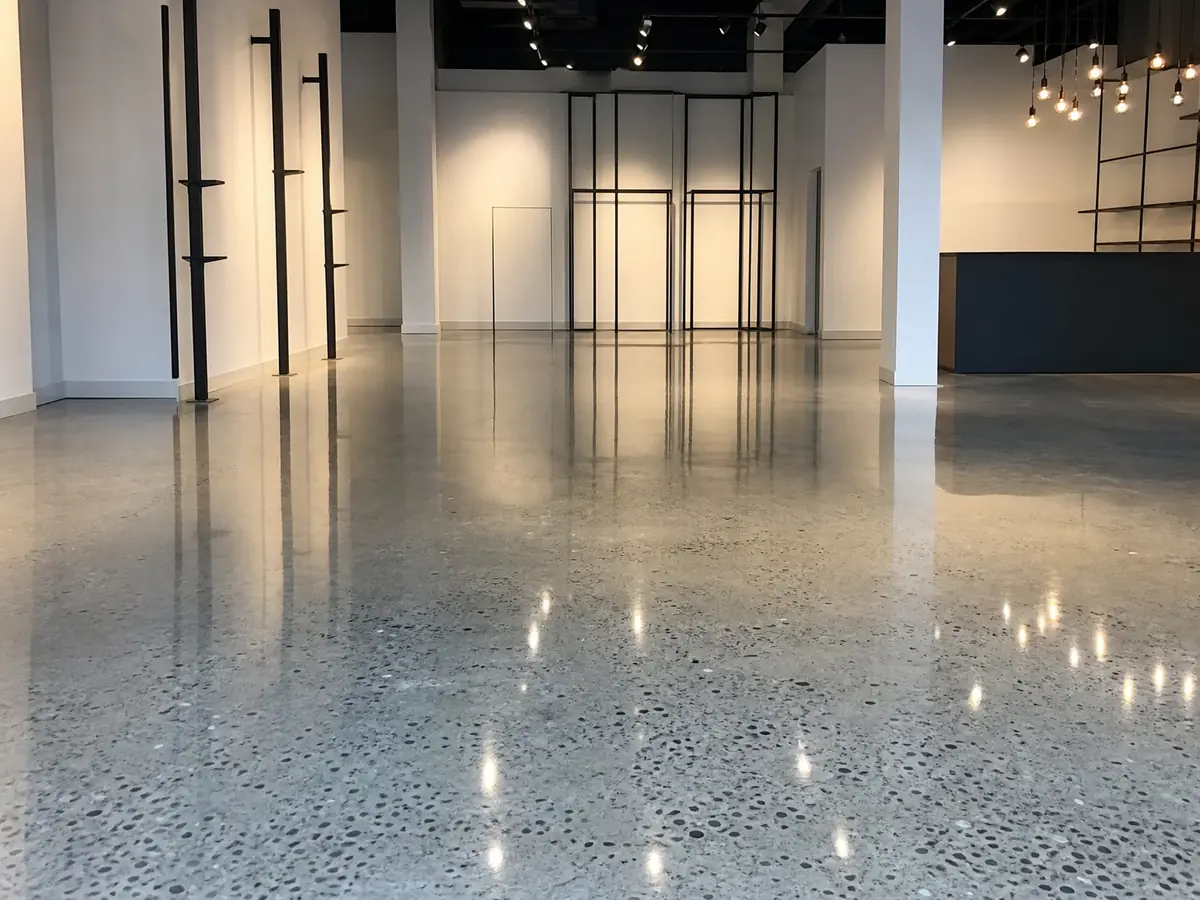
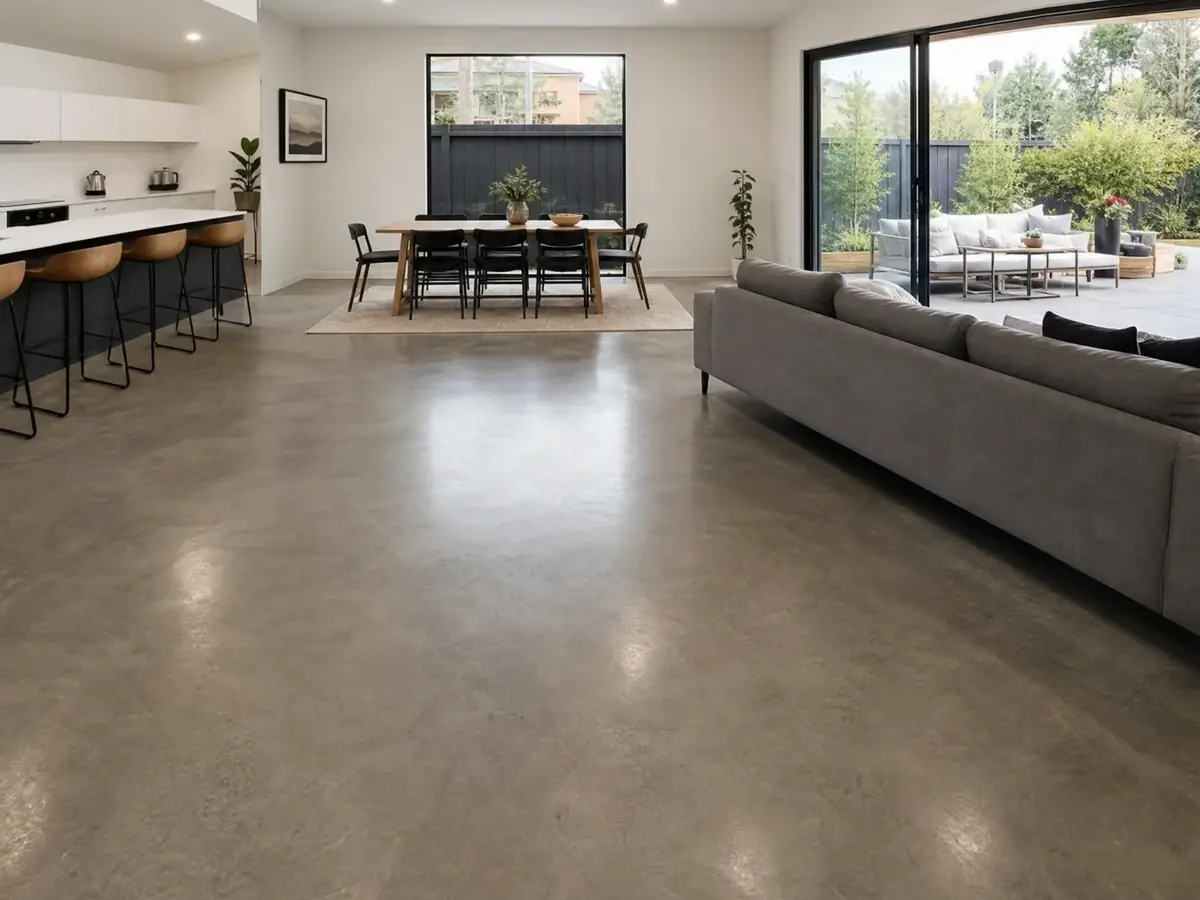
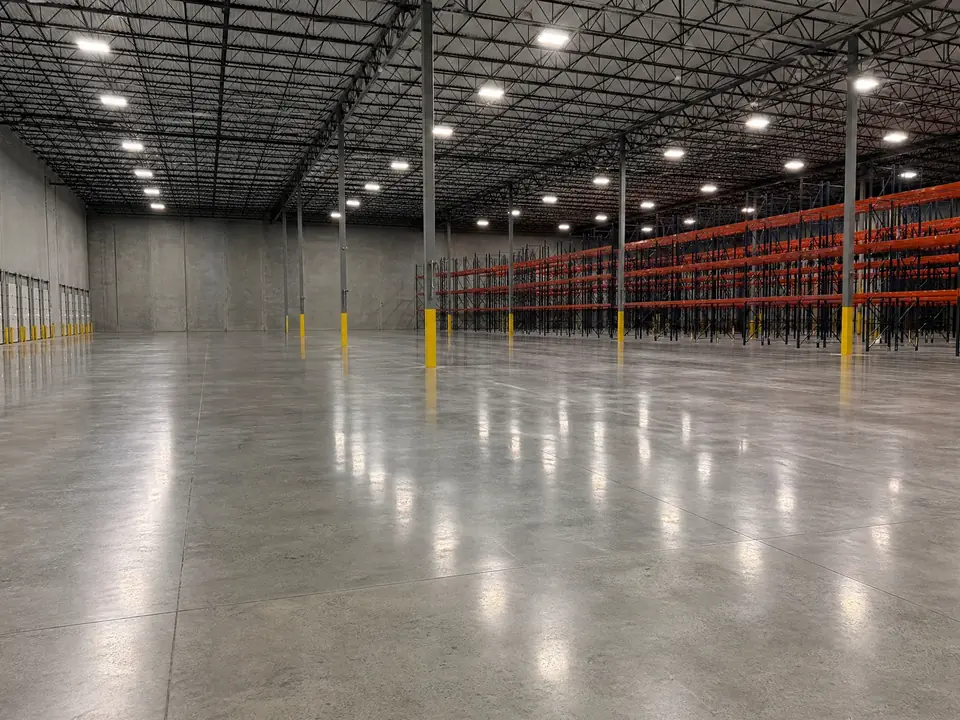
This system makes the most sense where function matters more than decoration, or where you want to keep the concrete look. A workshop or storage bay in an industrial park gains dust control and easy sweeping for a fraction of the price of a thick coating. A rental unit, an office back room or a laundry room gets a washable surface without a color decision. A garage floor in a home that will sell soon can look sharp and clean for far less than a full flake system. It is also a sensible first step on a large floor you plan to coat later, because the ground surface can be upgraded when the budget is ready. In Simi Valley, many homes have a plain broom-finish slab that is perfectly sound and only needs protection. Others have thin paint or old sealer that peels in the heat, and grinding gets rid of it. Choose a different route if you park hot cars daily, because a clear sealer is a thin film and can mark more easily than a flake or solid system. Choose it if you like the natural, slightly industrial concrete look and do not need your floor to hide anything.
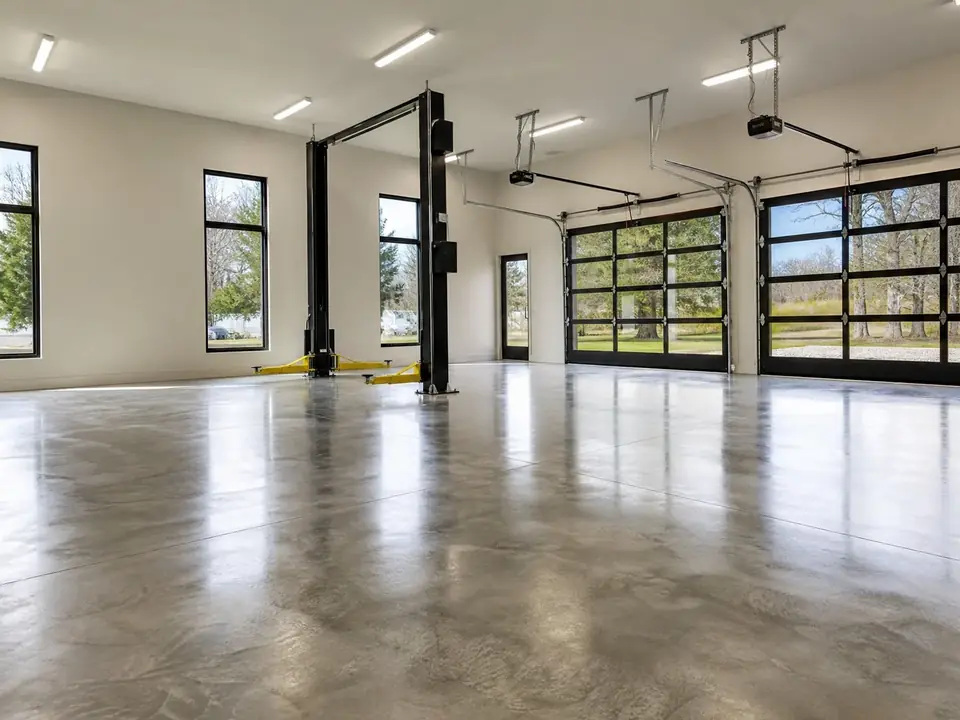
A sealer is thinner than an epoxy build, and that has consequences. It protects against dust, moisture and most spills, yet it wears faster than a thick system under tire traffic, rolling tool chests and dragged metal. In heavy-use areas you may need to recoat the sealer sooner, which is a quick job on a floor that has already been ground. Hot-tire pickup is the biggest worry on a driveway-facing garage bay, and the right sealer helps, but a flake or solid system is more tolerant. Slip resistance is another point. A glossy sealed floor can be slick when wet, so we can add a fine non-slip additive or choose a satin sheen when the floor will see water. For upkeep, sweep or dust mop weekly, damp mop with a neutral cleaner and warm water, and wipe up oil, coolant and brake fluid soon after they land. Skip strong acids and abrasive pads. A grind and seal floor is not polished concrete, which uses finer diamond steps and a densifier to produce a mirror-like sheen and is a separate, costlier process. Ask us about both so you can compare. If you ever want color later, a ground and sealed floor can be scuff-sanded and coated, though any old sealer has to be removed or tested first for compatibility.
Grind and seal is the shortest job we do, because there are no pigmented build layers to wait on. The grinding, repairs and sealer coats usually happen in a single visit or two, and your written quote lists the schedule for your floor. The sealer firms quickly, and most floors accept light foot traffic soon after the final coat. Vehicles should wait until the sealer has hardened, which your installer will confirm on the day. Heat speeds the cure and cool or damp weather slows it, and a warm Simi Valley afternoon will firm a coat faster than an overcast morning. Santa Ana wind days can blow dust into an open garage, so the floor is vacuumed again right before sealing. A few extra days of gentle use before the first deep cleaning gives the coating time to reach its full strength.
Choose grind and seal when you want protected concrete at the lowest cost and you like the natural look. Pick a flake epoxy floor if you want the stain hiding and hot-tire tolerance of a thick system in one day. Pick a solid color epoxy floor for an even, bright surface. Pick a metallic epoxy floor for depth and a showpiece finish. Pick quartz when traction is the priority. Choose polished concrete only if you want a high sheen and a bigger budget. Grind and seal is the right answer when the slab is sound and the goal is simple.
Typical ranges for Simi Valley and Ventura County. Minimum project $2,600. Commercial and industrial work is quoted after a site visit.
| System | Price per sq ft | Typical project |
|---|---|---|
| Flake system (garage, up to 400 sq ft) | $6.50 – $10 per sq ft | $2,600 – $4,000 |
| Solid color system | $9.50 – $11.50 per sq ft | $3,800 – $4,600 |
| Metallic epoxy system | $12.50 – $18.50 per sq ft | $5,000 – $7,400 |
| Quartz & sand finish system | $9 – $16.50 per sq ft | $3,600 – $6,600 |
| Grind & seal (clear sealer) | $6.50 – $9 per sq ft | $2,600 – $3,600 |
| Patio, driveway & pool deck | $8 – $12 per sq ft | $3,200 – $4,800 |
| Commercial & industrial | Quoted after a site visit | Quoted per project |
Prices and details reviewed October 2026. Project examples assume a two-car garage up to 400 sq ft. Free on-site measurement and written estimate. See the color chart to pick your color.
Yes, in most cases you can epoxy over old concrete, but not over the problem itself. Cracks are repaired, joints are treated, oil is ground and cleaned out, old coatings are tested or removed, and moisture is checked first. The coating is only as good as what it bonds to.
Read the answer →Epoxy floors peel when the coating loses its bond to the concrete. The usual causes are moisture rising through the slab, poor surface prep such as acid etching instead of diamond grinding, a thin or unsuitable topcoat, and cheap kits. Proper grinding, moisture testing and a barrier basecoat prevent most peeling.
Read the answer →A two-car flake epoxy garage floor in Simi Valley typically costs $2,600 to $4,000 for up to 400 square feet, or $6.50 to $10 per square foot. Our minimum project is $2,600. Solid color starts at $3,800, metallic runs $12.50 to $18.50 per square foot, and larger garages cost more because pricing follows square footage.
Read the answer →Grind and seal is a two-step floor treatment. A diamond grinder removes stains, old coatings and the weak surface layer of the slab, then a clear sealer is applied to protect it. The floor keeps its natural concrete appearance but gains dust control, easier cleaning and resistance to most household spills.
Grind and seal runs $6.50 to $9 per square foot, which usually works out to $2,600 to $3,600 for typical projects. Our minimum project is $2,600. Slab condition, cracks, old coatings and total area all move the number. A free estimate gives you a fixed written quote after we see the floor.
Not better, just different. Grind and seal costs less and keeps the natural concrete look, but its thin sealer film wears faster and hides less than an epoxy build. Epoxy systems cover stains, tolerate hot tires better and add color. The right pick depends on budget, traffic and how you want the floor to look.
Grind and seal uses a coarser grind and a clear surface sealer, while polished concrete uses a longer series of finer diamond steps plus a densifier to reach a glossy shine. Polishing takes more labor and costs more. Grind and seal is a practical protective finish, not a mirror finish.
It depends on traffic, sun, cleaning habits and the sealer used. A garage with daily car traffic will need its sealer refreshed sooner than a back room that sees only foot traffic. Because the slab has already been ground, a recoat is simple. We do not promise a set number of years.
Yes, in many cases. After grinding, a concrete stain or dye can add color before the clear sealer goes on, giving a mottled, stone-like effect. Results vary with the age and mix of the slab, so we test a small area first. If you want precise color control, a pigmented epoxy system is more predictable.
It can be when wet, especially with a gloss sealer. A satin finish is a little grippier, and we can add a fine slip-resistant additive for areas that see water, such as a garage near the driveway or a utility room. If grip is the main concern, a quartz or sand finish is the stronger choice.
Only partly. Grinding removes surface stains and reduces deeper ones, but oil that has soaked into the slab may leave a faint shadow. Cracks are filled and ground smooth, though they remain visible because the sealer is clear. If you want those hidden, a pigmented system such as flake is the better answer.
It can mark or lift if the slab was poorly prepared or the wrong product was used. On a properly ground floor with a quality sealer, hot-tire pickup is much less likely, but a thin film still has less margin than a thick flake or solid system. For daily parking, we usually suggest the thicker route.
Durable, easy-to-clean garage floors that resist hot-tire pickup, oil and salt. Most two-car garages are done in one day.
Learn more →A clean, seamless pigmented floor in gloss, satin or matte for garages, workshops, interiors and commercial spaces.
Learn more →Full-rejection flake over a moisture-barrier epoxy basecoat, sealed with a UV-stable polyaspartic topcoat. Installed in one day.
Learn more →Call (805) 697-5483 or send the form at the top of the page. We reply the same day with a time to measure.